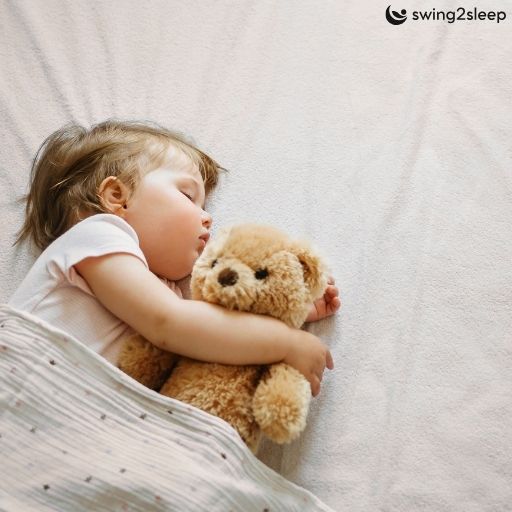


Baby sleep is an endless topic for parents. Either your child doesn't sleep or doesn't sleep through the night, they sleep too little, fall asleep too late, don't like sleeping in their own bed, only with a bottle, and so on. Fortunately, there are many tips on which sleep aids can help your child fall asleep better. One of them: A stuffed animal.
Some mothers and fathers swear by a cuddly companion as a sleep aid for babies. Teddy bear, bunny, or tiger: How do you get your baby used to a cuddly toy for falling asleep?
What should you look out for and why does the cuddly friend usually play an important role in your child's life, not just during sleep? We have summarized all the answers to these and other questions for you in this practical article.

Getting your baby used to a cuddly toy for falling asleep: A few good reasons
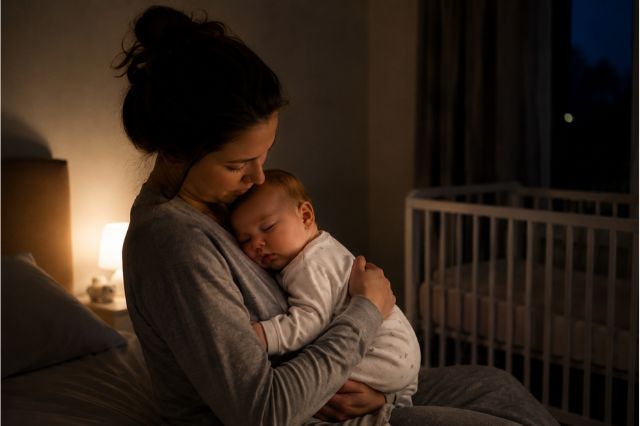
Babies are born with a great need for security and physical closeness, for affection and love. That's why most children calm down particularly well in the arms of mom or dad. Physical closeness usually works wonders – especially when the child is in a phase where they have trouble falling asleep.
Whether hunger, teething, growing pains, light, noise, or simply sensory overload: situations repeatedly occur in your baby's life that bring uncomfortable feelings and disturb sleep. A cuddly toy can be a way to get through the night more relaxed.
Because like physical closeness, cuddly friends also give babies and toddlers a sense of security and safety. Especially when they are paired with parental scents. Your baby then doesn't feel alone and feels less fear.
The importance of cuddly toys for babies and children
If your child gets used to the cuddly toy in the first few months of life, it will probably become a constant companion in further developmental phases later on.
That is perfectly okay: Stuffed and plush animals can fulfill a protective function in many ways and take away your child's feeling of being alone when mom and dad are not in direct proximity. In this way, they can help overcome separation anxiety and serve to calm them down.
Sleep aids can accompany them to sleep not only in the evening but also during the day and ensure they learn how to deal with emotions. For example, if you explain to your child during their nap with the help of the stuffed animal that the cuddly friend also needs a little rest and a break now, going to bed is usually easier.
Your child experiences connections and emotions in a playful way.
Promoting motor and social development
Not only can beloved cuddly toys be used for falling asleep, but motor skills are also promoted through interaction with the plush friend.
They usually consist of different textures and elements, having firm, soft, and rough components. This allows your baby to stimulate and train their senses through touch even in infancy.
Later, in toddler and primary school age, most cuddly toys become everyday companions and give the child support when processing experiences.
The connection to the cuddly friend is then solidified, the stuffed animal can become an emotional projection surface and also strengthens your child's social skills, for example, by imitating everyday situations they have experienced together with their plush buddy. Major events, such as the first day at daycare or school, can thus be significantly easier.
How do I get my baby used to cuddly toys for falling asleep?
Everything takes time. And even cuddly toys, as many functions as they can fulfill for your child, are not a miracle cure that suddenly makes sleeping through the night work.
Your baby sleeps very irregularly and a lot in the first few weeks of life anyway. Only after a few months, around the third month of life, does a day-night rhythm slowly develop.
This is something completely new for many babies, so patience is required from you parents. However, it is also a good time to slowly get your child used to sleep aids such as pacifiers, comforters, or cuddly toys.
It is important that you ensure a nice feel-good atmosphere when going to bed and maintain the same rhythm in the evening hours. Create a bedtime routine that suits you and include the cuddly friend.

Cuddly toy sleep aid: Pay attention to safety
Important: You should still stay by the bed from the third month onwards as long as the plush toy is with your child. For safety reasons, babies should not sleep alone with the cuddly toy at first, so that they do not choke or inhale fibers in their sleep.
As soon as your child rolls into all positions on their own, lifts their head safely, and sits upright independently, you can put the cuddly friend in bed with a good feeling.
By the way, you can also use the companion during the day, while playing and cuddling. Then your child will quickly accept the new friend as a comforter and companion.
Cuddly toys: What to look for when buying?
- Quality and safety: It may be obvious, but we want to mention it again. The cuddly toy for your child should be free of harmful substances; the filling and the outer fabric are particularly important. It is best if the plush friend can be cleaned in the washing machine, otherwise it can quickly become a dirty and unhygienic matter. Look for test seals and standards, for example the CE marking. This means the cuddly toy was manufactured according to European guidelines. The LGA quality seal stands for pollutant-free processing, while the TÜV seal in turn shows that the plush toy has been tested on educational and technical levels.
- Pay attention to the material: Plush, velour, and microfiber are possible materials for the cuddly toy. For infants, rougher surfaces, such as terry cloth, are the better choice.
- Workmanship: The cuddly toy should be firmly sewn and robust, as your child will probably carry the plush friend around a lot. Therefore, it is important that the products are durable and that small parts or seams do not come loose quickly.
A cuddly toy for your baby to fall asleep
Stuffed animals are a great way to help your baby find their way to sleep. And they are also ideal as a parental aid, because in your child's everyday life, the cuddly companion can become a good friend and source of comfort in difficult situations.
Both emotional and motor skills are strengthened by a plush toy. However, it is important that you do not leave your child alone in the crib with the cuddly toy in the first few months of life.
The risk of them inhaling fibers or choking on small parts is still too high at this point. As soon as your baby can sit up, the cuddly toy no longer poses a safety risk. Then the stuffed animal simply becomes an everyday companion, best friend, and worry eater.
We hope this article has given you a good overview of how you can establish a cuddly toy as a sleep aid for your child. Another sleep aid that many parents find effective is, of course, our swing2sleep, which makes the transition to sleep easier for your child with gentle movements.