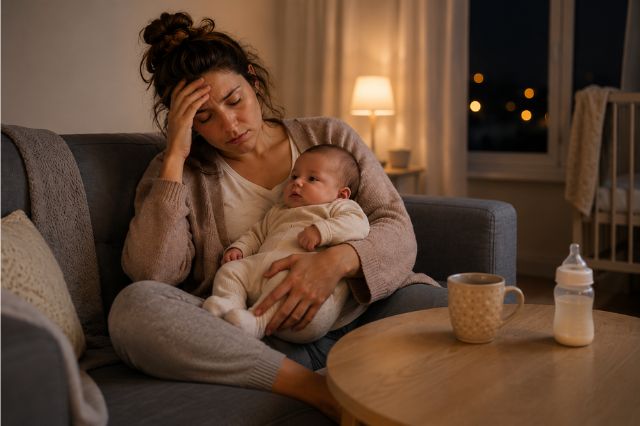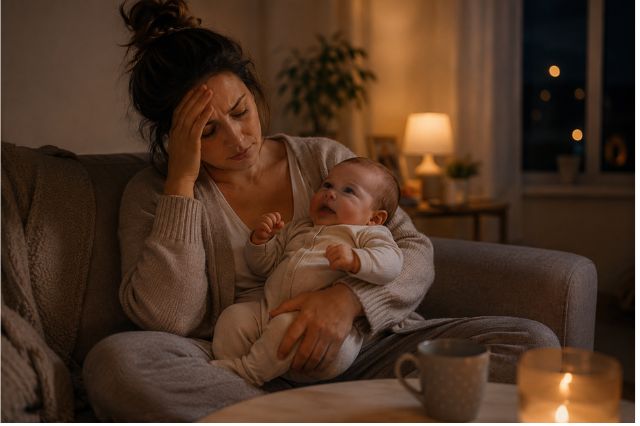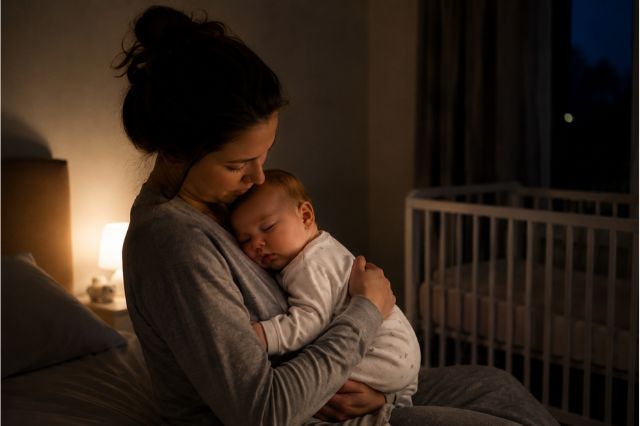
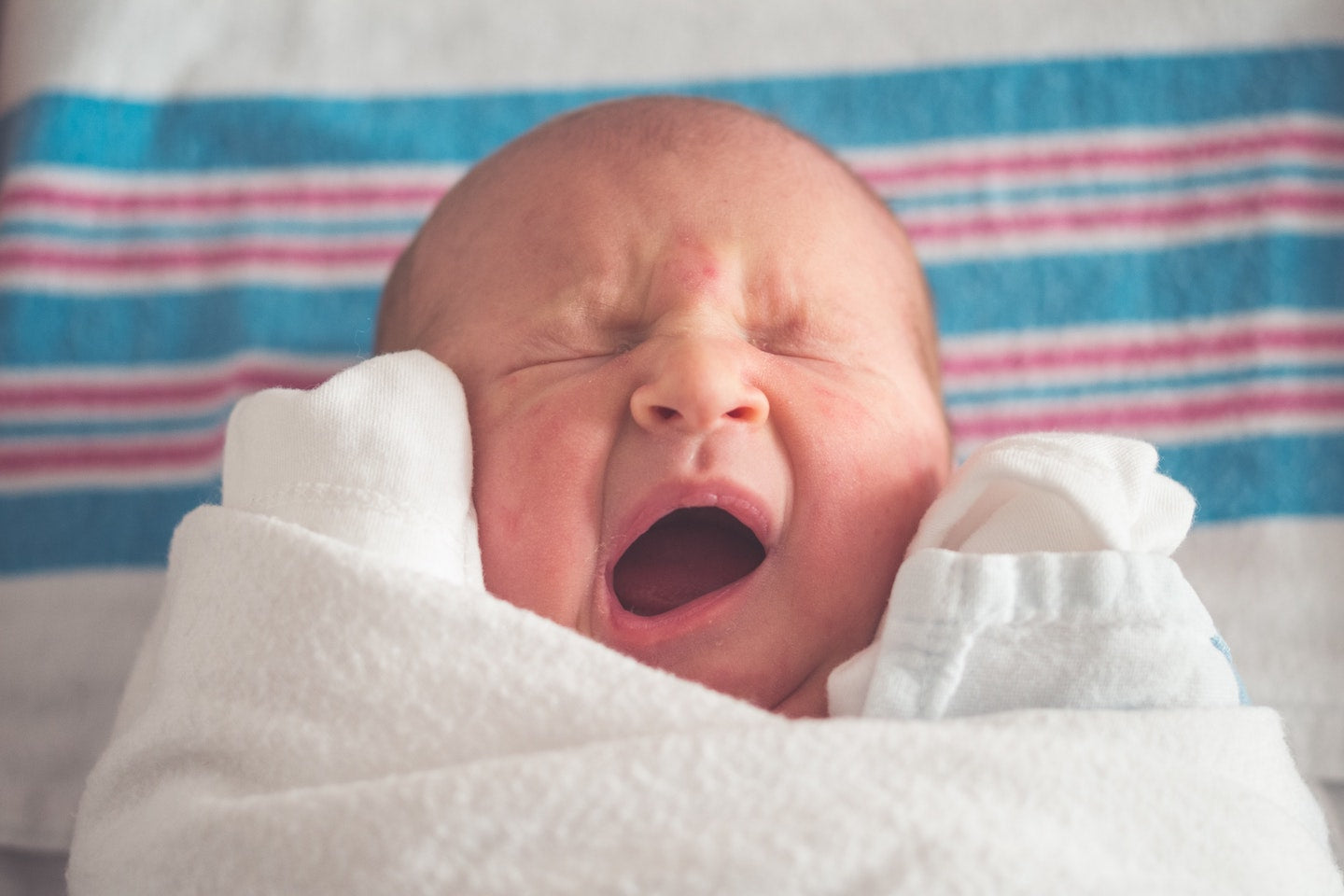


Lead-heavy fatigue, dark circles down to the cheekbones, and sleepless nights by the crib. Almost all parents know this from their baby in the first few months. Awake for several hours at night, falling asleep alone seems impossible, and Mom and Dad hardly know the difference between day and night anymore. Parents and child simply need to sleep for several hours at a time again, but restful sleep is hardly thinkable. But there is also good news: You can support your little one in finding sleep more easily and having a more restful night. In this article, we reveal the reasons why your baby might not be sleeping and what you can do if your baby finds it difficult to fall asleep.

Help, my baby won't sleep: How much do babies actually sleep
When a baby cannot find sleep or keeps waking up, it can present parents with unexpected challenges. After all, sufficient rest periods for your little one are enormously important for development. For you parents, the lack of recovery can, in turn, affect your mood in the long term – sleep deprivation is torture. But especially in the first few months, restless nights and problems falling asleep are unfortunately completely normal. Newborns do not yet have a day-night rhythm and sleep on average no longer than three to four hours at a time, regardless of what time it is. However, they have a high need for sleep in order to best cope with the growth and development phases in the first few months. This means: Depending on age and developmental stage, an infant needs 17 to 18 hours of sleep. As they get older, the daily sleep requirement decreases. Your little one then sleeps less but also wakes up less frequently in between – they gradually learn to sleep at night, are awake during the day, and develop a sleep rhythm.
When the baby won't fall asleep: Investigating the causes
Unfortunately, some babies, regardless of their age and the learning process, have problems falling asleep every now and then – even when they are tired. If your sweetheart doesn't want to sleep, there can be various causes. But don't worry: only in the very rarest cases are these organic. If your little one has sleep problems, you have to investigate the causes yourself, because this varies from child to child. Unfortunately, there is no universal answer or a secret recipe that always works when your baby doesn't sleep. Have patience with yourself and with your little one and try to implement one or two tips from this article. Then the sleep problems may possibly be a thing of the past after a few weeks.
Reason number 1: Wrong expectations
Many young parents often have wrong expectations when it comes to baby sleep. A baby does not simply fall asleep on its own in the first few months, and certainly does not sleep through the night. It can help to keep the following points in mind:
- Your baby's sleep cycles are shorter, sometimes just 30 minutes for newborns
- The proportion of light sleep is much higher in your baby. An adult spends much less time in the REM phase than an infant and sinks into restful deep sleep quite quickly. Your baby, on the other hand, spends about 20 minutes in the active REM phase, then goes into transitional sleep, and only then into a quiet deep sleep.
- The proportion of deep sleep is highest for your child until about midnight. Most babies sleep best until shortly after midnight and are in the light sleep phase after that.

Reason number 2: Your baby has a strong need for closeness
There are babies who have a high need for cuddling and therefore do not want to fall asleep or stay asleep, or only sleep in their parents' arms. The reason for this lies once again in evolution: infants instinctively seek closeness to their parents, as they would have starved or frozen to death as little Stone Age babies if they had not been very close to the body of their parents. The widespread opinion is unfortunately that one should let the baby cry in order to train it to calm itself down. This questionable view dates back to a time when the child's well-being was not always the priority. Do not let these statements get to you too much, because science has moved on in the meantime.
Reason number 3: Sensory overload
Discovering the world can be exhausting. Babies are quickly overwhelmed by the many new impressions. Especially when the day was particularly stressful, you were out and about a lot with your little one, your baby perceived many faces, colors, and sounds, and was possibly carried in different arms. This is then referred to as sensory overload. You can recognize this by the fact that your child is fussy and restless, turns their head back and forth, and cries a lot and loudly. Ensure that stressful situations remain the absolute exception and bring peace into your everyday life. With a little time, your little one will be better able to process impressions. So reduce your activities and bring a clear rhythm into everyday life.
Reason number 4: The sleep environment is not ideal
It sounds almost banal: but sometimes babies simply don't sleep well because the sleep environment is just not optimal. So, check the crib. Is the mattress perhaps uncomfortable? Could it be better placed in a different spot? Is there perhaps a full moon tonight? Is the room nicely darkened and ventilated? Is the baby perhaps wearing too much clothing? Or is it even too warm in the room? The optimal sleeping temperature for babies, as for adults, is 18 degrees, because body temperature drops slightly at night. If it is too warm, falling asleep and staying asleep can be disturbed. Also check your child's clothing and the sleeping bag: has a scratchy label hidden itself somewhere? Last but not least, you should keep displays, toys, and also stuffed animals away from the crib – in other words, all the distracting things that encourage playing instead of sleeping.
Some babies like to sleep in their own crib or even in their own room – all to themselves. Others, on the other hand, need a lot of closeness even at night and prefer to sleep in the parents' bedroom. In that case, a bedside sleeper or even the option of a family bed is the better choice. Even though the medical recommendation is that infants sleep safest in their own bed, you have to find out what fits best for you and your baby. Many midwives, for example, definitely advise a family bed, as long as all safety measures are observed.
How your baby sleeps safely in the family bed:
- Ensure hard mattresses, no waterbeds or soft toppers.
- A large bed from which the baby cannot fall.
- No gaps between mattresses.
- Your baby should sleep in their own sleeping bag, no separate pillows or blankets.
- You as parents should not have drunk alcohol or taken any medication or drugs.
- Older siblings should never sleep next to the baby.
- Parents' duvets and pillows should be out of the baby's reach.
Reason number 5: A growth spurt or teething
Every few months, your child is due for a new growth spurt. Your baby then makes a strong developmental leap, continues to develop the brain and numerous skills, and your child's body can also continue to grow in spurts. All of this is particularly challenging for your little one and their whole world is turned upside down. Of course, such spurts can then also affect sleep. Many children sleep worse during growth spurts, wake up more often, or wake up particularly early. Try to take these phases calmly, give your sweetheart a lot of closeness, and stick to your rhythm and bedtime rituals.
At the age of about 7 or 8 months, the first teeth can now also announce themselves. There are babies who are completely unfazed by this, while others react particularly sensitively to the first teeth. This can also manifest itself in sleep problems. Usually, the growth of teeth occurs in spurts: for a few days and nights there is pressure, itching, and pain, then there is some peace again. During teething, your baby often brings their hand to their mouth, smacks a lot, has increased salivation, and may even react with fever and diarrhea. Try to provide your baby with relief. At night, you can slightly elevate the baby's mattress from chest height with a wedge pillow, for example, because the pain usually intensifies when lying down, as the head is particularly well supplied with blood in this position.
When the baby doesn't sleep: Rule out organic causes
If the sleep problems persist permanently, it is certainly advisable to visit the pediatrician. You can then clarify that there is no chronic illness or acute infection behind it. If your baby, for example, still suffers from severe flatulence after the first three to four months, tosses and turns, and often has diarrhea, it makes sense to test your little one for an allergy or food intolerance. This can then also be the reason that the baby does not sleep. In other children who cry a lot, can hardly be calmed down, and do not want to or cannot sleep, there may be a vertebral or joint blockage – triggered by a difficult and strenuous birth with a vacuum extractor, forceps, or even by C-section. However, this is only rarely the case. But if your baby screams shrilly and seems restricted in their motor skills, feel free to see a doctor or book an appointment directly at an osteopathy practice. Often the problem can be solved with a few sessions and most children sleep a few hours more afterwards.
It can enormously affect your family life if your little one has problems falling asleep and staying asleep. Should you feel that you can no longer master the situation alone, you can also get professional support from counseling centers and therapy facilities. During sleep counseling, many parents can learn how to handle and interact with the child again with professional guidance. Aspects covered here include:
- Information about sleep development and sleep habits of babies and toddlers, for example with the help of a sleep diary
- Structuring the daily routine and jointly developing an individual bedtime ritual
- Recognizing tiredness in the baby
Be gentle with yourselves - Eventually your baby will fall asleep better
As already mentioned, problems falling asleep and staying asleep occur in most children at some point. So it is completely normal if your baby wakes up every now and then at night or cannot yet sleep through the night and finds it difficult to fall asleep and does not settle down in the evening. Only in rare cases are there concerning and organic causes. The reasons that a baby does not sleep well are therefore mostly harmless – but diverse. Even if it is sometimes difficult: always try to stay calm and go step by step in search of the cause. Find your routines and rituals and give yourself and your baby time. Then your nights will surely be quieter soon.