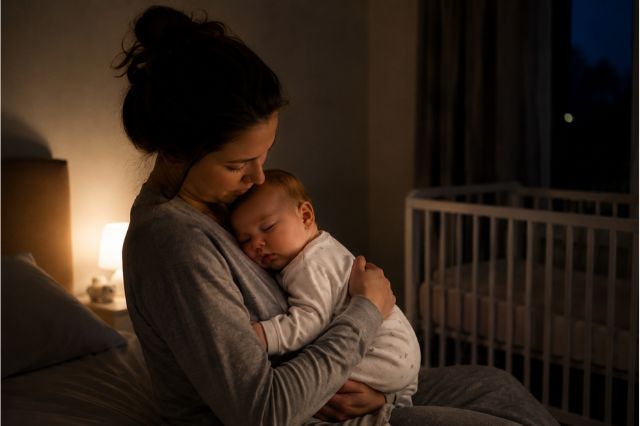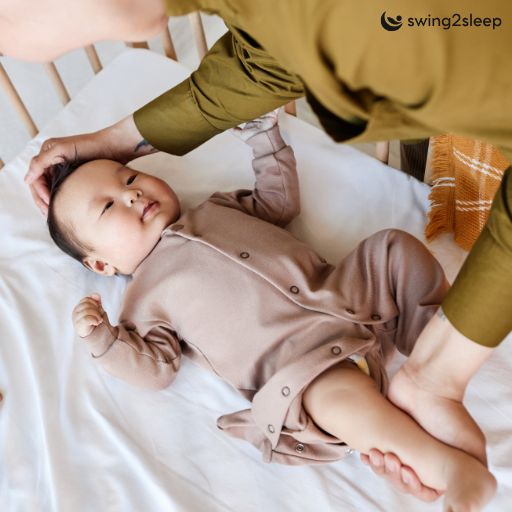


Do you know that feeling when you sit on the couch exhausted in the evening and wonder why your child simply won't settle down? When your baby gets too little sleep, it can be incredibly stressful for you, your child, and the entire family routine.
Perhaps you feel like something is going wrong. Maybe you compare yourself to other parents and think: "Why isn't it working for us?"
The truth is: You are not alone with this issue. Many parents experience phases where their baby sleeps little, wakes up frequently, or has difficulty falling asleep. And often there is much more behind it than just "not being tired enough". Sleep is a complex developmental process and every child brings their very own rhythm.
In this article, I will show you why your child sometimes doesn't get enough sleep, what causes might be behind it and, above all: what concrete things you can do in everyday life to gently improve your situation.
How much sleep does your baby really need?
Perhaps you have seen charts that specify exactly how long a child "should" sleep. But reality is much more flexible.
One child can get by with significantly less sleep than others and still be healthy and happy. Some babies need 14–16 hours of sleep, others do well with 10–12 hours. The decisive factor is not the number, but your child's behavior in everyday life:
- Does your child seem balanced and attentive?
- Does it react to you and its surroundings?
- Is it mostly content despite little sleep?
Then there is a high probability that your child is getting exactly the sleep they need, even if it feels like not enough sleep to you.
Important: Especially in the first year of life, sleep changes constantly. Growth spurts, developmental leaps, and new impressions ensure that your child reorganizes sleep again and again. Daily routines, nutrition, and new skills can also influence and change the rhythm in the short term.

The most common reasons for too little sleep
If your child hardly rests, in most cases this is not due to an illness, but to everyday factors that can often be easily changed.
Here are the most common causes:
- Overtiredness, the underestimated sleep killer: An overtired child does not rest better, but worse. They seem restless, find it hard to fall asleep, and wake up more frequently.
- Sensory overload & overstimulation in everyday life: If your baby is overstimulated, it is difficult for them to switch off. Too many impressions, noises, or an active daily routine can lead to your child being internally "wound up", even though they are actually tired.
- Lack of or unclear routines: Babies love repetition. If bedtime is different every day, they lack orientation.
- Developmental leaps & changes: Phases like a sleep regression are completely normal. Your child is processing new skills, and this often happens at night.
Important for you: Behind all these causes is not a "mistake", but development. With some understanding and small adjustments, you can gently help your child find sleep more easily.
When your baby has trouble settling down
Perhaps you recognize your child here: They are tired, rubbing their eyes, acting cranky, and yet falling asleep just won't work. This is exactly a typical sign that your baby is sleeping restlessly or isn't catching the right moment to fall asleep.
Watch for early signs of tiredness:
- Yawning
- Turning their gaze away
- Restless movements
- Quiet whimpering
If you recognize these signals early, you can help your child find sleep more relaxedly. A common mistake is missing the right moment. Then your child is already past their tiredness point and falling asleep becomes significantly more difficult.
Especially in such moments, your child often suddenly seems very awake or even more restless than before. This can be confusing, but it is a clear sign of overtiredness. The body releases stress hormones, which makes falling asleep even harder. Your child then needs extra closeness and support.
A small impulse for your everyday life: Observe your child very consciously throughout the day. You will quickly notice that certain patterns repeat themselves, and these are exactly what help you recognize the perfect bedtime.
When your baby sleeps too little: typical situations & solutions
Perhaps you have already recognized yourself in the causes. But in everyday life, the whole thing often feels much more concrete and sometimes quite exhausting.
Perhaps you recognize your situation:
- Falling asleep takes forever: Despite breastfeeding, your child finds it hard to fall asleep.
- Frequent nighttime waking: Your child doesn't rest for long stretches at night and keeps waking up.
- Short naps during the day: Your child only rests for 30 minutes and still seems tired afterwards.
- Sleeping only with closeness: As soon as you put your child down, they wake up; closeness is crucial.
The same thing is often behind it: Your child needs support in falling asleep and staying asleep.
You can achieve a lot with small changes:
- Fixed rituals provide security
- Pay attention to the right time to lay them down
- Create a calm evening routine
- Optimize the sleep environment
- Bring structure to the day
- Create gentle transitions
- Lay your child down tired but awake
You don't have to do everything perfectly. Even small adjustments can significantly relax your daily routine.

Gentle sleep aids for more relaxation
Babies are not small adults; they need closeness, movement, and security to settle down. That is exactly why gentle sleep aids often work so well.
Particularly effective are:
- Carrying or gentle rocking
- Calm music or steady noises
- A familiar bedtime ritual
- A cuddly toy for falling asleep
And sometimes it just takes a little more support.
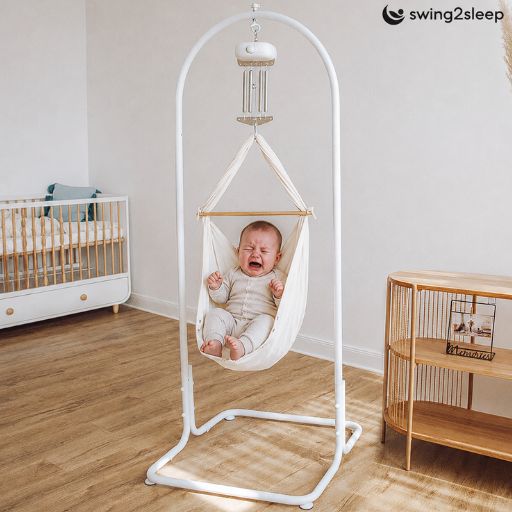
Many parents have very good experiences with letting their baby be rocked to sleep, quite naturally and rhythmically. This is exactly where an automatic baby hammock can help: It imitates the gentle movements from the time in the womb and gives your child a feeling of security and comfort.
Particularly practical: An automatic baby hammock can calm your child when they have trouble settling down, help them fall asleep faster, and often sleep relaxed for longer. If you are unsure, it's worth taking a look at a real swing2sleep experience report.
It can help your child fall asleep more easily and stay calm longer, finally giving you a few relaxed moments again.
Recognizing common mistakes & getting support in time
When your child sleeps poorly, you are probably looking for solutions and doing your best every day. But sometimes it is precisely small, unconscious habits that make your child's sleep even more difficult.
The good news: You can change many things quite easily, without pressure, without rigid rules, but with more understanding for your child and their needs.
Many parents have similar experiences and fall into typical patterns:
- Late bedtime: An overtired child often finds it harder to fall asleep and seems more restless.
- Lots of hustle and bustle in the evening: Stimuli such as light, noise, or activity keep your child awake even though they are tired.
- Unclear or changing routines: Without fixed sequences, your child lacks orientation and security.
- Quick reaction at night: Not every waking moment needs immediate help; sometimes your child finds their way back to sleep on their own.
- High expectations: Sleeping through the night is not a given in the first year, but a matter of development.
Important for you: It's not about doing everything perfectly. Even small changes can have a big impact.
At the same time, there are moments when you should take a closer look. If your child is permanently very restless, can hardly be calmed, or your daily life is heavily burdened, you are allowed to get support.
For example from:
- your pediatrician,
- a midwife,
- early intervention services or a sleep consultant for babies.
Sometimes a small impulse from outside is enough to noticeably relax your situation. You don't have to walk this path alone.
Conclusion: Baby sleeps too little
Your baby sleeps too little, which often feels like an endless cycle of tiredness, uncertainty, and frustration. But you should realize: Sleep is not a state that can be "forced", but a process that you can lovingly accompany.
Your child learns something new every day. They develop, process impressions, and find their own rhythm step by step. And you are exactly the person who helps them with that.
With a little patience, small adjustments in everyday life, and a better understanding of your child's needs, you can change a lot. It's not about perfection, but about finding your common path.
And even if it might not feel like it right now: This phase will pass. Your child will find their sleep and you will experience more peace again.