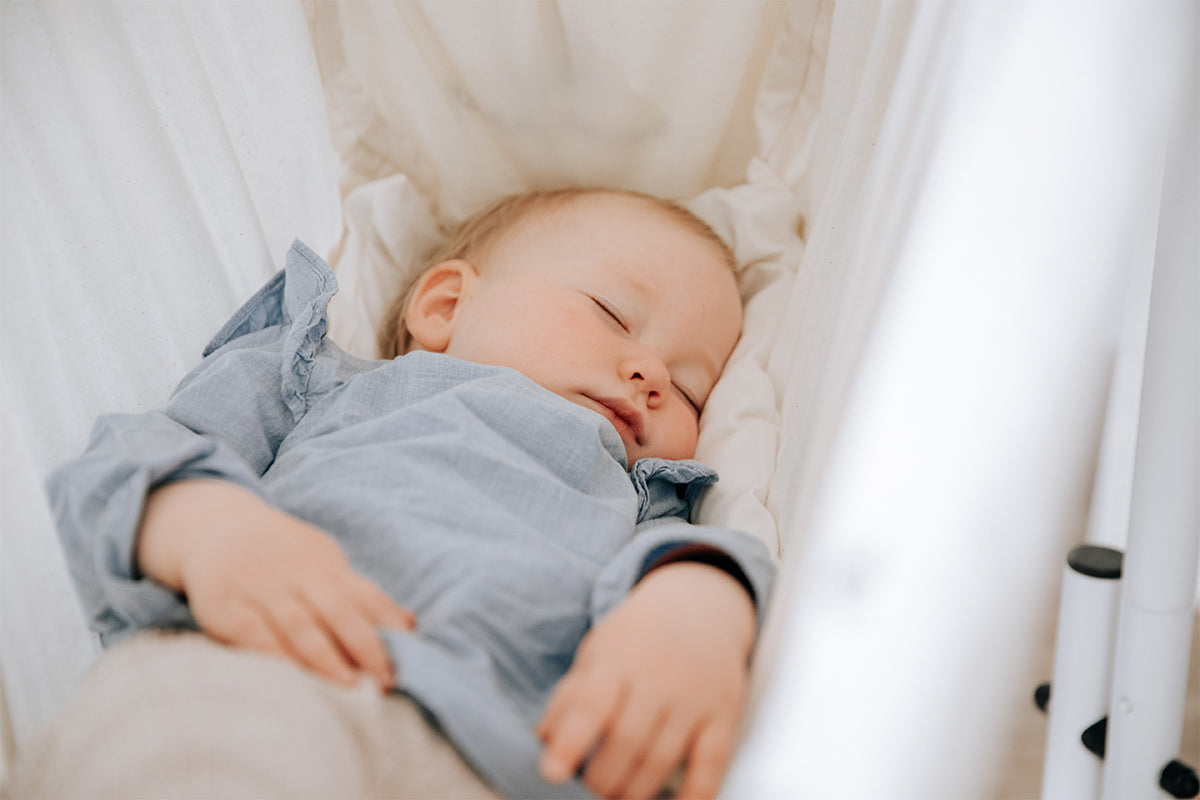


Everything parents should know about baby sleep in the first few months
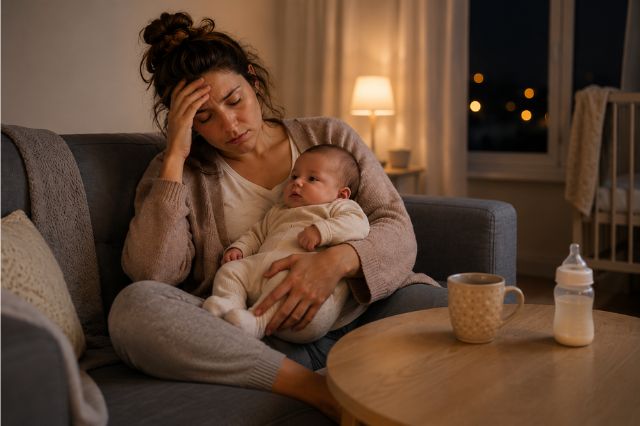
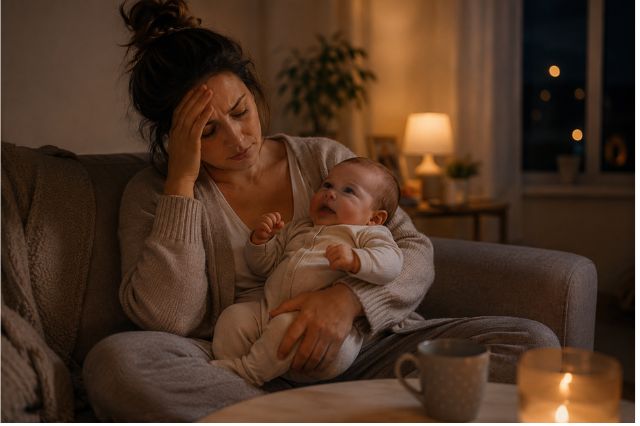
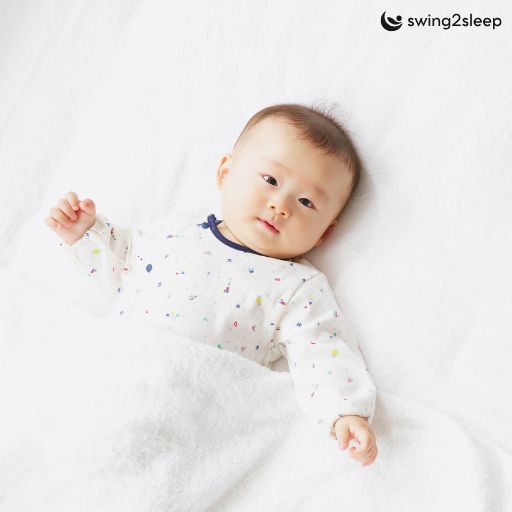
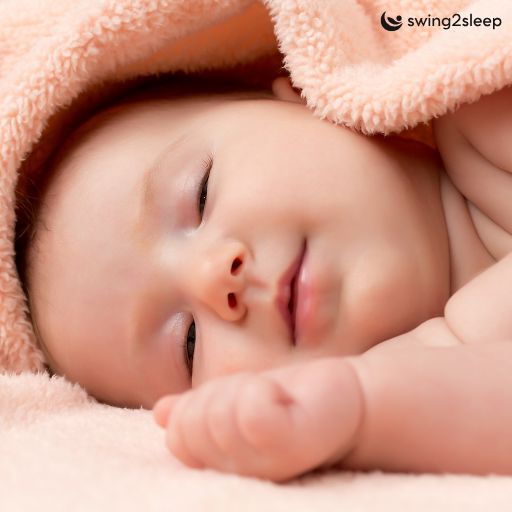
“Sleep, baby, sleep...” - this old nursery rhyme often sounds like a pleading mantra from the throats of overtired parents. In the first period after the birth of their little miracle, they have one thing above all: deep, dark shadows under their eyes. The result of numerous sleepless nights. Although babies sleep a lot in the first months of life, after 9 months in mom's cozy belly, they first have to get used to day and night. But how does baby's sleep develop in the first year of life? And what can you as parents do to support your baby when falling asleep?
1. Baby's sleep in the first 12 months
How much sleep do babies need?
Babies have a very high sleep requirement, especially in the first months of life, although how much varies from child to child: some babies are long sleepers, while others get by with less sleep. In this respect, the little ones are no different from us adults. However, there are average values that you can find in this baby sleep table:

In the first three months, babies sleep an average of 16 to 18 hours a day, spread over four to five naps throughout the day and night. They first have to get used to our colorful world after the cozy darkness in mom's dark belly. Most babies only develop a real sense of day and night from the fourth to sixth month. Until then, they maintain the sleep-wake rhythm they got used to in the womb from the 36th week of pregnancy.
From the fourth to sixth month, their sleep requirement already decreases significantly to approx. 15 hours. They slowly get used to the new rhythm and increasingly shift their sleep to the night by the 12th month of life. Unlike adults, REM sleep (Rapid Eye Movement sleep) predominates in babies. You can find more information about this in our blog post about baby's sleep requirements.
When do babies sleep through the night?
When your little darling sleeps through the night is just as individual as their personal sleep requirement. As you can see from our baby sleep table, most babies sleep through the night from the seventh to ninth month. For some it works as early as the sixth month, while others need a little longer.
By the first year of life, babies can usually sleep through for six to eight hours. As parents, you will have to be patient until you are no longer woken up in the middle of the night. However, there are also things you can do to encourage your little treasure to sleep through the night, which we will go into in more detail below.
Sleep log for babies
We also recommend that you keep a sleep log for your baby. Especially in the first months of life, it helps you to document your baby's sleep behavior and recognize their natural sleep pattern. This usually establishes itself from the sixth month onwards, but for some children it can take longer, which is no cause for concern.
The reasons for your child's problems falling asleep or staying asleep can be varied: Is your baby perhaps sleeping too long at noon and therefore not getting tired in the evening? Or is it perhaps too warm and they are sweating at night? Record your observations and sleep times precisely so that you can quickly get to the bottom of the causes of baby's sleep problems.
In our post “Sleep log for babies” we explain exactly why you should log your baby's sleep and the best way to go about it.
2. How can I support baby's sleep?
Your baby has a mind of its own from the start and decides for itself when it wants to sleep. But there are some things you as parents can do to support baby's sleep. The most important thing is a regulated daily routine so that your child learns that the night is for sleeping.
Tips for healthy baby sleep:
- Ensure a regulated daily routine and stick to fixed meal, play, and sleep times.
- Always place your tired baby in their crib on their back - even during the day. This way they learn that their bed is a safe place.
- Choose a firm mattress and avoid pillows.
- From the sixth month onwards, try to let about four hours pass between the last daytime nap and the first night's sleep so that your baby is tired in the evening.
- Your little darling should have drunk enough and be full in the evening before you put them to sleep.
- Regular evening and bedtime rituals help your child to calm down and provide a sense of security.
- Ensure a pleasant sleeping environment in the nursery. It should be quiet and not too warm (16 to 18 degrees Celsius is ideal). The light should also be dimmed.
- When you put your baby in the crib to sleep, they should be tired but awake. This helps them learn to fall asleep without aids.
However, your baby already has a mind of its own. It decides for itself when it wants to sleep, and it can always happen that it suddenly wakes up at night. Then one thing is paramount: keep calm! Avoid turning on the light if possible and do not take your little darling out of the crib immediately. Instead, speak a few soothing words to your baby or sing them a lullaby.
Please do not get into the crib with your baby if possible and do not try to quiet them down at night with a pacifier or toy. Because then your baby could get used to these sleep aids and will find it harder to fall asleep without them. Even if the diaper is full, changing it at night should be as calm and quick as possible so that your baby is not unnecessarily agitated.

Bedtime rituals for babies
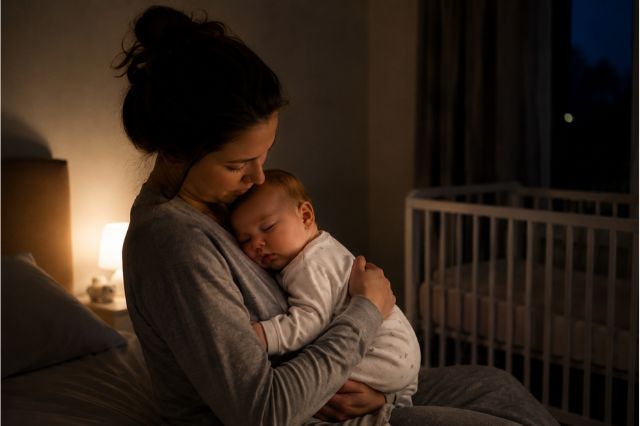
Babies and toddlers have an immense fear of abandonment and prefer to have their parents very close to them. When your baby is supposed to go to bed alone at night, this always means a separation from mom and dad for your little one. They find it difficult to accept this farewell, because babies in particular do not yet understand that their parents are not leaving them alone and are merely in the next room nearby. With a ritual that always follows the same pattern, which you can introduce from the eighth week of life, you make the nightly "farewell" easier for your child and prepare them for bedtime in a playful way.
How you design your ritual is up to you. However, it is important that it calms your baby and prepares them for sleep. Romping around, wild play and a running television are absolutely taboo before bedtime, as they would stimulate your child too much. Instead, you should keep your bedtime ritual as calm as possible and plan about half an hour for it.
Whether you start with the evening personal hygiene in the bathroom, with a children's book on the couch or directly in the nursery is up to you. However, it is a good idea to firmly establish washing, brushing teeth, changing diapers and putting on pajamas in your evening routine. Furthermore, we have the following suggestions for an age-appropriate bedtime ritual:
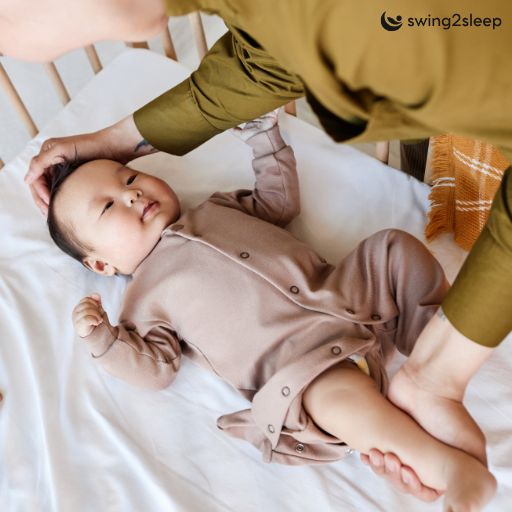
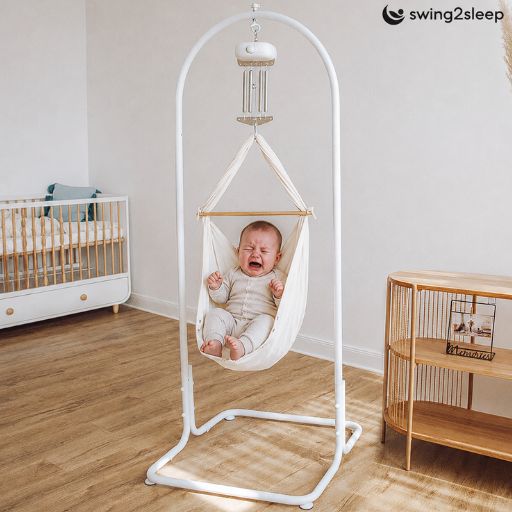
- For the very little ones: Cuddling, breastfeeding and letting them rock swaddled in the automatic baby hammock from swing2sleep.
- Looking at a picture book or reading aloud to promote your child's cognitive skills and language development.
- Singing to them or singing together (with toddlers).
- Winding up a music box or playing an audio book.
What do I dress my baby in at night?
To help your baby find sleep easily, the nursery should not be too warm. The ideal sleeping temperature for babies as well as for adults is 16 to 19 degrees Celsius. It is therefore advisable to check the room temperature regularly with a thermometer. But your baby's sleepwear is also important so that you avoid overheating.
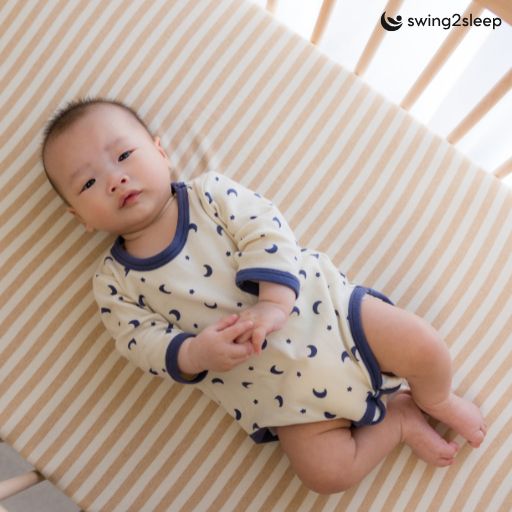
For safe sleep, you should avoid a duvet and rather use a baby sleeping bag. This not only prevents your baby from getting too warm, but also enormously reduces the risk of Sudden Infant Death Syndrome. In a sleeping bag, your baby cannot turn onto their stomach so easily or get under the covers and, in the worst case, suffocate. In addition, your little one feels secure in the sleeping bag and does not get too cold. You can find more tips on choosing the right sleepwear in our blog post "Dressing babies at night".
3. How do I recognize sleep disorders in babies?
Problems falling asleep and staying asleep are relatively normal in babies and toddlers and are usually no cause for concern. As long as you ensure a regular daily routine and specifically support your baby in finding a natural and healthy sleep rhythm, your child's sleep should settle down and improve over time.
However, it can of course also happen that there is a specific reason behind your child's sleep problems. If your child is very cranky or unbalanced during the day because they do not sleep well at night, a sleep disorder could be behind it.
Snoring and apnea
Yes, even babies can already snore quite a bit and wake up their parents with loud sawing, especially if they sleep in the same room (see our post on the topic of "Co-sleeping"). But pauses in breathing, known in technical terms as apnea, are also possible in babies and should definitely be clarified. Usually, a misalignment of the jaw, a cleft lip and palate or enlarged tonsils is the underlying cause.
Night terrors
Night terrors (Pavor nocturnus) usually only occur in children aged two to six, but we would like to include them here because they are among the most common waking disorders. Although they are often harmless, they literally give you as parents a real fright: your baby was just sleeping like an angel, and suddenly they are screaming and crying at the top of their lungs. You can recognize that it is a night terror by the following signs:
- Your baby still seems to be asleep.
- They cannot be woken up, or only with great difficulty.
- They seem anxious, screaming in panic.
- The next day they cannot remember anything.
Usually, the night terror disappears as quickly as it came, as it is often only a symptom of another problem, such as:
- Lack of sleep
- Fever
- Emotional stress

Sleep drunkenness
This problem is not actually a sleep disorder in the true sense, but it occurs very frequently. Because if your baby is suddenly woken up or wakes up in the middle of the night, it often takes around 15 minutes until they can orient themselves. Sleep drunkenness manifests itself primarily through
- disorientation in terms of place and time
- slurred speech (in toddlers and children)
- slowed reactions
Are you looking for more tips on how to improve your baby's sleep? In our Baby Sleep Blog, we regularly publish helpful articles on the subject so that you and your baby can get to sleep better and parental dark circles are at least kept within limits.
If your newborn finds it particularly difficult to fall asleep, you can rock them very gently to sleep with our swing2sleep automatic baby hammocks. And the best part: You can also rent our automatic baby hammocks, because you often only need them for a few months. This also gives you the opportunity to first test how your little one reacts to the vibrations of our automatic baby hammocks.
We wish you and your baby the most restful nights possible and, above all, many sweet dreams!