


How does the sleep rhythm change in the 11th month?
At 11 months, many babies' sleep seems much more established – but things are still in motion. Most babies at this age need a total of about 12 to 14 hours of sleep spread throughout the day, consisting of two naps and a longer night's sleep. The daily routine becomes more structured, and many children increasingly stick to fixed bedtimes more reliably.
What also becomes apparent: your baby's wake phases are getting longer. They stay active longer in the morning and afternoon, which often makes naps a bit shorter or more clearly defined in time. The midday nap also gains importance as it helps the body recover from more intense mornings.
A certain rhythm with two naps – in the morning and afternoon – as well as about 10 to 12 hours of night sleep is typical. Nevertheless, it is completely normal if the sleep phases fluctuate in between. Some babies fall asleep earlier or later at times, or need more sleep on particularly active days to regenerate well.
It remains important that your baby gets enough rest overall and appears balanced during the day. Even if the sleep schedule now seems more reliable – flexibility helps to respond to your child's individual needs, because no two days are the same.
In the 11th month, many babies' sleep becomes noticeably more regulated – fixed naps and a constant night's sleep are no longer a rarity. Nevertheless, it remains important to be adaptable.

What wakes your baby up at night?
In the 11th month, however, baby sleep can become a bit more restless again – even if they have already managed longer nights before. This is completely normal and often a sign that your child has reached a new stage of development.
Babies at 11 months experience their environment more consciously and begin to grasp connections more strongly. This can lead to inner restlessness – especially at night. Small stimuli such as light, noise, or even just the lack of your proximity are sometimes enough to wake the baby up. Experiences of the day or dreams can also continue to work during sleep and make it harder to fall asleep.
Added to this is the growing desire for independence – combined with the ongoing need for security. This tension makes many babies particularly susceptible to interruptions at night. Sometimes your child doesn't wake up for a specific reason at all, but simply seeks orientation for a moment.
How does your baby fall asleep better in the evening?
Settling down in the evening is no longer just a question of tiredness for many 11-month-old babies. Their day is often full of impressions – from crawling to pulling themselves up to the first small social interactions. The brain remains active even when the body would have been ready for sleep long ago.
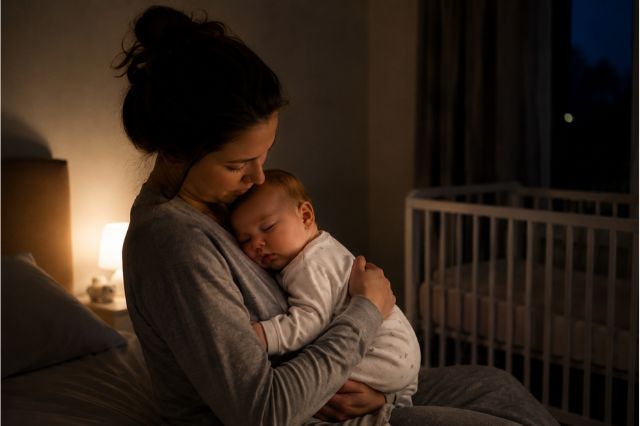
To help your baby switch off more easily, a clear and predictable evening routine helps. Rituals such as darkening the room, a soothing sound, or cuddling together provide orientation – and help with the transition from an exciting day to a relaxed night.
It is important to catch the right moment: if your baby shows the first signs of tiredness such as rubbing their eyes or sudden fussiness, this is the ideal time to start the bedtime ritual. Reacting too late can lead to overtiredness – and that usually makes falling asleep even more difficult.
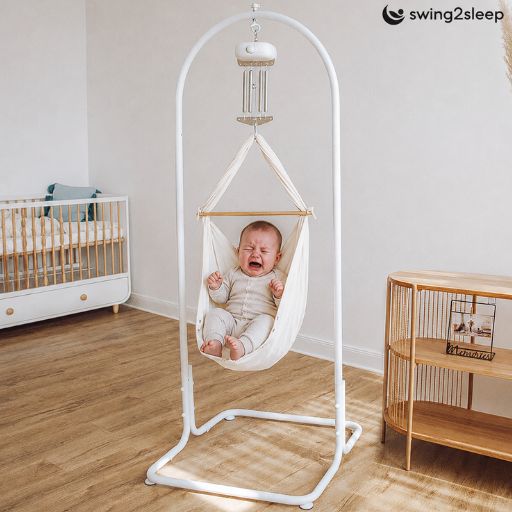
A gentle sleep environment also contributes to your child feeling secure. Steady movements – for example, through an automatic baby hammock motor like the one from swing2sleep – can help them settle down. Their own little bed, always in the same place, also gives many babies security.
The more reliable the routines are, the easier it is for your child to settle into sleep in the evening – especially at an age when everything else suddenly seems so exciting.

What to do if your baby hardly wants to sleep during the day anymore?
Some parents notice in the 11th month that their baby suddenly doesn't want to sleep anymore – even though they are obviously tired. Your child seems fussy, rubs their eyes, but still finds it hard to settle into a midday nap.
This is not uncommon at this age. Many babies are in the middle of a developmental leap, perceive their surroundings more consciously, and feel like they are missing out on something. At the same time, the wake phases are getting longer, which makes it harder to find the right moment to fall asleep.
It often helps to pay very close attention to your baby's tiredness signals – i.e., before they are overstimulated. A quiet environment without too many stimuli also supports settling down. A steady daily routine can also help, because if your baby settles down at similar times, the body adjusts to it.
If falling asleep still doesn't work right away, it is still good to plan a quiet break. A short break in their own little bed or in your arms can be enough to gather new energy. These phases in which your baby hardly settles down during the day are usually temporary. With an attentive eye on the rhythm and loving guidance, daytime sleep often settles back in on its own.
Sources:
(1) Parents.com – Baby Sleep Basics: 7–12 Months https://www.parents.com/baby/sleep/basics/understanding-baby-sleep-7-12-months/
(2) Cleveland Clinic – Sleep in Your Baby’s First Year https://my.clevelandclinic.org/health/articles/14300-sleep-in-your-babys-first-year
(3) KidsHealth – Sleep and Your 8- to 12-Month-Old https://kidshealth.org/en/parents/sleep812m.html