

How does the sleep rhythm change at 12 months?
At 12 months, many babies' sleep rhythm changes noticeably. Some children continue to need two naps a day, while others gradually switch to just one nap. This transition is often gradual – on some days one midday nap is enough, on others a second one is necessary. This is completely normal.
Overall, babies at this age sleep about 12 to 14 hours per day, usually 10 to 12 hours of sleep at night – continuously or with short wake phases. During the day, wake times lengthen significantly, which also changes daytime sleep.
Through new movement experiences and many impressions during the day, baby sleep becomes more individual. Some children suddenly need more rest, others cope well with less sleep. A reliable daily structure helps to support the new rhythm – but every baby develops their own sleep habits in the process.
It is important to pay attention to your baby's signals: signs of tiredness such as yawning or rubbing eyes show when it is time for a break. Whether one or two naps – the decisive factor is that your child appears balanced during the day and the day-night rhythm gradually stabilizes.
The sleep rhythm changes: many babies get by with one nap, others still need two. What matters is what is good for your child.

What wakes your baby up in the twelfth month?
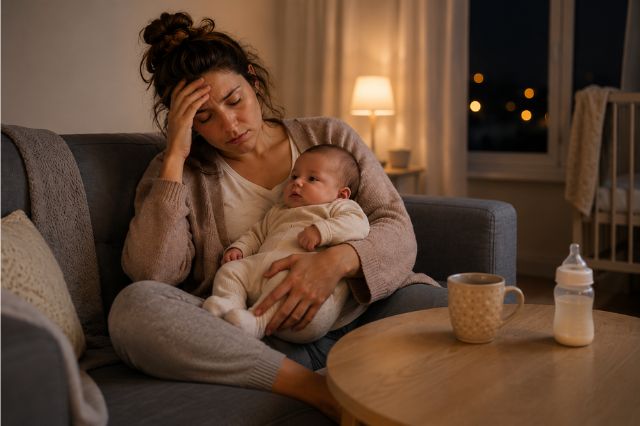
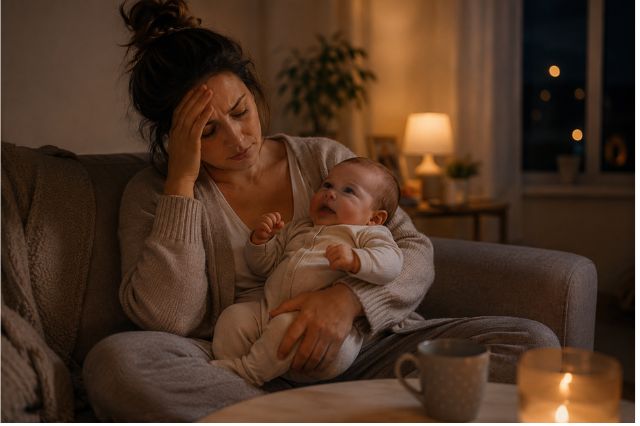
Even if your baby is now 12 months old, it doesn't mean that undisturbed sleep is guaranteed. Many parents observe restless nights again in the twelfth month – often accompanied by frequent waking, fussiness, or problems falling asleep. Behind this is often a so-called 12-month sleep regression, a phase that many babies go through at this age.
This event coincides with a leap in development. Your baby might just be learning to walk, starting to say their first words, or showing more independence in everyday life. Such milestones also affect sleep behavior. The brain is more active, processes impressions more intensely – especially at night. During this time, it can happen that your baby wakes up more often or finds it harder to fall asleep.
Also teething is a typical companion of this month of life. When the next teeth break through, this can lead to nightly restlessness. Some babies wake up several times throughout the night – others sleep worse, even though they are tired.
In addition to physical causes, emotional experience also plays a larger role. Many babies now develop stronger separation anxiety. They don't want to fall asleep alone or seek your proximity at night. This is an important part of social and emotional development – and a reason why sleep sometimes gets mixed up in this phase.
Even if the sleep rhythm of babies at this age can falter again, it is usually temporary. Patience, empathetic guidance, and a routine that remains as consistent as possible help your baby feel safe – and find their way back to a calmer sleep.
How can you support your baby in falling asleep?
At 12 months, your baby is not only more active but also more sensitive to changes in the daily routine. A clearly structured evening can therefore be enormously helpful in settling down and falling asleep more easily. Because the more the day is characterized by movement, new impressions, and small frustrations, the more important a reliable transition into the night becomes.
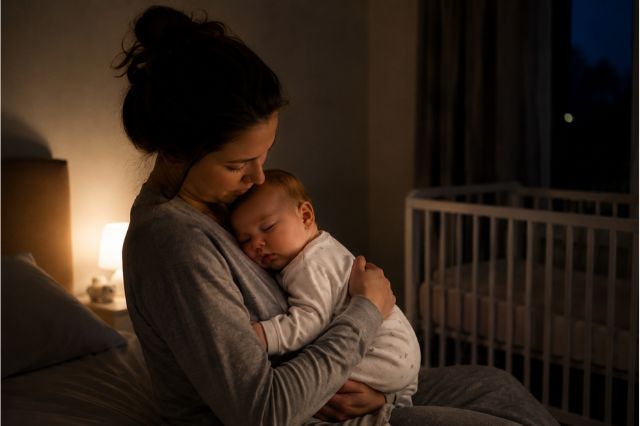
Fixed rituals have proven effective – such as darkening the room, a quiet lullaby, or cuddling together. They give your baby security and signal: now the rest phase begins. The sleep environment should also be as low-stimulus as possible. Dimmed light, a familiar smell, and a fixed sleeping place support your baby in switching off.
Also, pay attention to the right timing: when your baby shows the first signs of tiredness – such as yawning, rubbing eyes, or restlessness – this is the best moment to start the bedtime ritual. Reacting too late can lead to overtiredness, which makes falling asleep more difficult and often leads to waking up at night.
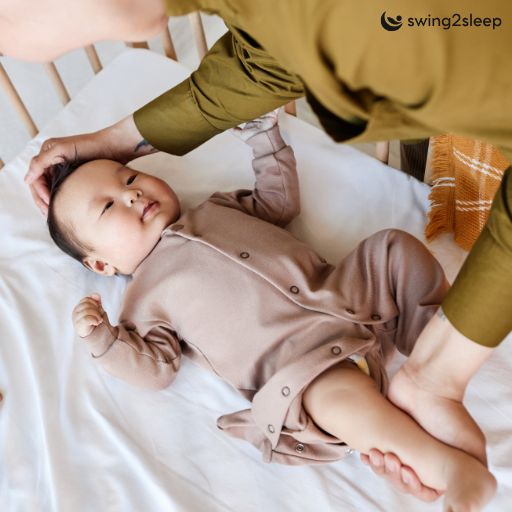
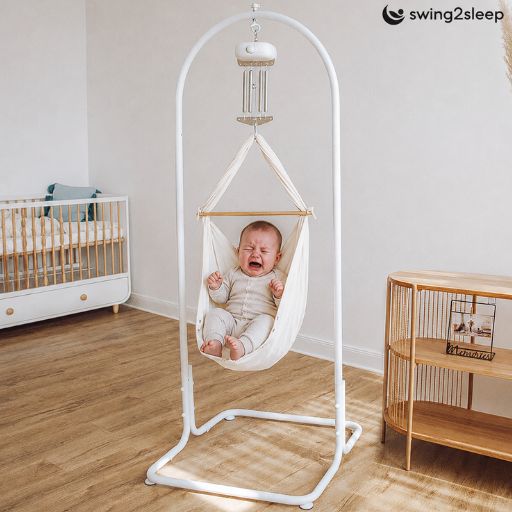
Steady, soothing movements are also often helpful in this phase. An automatic baby hammock motor – such as those offered by swing2sleep – can facilitate the transition from a waking to a sleeping state. Especially for babies who find it hard to settle down in the evening or wake up more often at night, the gentle movement provides relaxation and a familiar feeling.

How does the transition to toddlerhood affect sleep?
At 12 months, many babies are on the threshold of toddlerhood. They discover their environment even more actively, show significantly more independence, and increasingly demand what they want and when – also when it comes to sleep. These changes can lead to the sleep rhythm shifting again.
In this phase, it is completely normal for sleep behavior to change. Some babies suddenly sleep more restlessly again, even though they previously slept through without problems. Others suddenly need less sleep or only take one nap a day. The previous rhythm no longer quite fits – a sign that new needs are emerging.
Especially the transition to a single midday nap can be challenging. Some babies are still tired in the morning, others hold out surprisingly long but then seem overtired from the late afternoon onwards. The nightly sleep phases also sometimes change – falling asleep takes longer or the baby wakes up more often at night.
Parents often report fluctuating situations during this time. One day the baby sleeps deeply and soundly at night, the next everything is different. This is nothing unusual at the age of 12 months. Babies in this stage of life primarily need orientation, security, and a daily structure that is tailored to their individual wake phases.
Sources:
(1) Happiest Baby – First Year Sleep Schedule https://www.happiestbaby.com/blogs/baby/first-year-sleep-schedule#baby-sleep-schedule:-12-months
(2) Raising Children – Baby sleep: 2–12 months https://raisingchildren.net.au/babies/sleep/understanding-sleep/baby-sleep-2-12-months
(3) Parents.com – Understanding baby sleep (7–12 months) https://www.parents.com/baby/sleep/basics/understanding-baby-sleep-7-12-months/
(4) Babyschlummerland – Baby 12 Monate: Schlaf https://www.babyschlummerland.de/baby-12-monate-schlaf/