


At six months, your baby's sleep changes significantly once again. Many 6-month-old babies now sleep 6 to 8 hours at a time during the night, even if they wake up occasionally in between. The day-night rhythm continues to stabilize, and the days are characterized by longer wake windows and more targeted activity phases.
Typical for this age are two to three naps a day – usually in the morning and afternoon. The total sleep requirement is now around 12–15 hours of sleep per day, with each child developing their own rhythm. Some babies sleep shorter during the day and make up for the sleep at night, others need more rest spread over the day. Everything is possible – and completely individual.
Falling asleep also changes: many 6-month-old babies now need a little more time to settle down. Stimuli from the day, new motor skills, or starting solid foods can influence the transition to sleep. Therefore, it is helpful to pay attention to a clear structure in the daily routine already now – so that your baby knows when it is time to sleep.
At six months, baby sleep becomes more structured: the day-night rhythm stabilizes, naps follow a clearer pattern – but every baby develops quite individually.

Why is sleeping through the night sometimes difficult again?
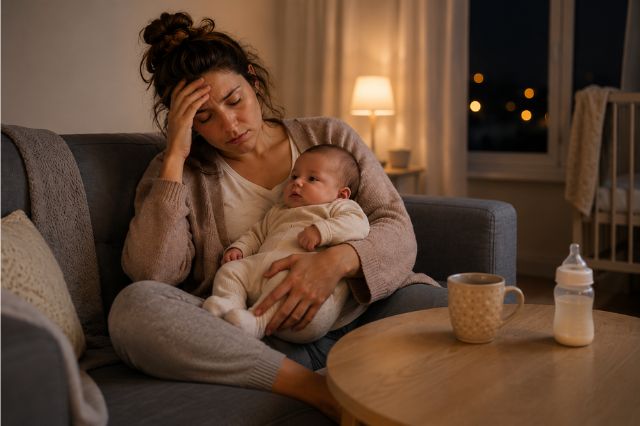
Even if a more stable sleep rhythm has developed for many babies at six months, restless nights can suddenly occur again. Parents often report that their baby wakes up more frequently at night – even though they had previously slept through for longer periods. This phenomenon is often referred to as a so-called sleep regression.
Behind these changes is usually not a step backward, but a typical developmental step. At this age, a restructuring of the sleep phases takes place: baby sleep becomes less deep, and the transitions between phases become more conscious. So your baby doesn't wake up more often than before – they just notice the waking more clearly and sometimes need help to fall back asleep.
In addition, many babies at this age increasingly process emotional and sensory impressions from everyday life. New faces, sounds, first experiences with solid foods, or simply a more active daily routine can lead to the baby sleeping more restlessly at night or seeking closeness more frequently.
Physical changes such as starting teething or learning new movements – e.g., rolling over or pushing up – can also affect night sleep. These processes often take place exactly at night when the nervous system processes the most. It is important not to see the nightly interruptions as a problem, but as a sign that your baby is continuing to develop. With patience, attention, and reliable support, this phase can be bridged well.
What supports your baby when falling asleep and during the night?
With the sixth month, a phase of greater independence begins for many babies – at the same time, falling asleep often remains a sensitive moment. At this age, many children find it difficult to settle down after an exciting day. Therefore, it is helpful to make the evening as calm and predictable as possible.
A clear routine – for example, consisting of diapering, gentle attention, and a recurring sleep ritual – conveys security. Rituals signal to the baby: now the rest period begins. Some parents rely on a short sleep melody, a dimmed night light, or gentle rocking.
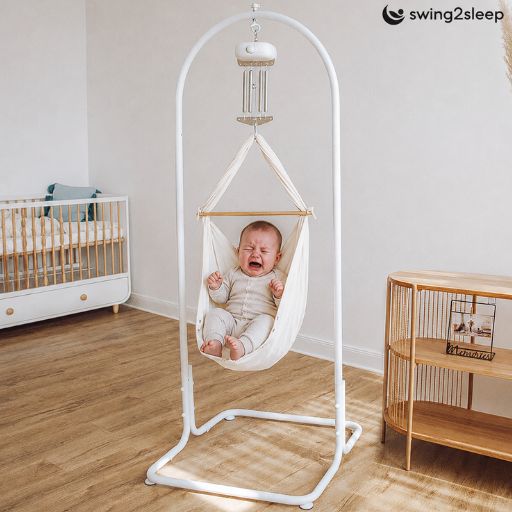
Especially in phases when your baby wakes up more often at night or has trouble falling asleep, a steady, rhythmic movement can help. Many parents fall back on proven sleep aids – such as an automatic baby hammock motor, as also offered by swing2sleep. The gentle up-and-down movement has a particularly calming effect on many babies.
It is also important to make the sleep environment as low-stimulus as possible. A darkened room, constant sounds (e.g., white noise), and a pleasant temperature support inner calming – and help the baby to settle into sleep.

How does emotional development affect sleep?
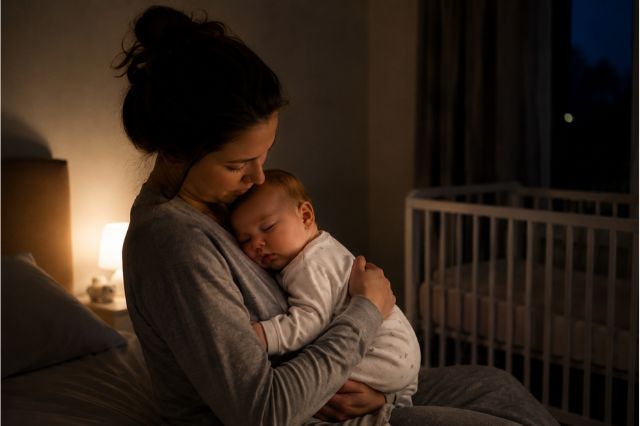
At around six months, many babies go through a phase of intense emotional development. They recognize familiar people more consciously, begin to show stranger anxiety, and specifically seek closeness. This can also influence sleep – especially at night.
If your baby has a harder time settling down in the evening or wakes up more frequently at night, the increased need for security is often behind it. Many babies want to make sure that a familiar person is nearby – and can only be calmed with closeness, voice, or physical contact.
This is not a step backward, but part of a healthy attachment development. Your baby is beginning to understand that they do not always need direct physical contact to feel safe – a learning process that takes time. Recurring rituals and reliable reactions help them to develop trust bit by bit.
In this way, emotional maturation becomes an important building block on the way to self-regulated sleep behavior – even if it can become more restless in between.
Sources:
(1) UCSF Benioff Children’s Hospitals – Your Baby at 6 Months https://www.ucsfbenioffchildrens.org/education/your-baby-at-6-months
(2) HiPP – How much sleep does my baby need? https://www.hipp.de/beikost/ratgeber/babys-gesundheit-entwicklung/schlafen/wie-viel-schlaf-braucht-mein-baby/
(3) Kindergesundheit-info.de – Baby sleep (0–12 months) https://www.kindergesundheit-info.de/themen/schlafen/0-12-monate/babyschlaf/
(4) KidsHealth – Sleep and Your 4- to 7-Month-Old https://kidshealth.org/en/parents/sleep47m.html