

How does sleep behavior change at 8 months?
At the age of 8 months, your baby goes through another phase of change – and this also affects sleep. Although many babies at this age have already become accustomed to a structured daily routine, the next big developmental step often causes more restless nights.
Typical for this month of life is that most babies now take two fixed naps per day – one in the morning and one in the afternoon. The previously occasional third nap is dropped by many, as the waking phases become longer and more active overall. An 8-month-old baby is often awake for 2.5 to 4 hours during the day before becoming tired again.
Night sleep also changes: while many babies generally sleep through the night, they wake up more frequently – for example, because they suddenly perceive a new sound or need to process what they experienced during the day. Babies at this age dream more intensely, are often more motor-active, and process new impressions, such as when they are just starting to crawl or sit up independently.
All these changes can cause your child's rhythm to fluctuate. However, the sleep requirement usually remains constant at around 12 to 15 hours of sleep per day, distributed between daytime sleep and night.
At 8 months, the sleep behavior of many babies changes noticeably – longer waking phases, new skills, and inner restlessness often disrupt the previous rhythm a bit.

Why is your baby suddenly sleeping worse again?
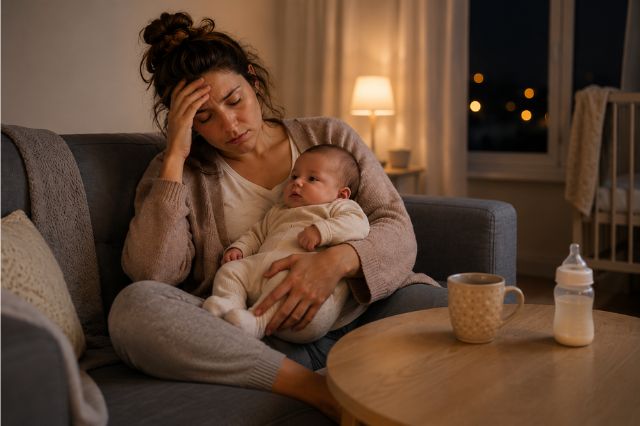
If your 8-month-old baby suddenly sleeps more restlessly or wakes up more often at night, this is usually no cause for concern. Many babies at this age experience a so-called sleep regression – a phase in which their sleep behavior temporarily deteriorates, even though it was stable before.
The reasons for this are manifold: on the one hand, your baby is currently developing new motor skills, such as crawling or sitting, which they must process mentally and physically. Many babies have difficulty settling down in the evening during such phases because they are still "in motion" internally.
On the other hand, emotional perception also changes. Separation anxiety occurs more frequently now – your baby begins to perceive more consciously when you are not nearby. Especially at night, this can lead to frequent waking and the need for closeness.
In addition, physical factors play a role: teething begins for many babies at this age or progresses. The first little teeth sometimes cause pressure or discomfort – even if nothing is visible on the outside yet. All these factors ensure that baby sleep at 8 months is often less predictable. However, with a little patience, loving support, and a stable sleep routine, this phase can be bridged well.
What helps your baby fall asleep during this phase?
A regulated daily routine with appropriate rest phases helps your baby relax more easily in the evening. If the waking phases during the day are too long, over-tiredness can quickly occur – which makes falling asleep in the evening even more difficult. Therefore, pay attention to the subtle signals that show your baby is getting tired: yawning, rubbing eyes, or fussiness are classic signs of tiredness.
The sleep environment also plays an increasingly important role now. Many 8-month-old babies react more sensitively to noise or light conditions. A quiet environment, dimmed light, and few distractions help them to relax.
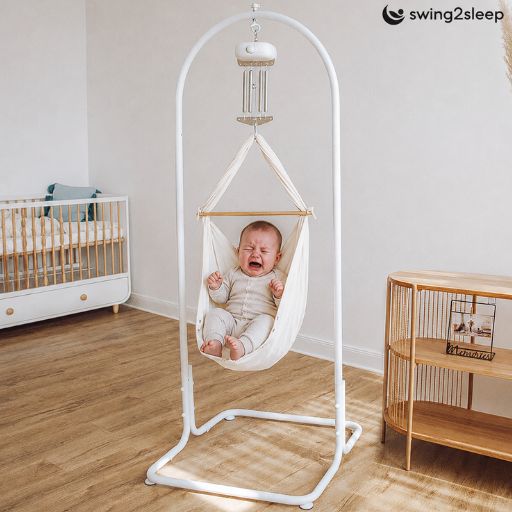
In addition, it makes sense to use sleep aids consciously and specifically. A gentle or even monotonous soundscape – such as white noise or quiet background music – can give your baby a familiar feeling. Steady movements such as light rocking or gentle bouncing can also have a calming effect. Products like the automatic baby hammock motor from swing2sleep support many parents in exactly such moments because they offer a constant and gentle sleep aid when the baby has a harder time settling down.
One thing is particularly important: stay patient. Your baby is currently processing many impressions – and needs your reliable closeness to find their way in their new sleep rhythm.

How can you gently support nighttime waking?
When your 8-month-old baby wakes up at night, one thing is above all important: stay calm. Many babies at this age still need support to find their way back to sleep after short waking phases – but that doesn't automatically mean you have to intervene actively.
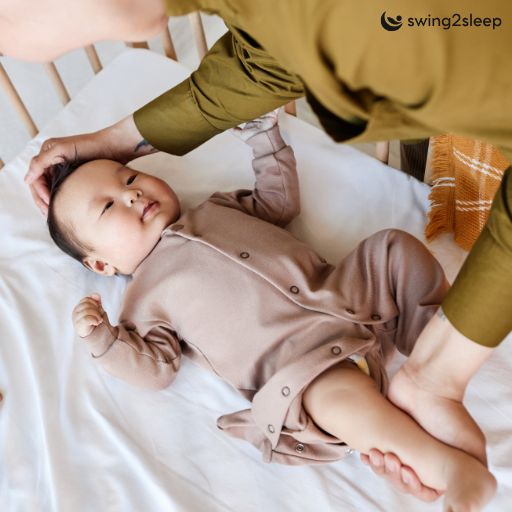
A first tip: wait a few moments at first. Some babies at this age find their way back to night sleep independently if they are not immediately spoken to or taken out. If your baby does not calm down on their own, small gestures often help – a soothing whisper, gentle stroking, or placing your hand on their belly.
Avoid turning on the light or picking up your baby directly if possible. Such stimuli signal that the night is over – which makes it harder for your child to fall back asleep. Instead, keep the environment as dark, quiet, and familiar as possible.
A recurring ritual can also help: if you play a certain melody for your baby before they fall asleep or say a few quiet words, exactly that can provide security at night – and facilitate the transition back to sleep.
Sources:
(1) Sleepwise Consulting – 8-Month-Old Sleep Schedule https://sleepwiseconsulting.com/8-month-old-sleep-schedule/
(2) Babyschlummerland.de – Baby 8 Monate: Schlaf https://www.babyschlummerland.de/baby-8-monate-schlaf/
(3) The Baby Sleep Site – 8 Month Old Baby Schedule https://www.babysleepsite.com/schedules/8-month-old-baby-schedule/