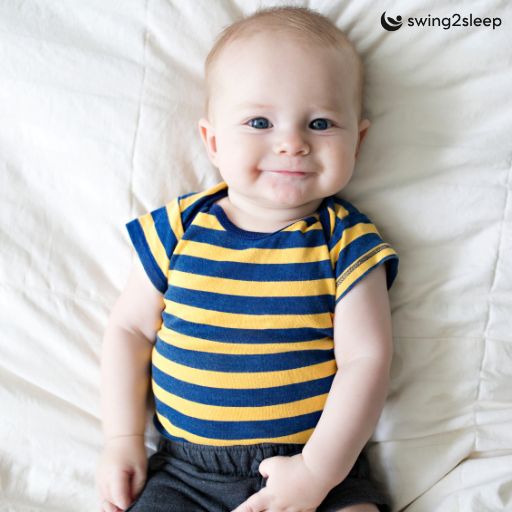
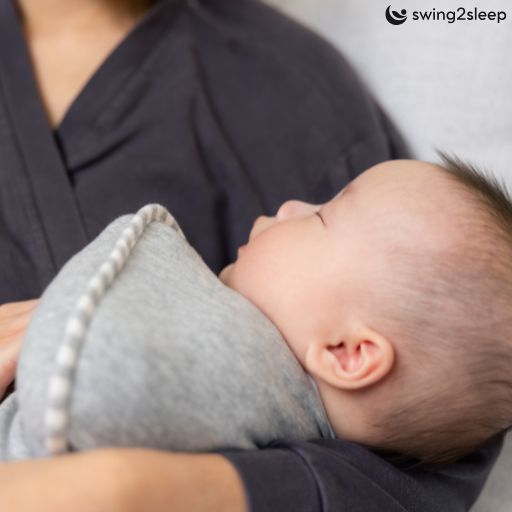


Small children need age-appropriate bedtime rituals. This gives them stability and security in the otherwise often unpredictable life of adults. Especially for children who have sleep problems or are generally very sensitive, it is important to introduce appropriate sleep rituals as early as possible. But what could these look like in practice? And what else needs to be considered?
Why is a bedtime ritual so important?
When it's time for the baby to go to bed, it always means a separation from Mom and Dad, however short it may seem to us as adults. Babies do not yet understand that their parents have not left them, but are sleeping in the next room.
Therefore, the evening farewell is difficult for children to accept, not only as a baby but also later when they have grown into toddlers. The child experiences the fear of being left alone and excluded.
It is therefore worth getting the child used to a consistent, age-appropriate bedtime ritual at an early stage. In this way, they are playfully prepared for the upcoming bedtime and also lose their fear through loving attention.
Free Download: Baby Sleep Guide
Would you first like to get an overview of your baby's sleep patterns yourself? A sleep log can help you here.
With the help of a sleep log, please observe your baby particularly closely for at least 2 weeks. Note down when your baby sleeps, how they sleep, and what happened during the day.
You might quickly find that your baby has a particularly hard time falling asleep when visitors have come over or you've had a turbulent day, e.g., shopping. Here, the solution may be very close at hand, namely by trying a more relaxed daily routine.
Does the sleep log allow no conclusions to be drawn about the frequent evening restlessness and are you at the end of your tether? Then seek help!
It doesn't matter who you turn to, it's best to take your sleep log with you. This gives the doctor or the sleep coach the chance to get an immediate overview of the last few weeks.
What exactly is a ritual?
A ritual is characterized by the fact that it is repeated in the exact same form. You will quickly notice when the introduction of the ritual takes effect. Should you ever forget it, your offspring will loudly demand it. The ritual is a predictable constant for your child.
They then know when bedtime is approaching. This is much easier to understand than if the day were to end suddenly and abruptly. The child will soon love the ritual and insist that it is followed exactly.
Clear structures and knowing what comes next have a relaxing effect on the child. This makes them calm, and the likelihood that they can sleep well increases.
What could an age-appropriate bedtime ritual look like?
Ideas and possibilities are plentiful. However, it should be noted that your ritual should not overstimulate the child. Wild play or boisterous romping around will tend to hype them up.
The bedtime ritual should therefore be a bit quieter. In addition, the ritual should be appropriate for the child's age. Plan about half an hour for it. Where the ritual begins doesn't matter: in the bathroom, in the nursery, or in the living room. The end point, however, should always be the same: the crib.
It is also important that you create conditions that make it easier for the child to fall asleep. For example, the television should be switched off at least an hour before bedtime – for the very little ones, it is best avoided altogether.

Below you will find a few ideas on how you could design a bedtime ritual:
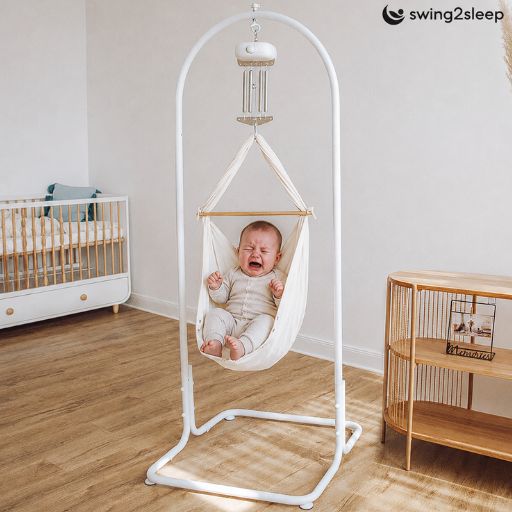
- Cuddling, breastfeeding, letting the child rock swaddled in the automatic baby hammock, or winding up the music box. These bedtime rituals are particularly suitable for the very little ones.
- Looking at a picture book together.
- Reading a story aloud. Reading aloud has a positive effect on your child's mental development, as it stimulates the imagination and promotes language development.
- Singing something or letting the child listen to an audio play. Many children still remember the songs that were sung to them as adults.
- The child could also say goodbye to all their stuffed animals and dolls individually in the evening before going to bed.
- Or you can simply tell your child what you experienced during the day. Even if they don't understand your words yet, they still like the sound of your voice and feel safe and calmed by it.
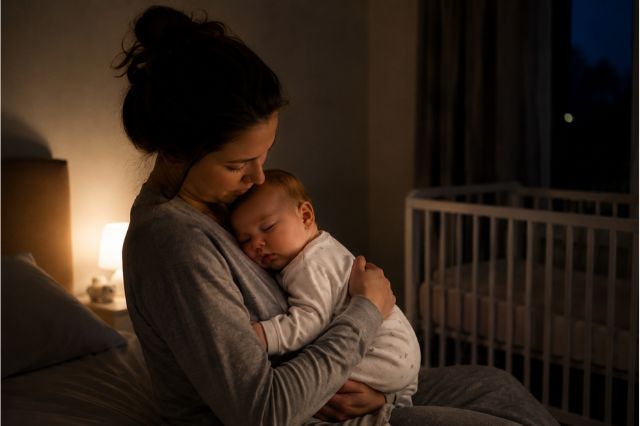
After a soothing massage or a relaxing bath, you change rooms once more. You go into the darkened, cozy bedroom and thus to the place where you and your baby will lovingly say goodbye to each other: perhaps for 2-3 hours.
In the following video, a young mother describes how she designs the daily ritual
In the following video, Kathrin describes how she designs the daily ritual.
Daily personal care as a bedtime ritual
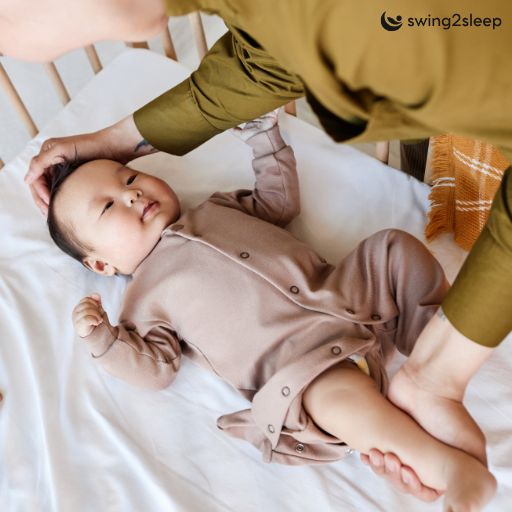
Brushing teeth, washing, combing, and changing diapers can also be integrated into the evening ritual. This can also include changing clothes: babies don't actually need pajamas; theoretically, they could just as well be put to sleep in a romper. Nevertheless, the evening putting on of pajamas is a ritual that unmistakably announces bedtime.
From when can you introduce a sleep ritual?
As early as 8 weeks, babies can be accustomed to bedtime rituals and gently prepared for bedtime. By the way, you should also stick to your bedtime rituals when you are on the go. This gives your baby or toddler additional support and security in unfamiliar surroundings.

Time and again, we hear from parents that they have found an unbeatable bedtime ritual that is highly effective, especially for colicky babies: they place their swaddled babies in the swing2sleep before bedtime. Through the gentle rocking and the confinement in the automatic baby hammock, the baby feels snugly protected and safe, just like in the womb. This puts the children in a much better mood for falling asleep.
These parents swear by our automatic baby hammock. See for yourself and test the swing2sleep now.
As a parent, you don't ask yourself about the meaning of your life. You watch it sleep every evening. The swing2sleep team wishes you quiet and restful nights.
Frequently asked questions about rituals and sleep routines for babies
When to start rituals with babies?
Even from the first weeks of life, babies benefit from recurring routines. Rituals do not have to be fixed or extensive at the beginning. Gentle repetitions such as dimmed lights, quiet voices, or a consistent sequence before sleeping are completely sufficient.
From when can you start a sleep routine for babies?
A simple sleep routine can be introduced from about the sixth to eighth week of life. At this point, many babies begin to develop initial patterns between day and night. It is important that the routine remains flexible and is oriented towards the baby.
When should you start with sleep accompaniment?
Sleep accompaniment makes sense from birth. Babies cannot regulate themselves and need closeness, security, and support when falling asleep. Sleep accompaniment strengthens basic trust and is not a sign of spoiling.
When should you introduce bedtime for a baby?
A fixed bedtime usually only develops over the course of the first few months. From about three to four months, you can slowly orient yourself towards a time window. The decisive factor is the baby's signs of tiredness, not the time.