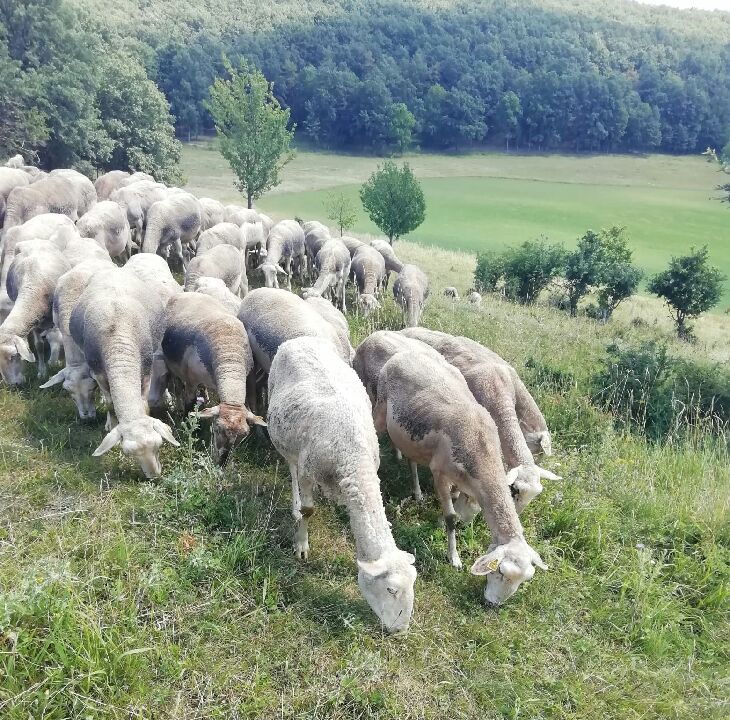


Mulesing is a technique in which sheep suffer terrible agony. As is so often the case, this is the result of ruthless profit maximization. We at swing2sleep say no to this form of exploitation of our fellow creatures. Therefore, only mulesing-free wool is processed in all swing2sleep hammocks.
swing2sleep relies on mulesing-free wool
Can you still buy lambskins, sheepskins or other wool products without hesitation, or are you possibly supporting the suffering of animals?
Unfortunately, there is no general answer to this, because there are significant differences in the extraction of wool.
Most people would probably not suspect any great cruelty to animals behind the shearing of sheep. After all, cutting hair doesn't hurt either.
Basically, this idea is obvious, but reality all too often looks a little different. In the wool industry, sheep shearing is not exactly gentle with the animals. It has to be fast, so the animals are not handled with kid gloves.
What many do not know: In many cases, so-called mulesing is used, and this process is indeed very painful for the animals.

What exactly is mulesing?
Mulesing is common practice, especially in Australia. Merino wool is popular, not only for baby clothing, but also in the outdoor sector or as a sweater, hat or scarf.
How much animal suffering is associated with the production of merino wool is largely unknown, yet mulesing is used for 90% of the merino wool produced.
In order for the sheep to supply as much of the popular wool as possible to cover the high demand, they are a special breed with a particularly large number of skin folds. The larger the skin surface, the greater the wool yield. However, these warm, moist skin folds are a popular nesting site for flies, which lay their eggs there. The genital and anal regions of the sheep are particularly affected. There, the eggs mature into maggots in the skin, which feed on the tissue of the host sheep after hatching, among other things. In doing so, they can cause severe inflammation, which is not only extremely painful but can also be fatal.
During mulesing, the skin folds around the anus and tail are cut away from the sheep with a knife. This usually happens without anesthesia, and wound care is also omitted. Maggots are then no longer supposed to be able to settle on the scarred tissue, but fly infestation can still occasionally occur in the untreated, open wounds.
Mulesing is therefore a painful mutilation of sheep that is criticized internationally – and we think rightly so!
How can mulesing be avoided?

Fortunately, not everywhere is as brutal as in Australia. In New Zealand and South Africa, for example, mulesing is prohibited.
One solution could be to simply breed the sheep differently, namely in such a way that the skin folds are not quite so pronounced. It would also be possible to regularly trim the area around the anus. But of course, that costs time and money.
What can you do as a consumer?
If there are doubts about which production the wool comes from, you can assume with a high degree of probability that mulesing was used. In such a case, you might prefer to refrain from a purchase.
Only wool that is clearly labeled as mulesing-free can actually be bought without hesitation.
What about the wool used at swing2sleep?
In our dream2sleep hammock there is a mattress filled with virgin sheep's wool. You can rely on the fact that the wool for our virgin sheep's wool mattresses does not come from mulesing farming.
The pictures in this article come from the small farms we work with. As you can see, the sheep there are kept and treated in a natural and animal-friendly way. So you can buy our products with a clear conscience.
Here you can find, for example, our virgin sheep's wool mattress, which warms in winter and cools in summer.
Your Maik Schwede