

Long before the first words cross their lips, your baby is communicating with you. But sometimes it's not that easy to understand their language: What does the baby mean when they arch their back, turn their head away, or clench their little hands into fists? What are they trying to tell us? In this post, we summarize for you why your baby kicks and fidgets so much and how you can interpret their other body language.
Baby fidgets and kicks a lot: Babies speak without words
Babies cannot speak yet and therefore communicate through their body language. There are several gestures that help you understand your baby even without words. With careful observation, you will notice that they have an impressive vocabulary at their disposal. All you need is a little practice and an attentive eye.
That is why it is so important for parents to learn baby gestures and know how to interpret them. In this article, we summarize for you which movements are typical for babies and what they want to express with them.
Your baby turns their head away
Babies turning their head away is one of the most common and easiest to interpret gestures in your baby's repertoire. It is basically self-explanatory and remains part of our body language throughout our entire lives. When the baby turns their head away, they simply want to be left alone for a moment.
Respect this wish so that your baby can find their way to sleep. Give your baby a break, be quiet, and let them sleep peacefully.
From the age of six to eight months, this gesture gains an additional meaning when the baby experiences stranger anxiety. They may then be afraid of the person in question and try to avoid them with this gesture. Now your baby needs a little distance and your secure support. Carry them in your arms for a while to calm them down.
Your baby kicks their little legs a lot
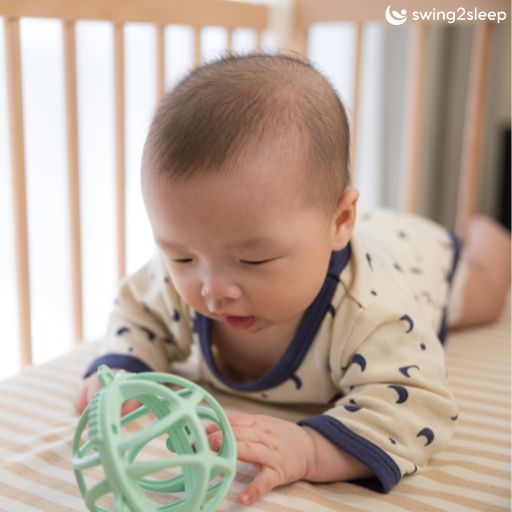
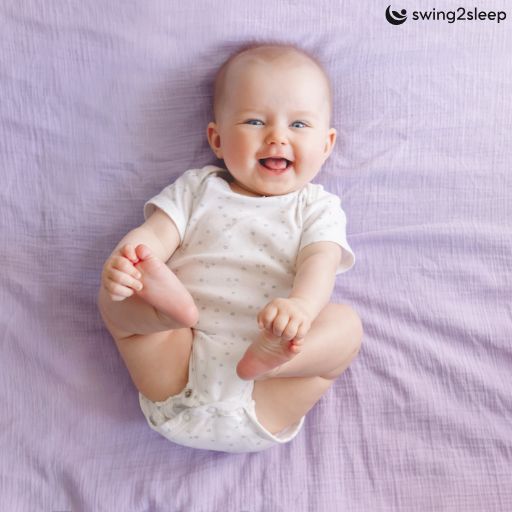
Active babies normally kick their legs frequently. This develops the muscles, and the baby discovers themselves playfully. If your child laughs while doing so, it actually only means good things: they are doing great and feel perfectly comfortable.
However, it could also be that the baby is not laughing, but shows an uncomfortable facial expression or even cries. Then they might have tummy ache or are bored, but perhaps they are just looking for your closeness. Your infant might need to burp if they have just been fed.
Uncoordinated kicking can also be an indication of tiredness. On its own, kicking doesn't have to have any meaning at all. Often babies just kick for no reason. Pay attention to the situation, the facial expression, and the sounds your baby makes while doing it. There are many different scenarios surrounding kicking.
Is your baby active and finding it hard to fall asleep? Then the automatic baby hammock from swing2sleep could help. It offers your baby a cozy nest where they can settle down better and be rocked to sleep with gentle up-and-down movements. Feel free to take a look at our wonderful hammock and see the calming effect on your baby for yourself.

Your baby is pulling up their legs
If your baby is lying there with pulled-up legs and shows their discomfort by shouting or crying, you can actually assume that they are in pain – perhaps even in their tummy.
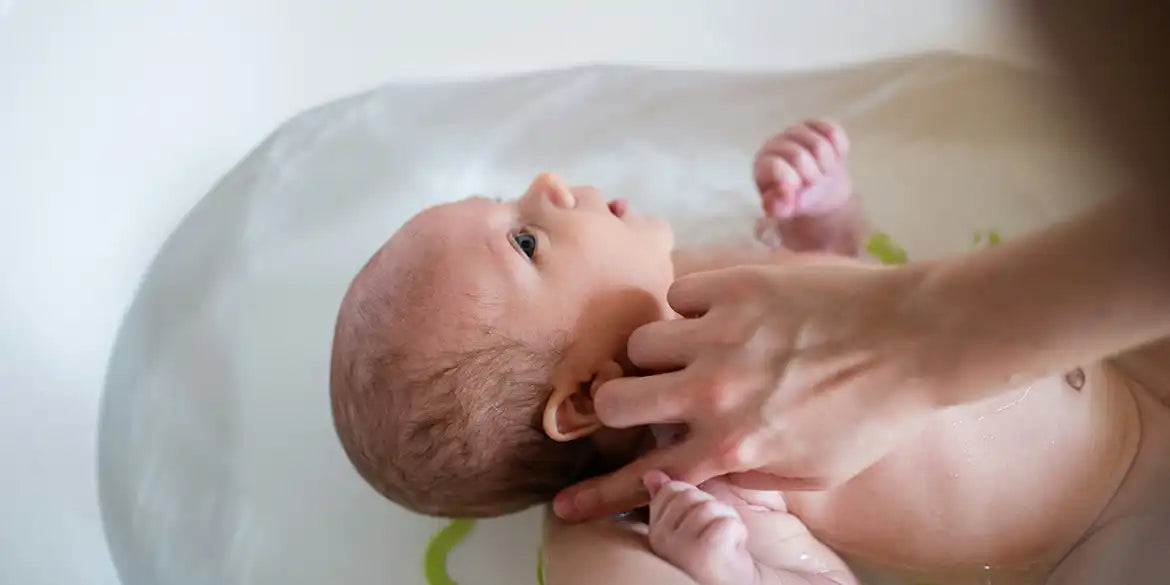
An arched back can also indicate this. In such a situation, a wonderfully relaxing massage can provide relief. Bathing or carrying them in a sling could also be helpful now.
If your baby seems to have repeated tummy aches, you should discuss the matter with your pediatrician.
Your baby has a relaxed posture
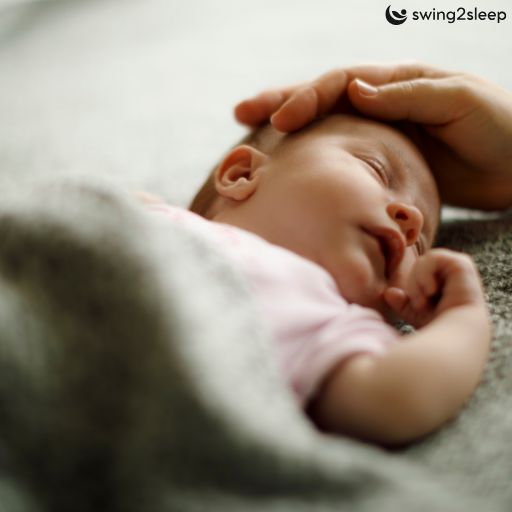
You can easily tell that your baby is relaxed by their posture. A relaxed posture is characterized by a gaze turned away, loosely closed fingers, and slightly bent hands.
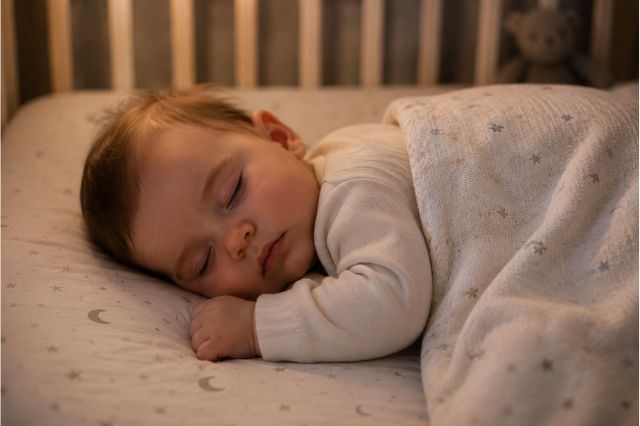
Great! It seems as if your baby is currently completely content. It is best to simply leave them in peace and not try to entertain them. They might just need a little break right now, but feels truly comfortable at the moment.
Your baby is fidgeting, crying & has their hands tightly closed
If your baby is restless, this can manifest through fidgeting, crying, and closed hands. This behavior can have several causes. What is certain is that your baby is currently anything but content with themselves and their environment.
Something seems to be bothering them. Perhaps they are anxious, perhaps they are in pain. Either way, it is best to pick them up, carry them around and soothe them. They may also calm down during breastfeeding.
Another tip is singing: If your baby hears your voice, it can help in many cases.
This behavior can be particularly exhausting at night: however, your baby certainly doesn't want to annoy you, but is in pain, dissatisfied, or wants attention. Take care of your newborn so that they can slowly calm down and fall back to sleep.
Your baby rubs their eyes and cries
If your baby is very restless, they quickly start to cry, make their body stiff, and rub their eyes. Such behavior is a clear sign of tiredness. In fact, many babies not only rub their eyes when they are tired, but also their ears.
Sometimes both cheeks are flushed and your baby clenches their fists. Now it's best to provide a little peace and quiet and let your little sunshine get some sleep in a darkened room, in the stroller or in a baby carrier. Awake babies who simply cannot find their way to sleep are often very tearful and dissatisfied – now they urgently need sleep.
Your baby fixes their eyes on you & squeaks
When your baby fixes their eyes on you and squeaks, they are in the best of moods. If they are also babbling, kicking, and reaching out their hands to you, they feel perfectly content.
Your baby is not only wide awake, but also in a good mood and wants to make contact with you or play a little. Now is definitely the ideal time for it!
Your baby sucks on their fists & is restless
Every now and then, babies suck on their fists. In doing so, they turn back and forth and seem restless. Your baby is clearly hungry! It won't be long before they start to cry. There is only one thing that helps: feeding!
If they are also often restless when falling asleep, the automatic baby hammock from swing2sleep could help them.
Your baby lies closely embraced in the hammock: This position reminds your baby of their time in the womb. Furthermore, the gentle movements are also familiar to your baby and help them to fall asleep better.
If your baby is currently going through a sleep regression, then our miracle hammock can also help: it rocks your baby to sleep even during difficult phases.

Your baby sucks on their hand
When your baby sucks on their hand, it looks like hunger at first glance, but that doesn't have to be the case. If they are actually hungry, then the baby is restless, seems to be looking for something (the breast) and becomes fussy.
If, on the other hand, they are simply just sucking on their hand, it could also be something else. If the last meal wasn't too long ago, your baby might simply be sucking themselves to sleep. Sometimes, however, it could also be that they are currently a bit tense or overstimulated and need a little peace and quiet.
Your baby is grabbing their ear
Even if some parents get a fright when they observe their child making this gesture, it doesn't necessarily indicate an ear infection. Often, reaching for the ear simply shows that your baby has discovered their ear and is now playing with it or exploring it.
But it could also indicate that they are a little stressed and overwhelmed. Babies who rub their ears sometimes also try to soothe themselves.
However, if your baby also has a fever, it could also be that they are teething or actually have earache.
Your baby moves in rhythmic repetitions
If your baby repeatedly performs the same movement, there is no reason for concern at first. This is quite typical behavior for babies. It is not a tic, but rather a steady movement pattern with which the child soothes themselves. And it's great that your baby can do that!
Only if this behavior leads to any form of restriction or impairment for your child is there cause to have it clarified by a doctor.
More peace: The automatic baby hammock from swing2sleep helps with falling asleep
When babies find it difficult to fall asleep, this often means stress for the baby and the parents. There is a wide range of possible causes, but only a few tips that really help.
That's why we developed our automatic baby hammock, which helps your baby fall asleep better and sleep through the night. The intelligent automatic baby hammock motor gently rocks your baby to sleep and adapts to your baby's movements.
Over 180,000 parents are already delighted with our miracle cradle and place their baby in the cozy nest to fall asleep. Feel free to take a look at the hammock and find the right version for your baby.