

Not only are the postpartum period and the cuddling time of the first few months now behind you, but your baby is now an alert and, above all, awake infant who is becoming increasingly mobile. A 4-month-old baby no longer just wants to lie around, but already expects a little more attention and has more and more energy.
This month, you will discover many changes in your baby's behavior, but the first milestones will also be reached in terms of growth and abilities. Are your nights challenging right now and your baby can hardly keep their little hands out of their mouth?
Then teething is most likely just beginning for your baby. Your everyday life, which is already very much adapted to the needs of your offspring, will now have to find itself anew. Baby's 4th month promises all kinds of change, but watching your little one's development will bring a lot of joy.
To help you keep a good overview of everything your baby learns in the new month of life, we have created a practical overview for you in this article.
What's new in baby's 4th month
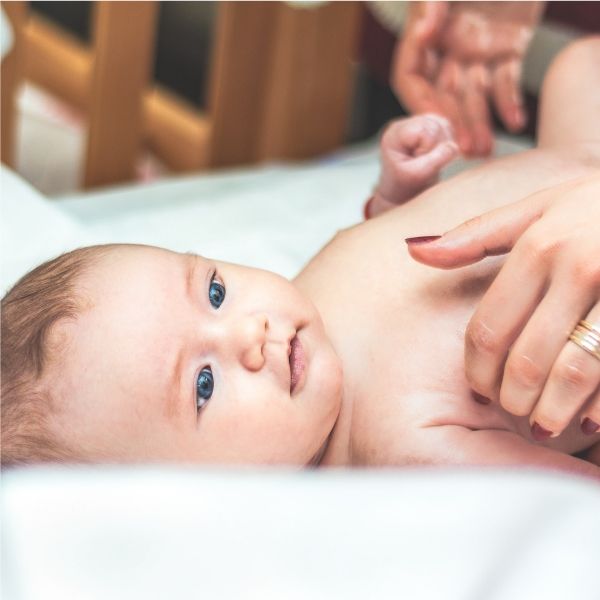
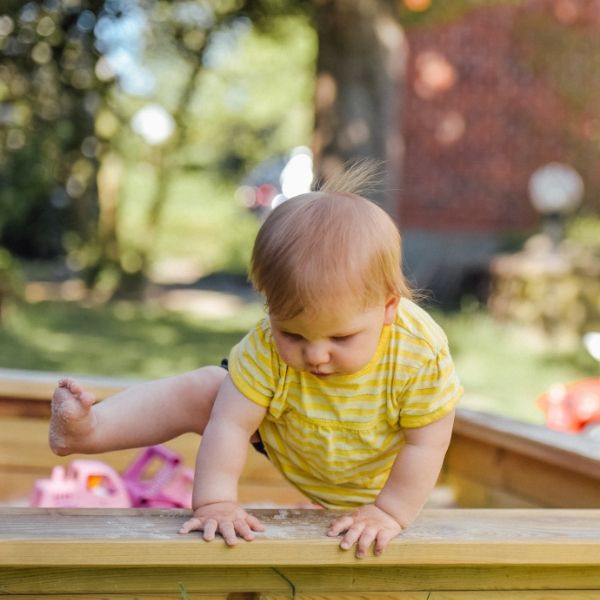
You probably already felt it clearly last month: your baby is ready to discover the world, only the motor skills are still lacking. A four-month-old baby no longer wants to lie on a blanket day in, day out, and the time of many naps is now a thing of the past. More and more movement is developing in your baby and they are slowly gaining reach, probably even more than you give them credit for. So caution is now also required with things that are near your baby. Some parents report exhausting nights and dissatisfied babies during the day in their baby's fourth month – but do not despair, as always, it is all just a phase.
Sensory development – baby in the 4th month
Your baby just learned to recognize fluid movements in the third month, and now they can already perform them. Important developmental steps are now unlocked, practiced diligently every day, and the muscles are trained. Their gaze now goes into the distance and intense colors have a special attraction for your child.
Your baby can now better estimate distance and can therefore recognize exactly whether Mom or Dad is moving away from them. Estimating distances is noticeably easier for a baby in the 4th month, and they will purposefully try to put everything they get their hands on into their mouth.
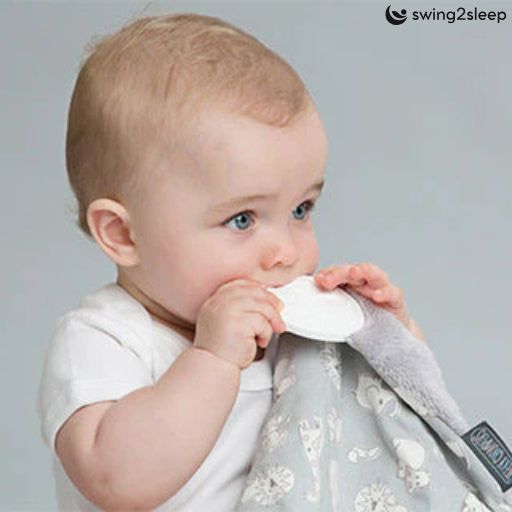
Hand-mouth coordination is being expanded. But not just because of teething pain – exploring things with the mouth is an important part of your baby's development.
Motor development of babies in the fourth month
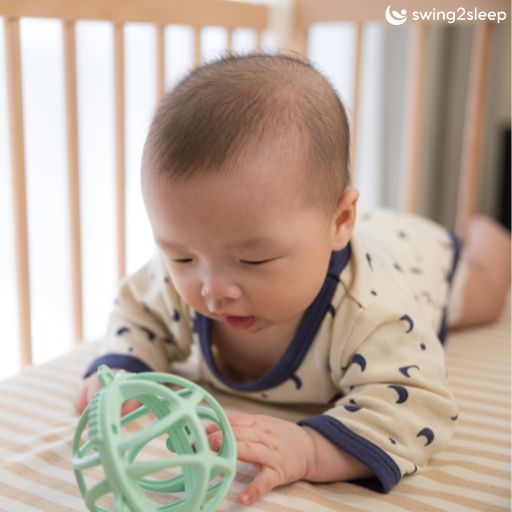
One moment of not paying attention and your baby has rolled onto their stomach in a flash. Sometimes the first turn happens so suddenly that even your baby is quite baffled.
Especially when they notice that turning from the stomach to the back, which happened out of a reflex just a few weeks ago, now turns out to be quite difficult. This is mainly due to your baby's now significantly more pronounced back muscles, which give your child stability.
Hand-mouth coordination, which will help your baby express interest in solid food, for example, develops in parallel with hand-eye coordination. With the help of this, your baby can fixate on things, reach out for them specifically, and grasp objects.
The grasping reflex is almost completely gone, so all kinds of toys and other objects can be used for playing. Make sure that no small parts can disappear into your 4-month-old baby's mouth while playing.
Language development of babies in the fourth month
How many noises, sounds, and babbles a child can already make at just four months old has certainly surprised you. Your baby's language comprehension develops in the fourth month and you can certainly observe that your baby can assign certain words to an object.
For example, they react with joy to people, a cuddly toy, or when you play finger games. Conversely, they also already recognize warnings, sadness, or anger in the pitch of your voices. It sounds a bit as if they have wanted to have long conversations for a long time when your little one trains their vocal cords and the muscles of the lips, tongue, and jaw.
Give your baby a lot of attention in these moments and talk to them; they will benefit from it. And even if not all the noises your 4-month-old baby makes are cute and delightful, always remember: crying is also a way of communication and indicates an unfulfilled need.
What a four-month-old baby should be able to do
The development of babies is individual. Not all things occur at the same time, and something that one child masters at four months, another might only learn in a few weeks.
If the U4 check-up with your pediatrician has not yet taken place, now is the time when the appointment should happen. There, your baby's head circumference, growth, and weight will be checked, and the first 6-in-1 vaccination is due.
In addition, you will be able to observe other things with your baby, for example:
- Your baby enjoys stretching its arms and legs out long when lying on the floor or the changing table. When it paddles and wiggles its arms and legs, it is laying the foundations for later crawling and scooting.
- Noises such as rustling, singing, or crackling attract your baby's attention, and it will try to move its head in the appropriate direction.
- Strangers are now scary to your baby. It feels most comfortable with you as parents or people close to it.
- At four months, your baby now perceives its surroundings as a whole and cannot yet filter stimuli well. If it does not settle down well in the evening, it will be processing the events of the day.
- The first teeth are breaking through. When teething, there are all kinds of aids that can make this strenuous time more bearable, both for your child and for you as parents.
- Movement can help your baby to calm down. To give you parents a break, an automatic baby hammock, such as the swing2sleep, can be a great alternative to hours of rocking.
- Age-appropriate toys are a great way to train the grasping reflex. When playing, even a four-month-old baby can keep itself busy for a while and make life easier for you.
4-month-old baby: Sleep, nutrition, and development
The new month of life brings all kinds of changes for you as a family. Your baby is active, has more energy than just a few weeks ago, and is becoming more and more interested in its surroundings. It is becoming more mobile, puts everything within reach into its mouth, and interest in food is also increasing.
But how much should a baby in the 4th month actually sleep? What does a baby's menu look like and what signs do you need to look out for before offering solid food? And how much encouragement does a baby in the 4th month of life really need?
How your baby sleeps in the 4th month of life
The topic of sleep usually occupies parents more than they wanted to admit to themselves before having children. The ideas of how the baby sleeps and, above all, where it sleeps, are usually far removed from the reality with a baby.
If your baby still largely falls asleep with physical contact or is breastfed by mom to fall asleep, that is absolutely fine and nothing to worry about.
Daytime naps will now decrease slightly and babies at this age usually still sleep two to three times a day before moving into nighttime sleep. During the day, you can let your baby sleep in your vicinity.
Some babies like to be carried close to the body, for example in a wrap or a carrier. But a bassinet or a cradle like the swing2sleep are also excellent for naps lasting between 30 minutes and two hours.
In the cozy hammock of the automatic baby hammock, your baby lies almost as if in the womb, while the gentle up and down movements of the quiet motor help to gently accompany your child to sleep. Thanks to the cradle's timer, you can ensure that your baby is rocked exactly until it has found its way to sleep.
The nutrition of a 4-month-old baby
The labels on jars found in every drugstore can be quite confusing. From the 4th month onwards, you can find all kinds of vegetable purees and follow-on milk. But does such a small baby already need solid food?
The World Health Organization (WHO) clearly speaks out against it. Babies should be fully breastfed or receive pre-milk until the 6th month before complementary foods are introduced. You can recognize the perfect start to this new and exciting time by the so-called signs of readiness for complementary foods.
All the nutrients your baby needs to develop normally and maintain a healthy weight are provided by breast milk and pre-milk, which can be fed on demand.
How much encouragement does your baby need?
Admittedly, there are plenty of courses and groups where even the youngest children meet. But please don't let yourself get stressed: Your baby doesn't need any outside family contacts, playgroups, or developmental courses yet.
But if you also enjoy meeting parents who have a child the same age as your baby, then such meetings and groups are just the thing for you. However, quality time with your child should be the priority in all these activities – if it burdens your everyday life, then just wait a while until you are all ready to go out among people and make social contacts.
A few toys and intensive moments with mom or dad are absolutely sufficient for your baby in the fourth month.
Time with a baby flies by. The milestones your child reaches, the developments, and the acquisition of new skills will sometimes leave you in awe.
And every day is an experience for your baby too, as it is just getting to know its body and all the wonders of its surroundings. We hope we were able to give you a good insight into the fourth month with a baby and take away one or two worries.