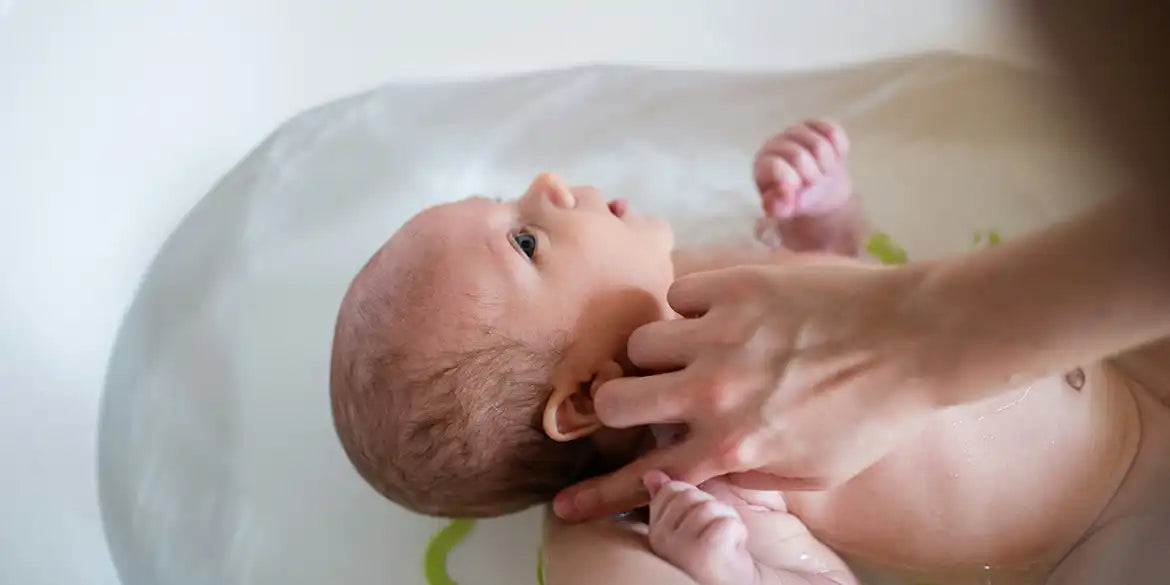


Touch can achieve a great deal in humans. It strengthens the bond and ensures the release of the happiness hormone oxytocin. This even works for the very youngest. In fact, the sense of touch is an important foundation for further development.
Sense of touch – The connection to the outside world::/H2
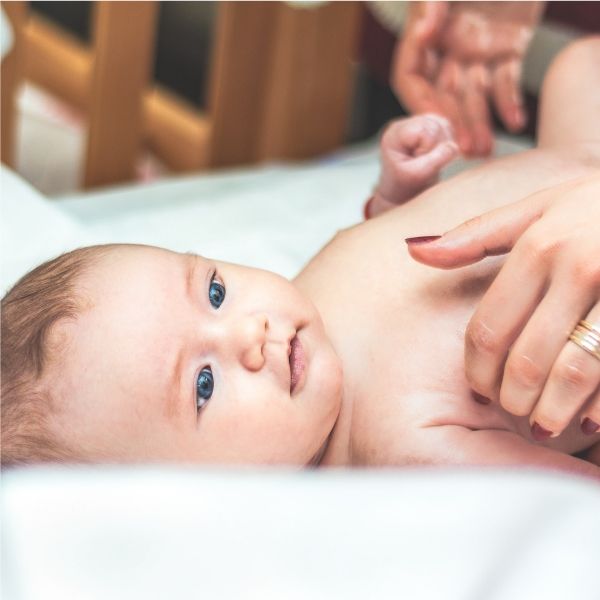
Skin contact is just as important for babies as food. Every single touch from mom or dad has a truly magical effect on the baby. Skin contact, as we know today, strengthens the immune system and builds psychological resilience. Children who never receive skin contact, but are only fed and changed, wither away instead. Furthermore, the first experiences of tenderness on the skin are an important basis for later sexuality.
Baby's first experience is touch
A baby's sense of touch is among the very first senses that a human develops. It becomes active before all other senses, long before the fetus can hear or smell. As early as the eighth week of pregnancy, it reacts to external tactile stimuli, such as when mom or dad place their hand on mom's belly.

Our sense of touch
Our skin is our largest sensory organ and is better developed at birth than all others. Even in the womb, the unborn child experiences gentle touches – from the surrounding amniotic fluid and through contact with the walls of the uterus. Even after birth, the sense of touch remains the dominant sense for a while, through which children primarily experience the world.
As early as the fifth week of pregnancy, an embryo can feel touches on the lip or nose – at a time when the mother often doesn't even know she is pregnant! This early establishment of the sense is an indication of the enormous role it will play throughout our entire lives.
Compared to the already quite complex sense of touch of a newborn, this sense is still little developed in the embryo. Nevertheless: from the 12th week onwards, the embryo can already feel and recognize stimuli across the entire skin surface. From the 20th week, thumb sucking begins, an intensive touch experience.
The importance of the sense of touch becomes immediately clear when you consider the wealth of information this sense transmits: heat, cold, the texture of objects, pain, pleasure, and even spatial orientation.
Oxytocin
Gentle touches make you happy. But why is that?
After birth, the baby experiences feelings of happiness with all pleasant touches: during breastfeeding, during physical contact, during personal care, or while cuddling with mom or dad. The reason for this is that the love hormone oxytocin is released – with far-reaching consequences: Oxytocin causes the baby to relax. It ensures a feeling of social connectedness, has a positive effect on anxiety and blood pressure, lowers cortisol levels, and stimulates nerve growth. Oxytocin quite rightly has a reputation as a bonding hormone; some even speak of a cuddle hormone.
Oxytocin also plays a central role in the birth process. It ensures that the mother can endure the painful contractions much better. After birth, it controls the milk ejection reflex and strengthens the bond between mother and child.
Oxytocin is essentially the counterpart to stress hormones such as adrenaline or cortisol. These cause blood pressure to rise and put us in a state of stress. In contrast, oxytocin provides calm, relaxation, and soothing.
For a good and healthy start in life, it is therefore important that you, as parents, give your offspring plenty of attention and touch. Incidentally, the longing for touch and skin contact does not only play a major role for babies and children. Rather, it is an existential basic need of all human beings – no matter how old.

Building a bond even without breastfeeding
The bond-promoting effect of breastfeeding is well known. However, there are also mothers who cannot breastfeed their baby for various reasons. But these women can also succeed in building a strong bond with their child: through sufficient physical contact. For example, the mother can simply place her baby naked on her bare chest while bottle-feeding. The advantage: this also works for the father. If the baby is gently stroked during this time, it receives a clear message: Mom and Dad love me.
What positive consequences does touching have?
But touch does not only strengthen the bond, it also has many other beneficial effects. The baby's muscles relax, and it feels comfortable and secure.Physical contact also helps with nipple confusion. In addition, the child's developmental processes are accelerated: the child grows better, its immune system is strengthened, and its body functions are less susceptible to disorders. Children who feel loved from an early age develop a positive body image and mental strength. Touching is therefore just as important for healthy development as food.
This, by the way, applies to the whole of life. Skin contact is also important for Mom and Dad, and when they touch, massage, and stroke their baby, it acts like a real fountain of youth.
However, a lack of touch has correspondingly negative consequences. Babies who grow up entirely without love and touch develop severe behavioral disorders over time and even die from this lack – even if they lack nothing else.
Communicating with your baby through touch
The very first communication between parents and child takes place through touch – through the abdominal wall. During pregnancy, parents make contact with their baby by touching the belly and feeling the baby. The larger the baby gets, the tighter it becomes in the womb and the more both the mother and the baby perceive mutual tactile stimuli. It is an unforgettable moment when parents feel for the first time how the child in the womb responds to their touch.
Bonding after birth through touch
Outside the maternal womb, life for a newborn is initially primarily cold, uncomfortable, loud, shrill and frightening. If the child is anxious or hungry, it will demand parental assistance by crying or screaming. However, it is then not enough if Mom or Dad talks soothingly to the baby. What it needs now above all is skin contact. This releases the aforementioned hormones, and it can calm down again.

The skin as a primary sensory organ
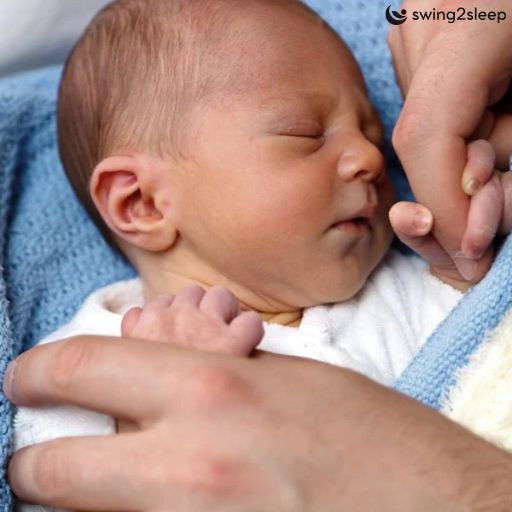
Loving touch is the primary channel through which the child experiences love and security in the early days. Skin contact is a very important factor for the child for the healthy development of nerve cells, the nervous system as a whole, and the brain.
However, skin contact and touch remain important for us throughout our entire lives. Those who grow up with plenty of skin contact become more balanced and less prone to stress later on. Furthermore, they can build trust with their fellow human beings better than others. This is because the skin stores the memory of touch and affection and then activates it in later situations when dealing with other people.
And even in advanced age, touch remains a fundamental need. We need it to maintain our mental and physical health.
How can parents further intensify this initial bond?
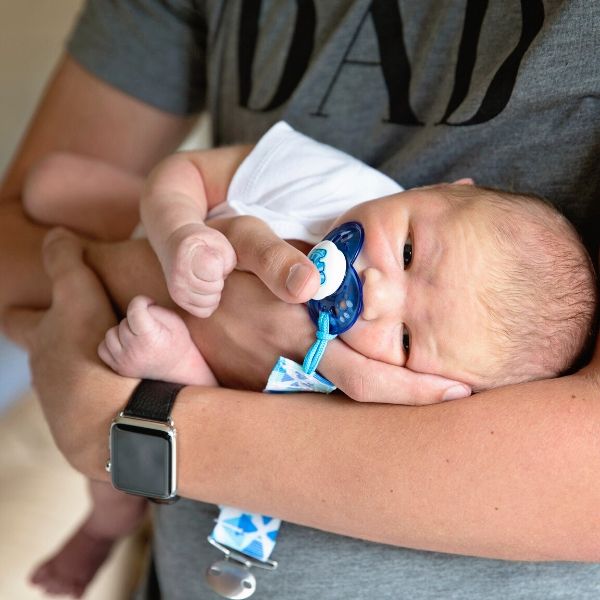
Skin contact and proximity strengthen the bond with the child. Therefore, especially in the first year of life, it is recommended to carry the baby around, let them sleep in bed with you or treat them to a baby massage more often. Such touch literally gets under your baby's skin, and they will benefit from it for their entire later life.
So you are not harming your child or spoiling their character because you are supposedly pampering them. In fact, you are strengthening them and laying a foundation for later success in life.
Even brief ignoring causes stress in babies
In an experiment conducted in Canada several years ago, it was shown that babies experience stress when they are ignored by their caregiver – even if only briefly. But not only that: they can even remember it later!
In the experiment, 30 babies were placed in car seats and divided into two groups. The mothers in one group interacted with their children as usual. The mothers in the other group, however, interrupted the play phases several times for about 2 minutes. During these breaks, they were instructed to stare blankly past their child into the room.
The following day, all 30 infants were invited back to the laboratory. On both days, the children's cortisol levels were measured several times. Those children who were ignored by their mother on the first day already showed increased concentrations of cortisol on the first day. Interestingly, on the next day, cortisol levels rose immediately, without them having been ignored yet on that day.
This shows that the babies remembered the situation from the previous day and feared that it might happen to them again.
They associated the laboratory with a stressful situation, which could be seen in their cortisol levels.
Infants are therefore able to link environments with negative experiences made within them. If they find themselves in such an environment again, they react with stress. However, stress is harmful to the immune system and can even damage the mother-child relationship. Too frequent stress also has a negative effect on the health and overall development of babies.
The swing2sleep team wishes you a wonderful baby time with many beautiful moments of cuddling.
Sources:
- Eliot, L. (2003): What's Going on in There? How the Brain and Mind Develop in the First Five Years of Life. – 4th ed. Berlin: Berlin.
- Burgdorf, J./Panksepp, J. (2006): The neurobiology of positive emotions. In: Neuroscience and Biobehavioral Reviews 30 (2006) 173–187, online: http://gruberpeplab.com/teaching/psych231_fall2013/documents/231_BurgdorfPanksepp2006.pdf
- Uvnäs-Moberg, K. (2006): Physiological and Endocrine Effects of Social Contact In: Annals of the New York Academy of Sciences Volume 807, Integrative Neurobiology of Affiliation.