


Many young parents feel insecure or even overwhelmed when spending time with their baby. When the baby cries more than the parents can handle, the original anticipation of the first time with the child turns into a cycle of fear, overwhelm, and stress. But there is a method to break this vicious circle. It is called Emotional First Aid and relies on the magic of bonding through touch.
Bonding through touch – the gentle way
An inconsolably crying child and stressed parents in an emotional state of emergency: this constellation can lead to a permanent relationship disorder between parents and child, which also has consequences for the baby's later development. Yet a positive relationship between parents and child is the absolute basis for a fulfilled and happy family life.

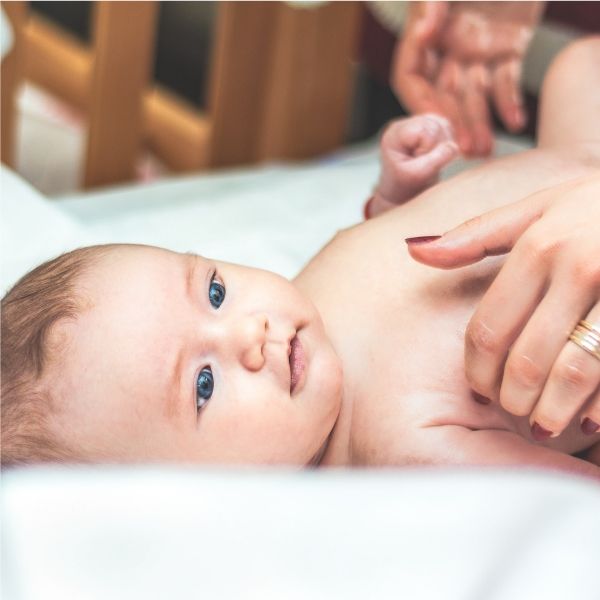
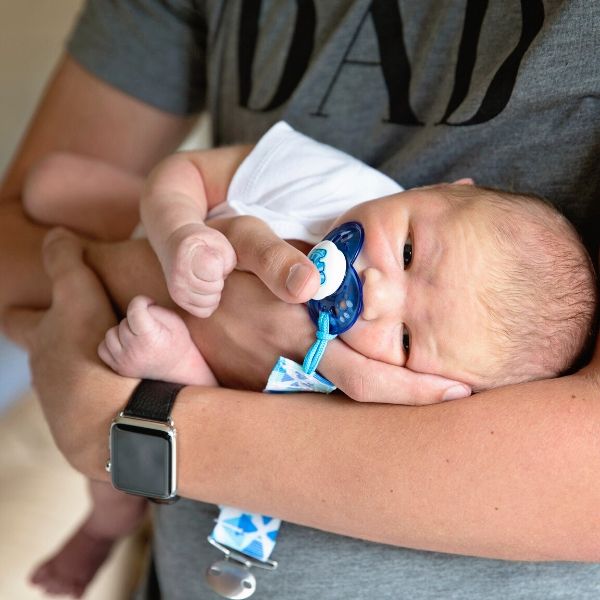
Unfortunately, it is often underestimated how extremely important touch and physical contact with mom and dad are, especially for newborns. Physical contact means so much more than just an occasional cuddle or a stroke. It is now known that babies who are touched a lot and are often allowed to be close to mom or dad calm down faster, sleep better, even develop better overall, and show more self-confidence later on. In a way, touch is also a form of nourishment. Instead of the body, however, it nourishes the soul of the new citizen of the world, so to speak.
To be touched tenderly means to be loved! This provides security and a sense of safety.
Why is touch so important?
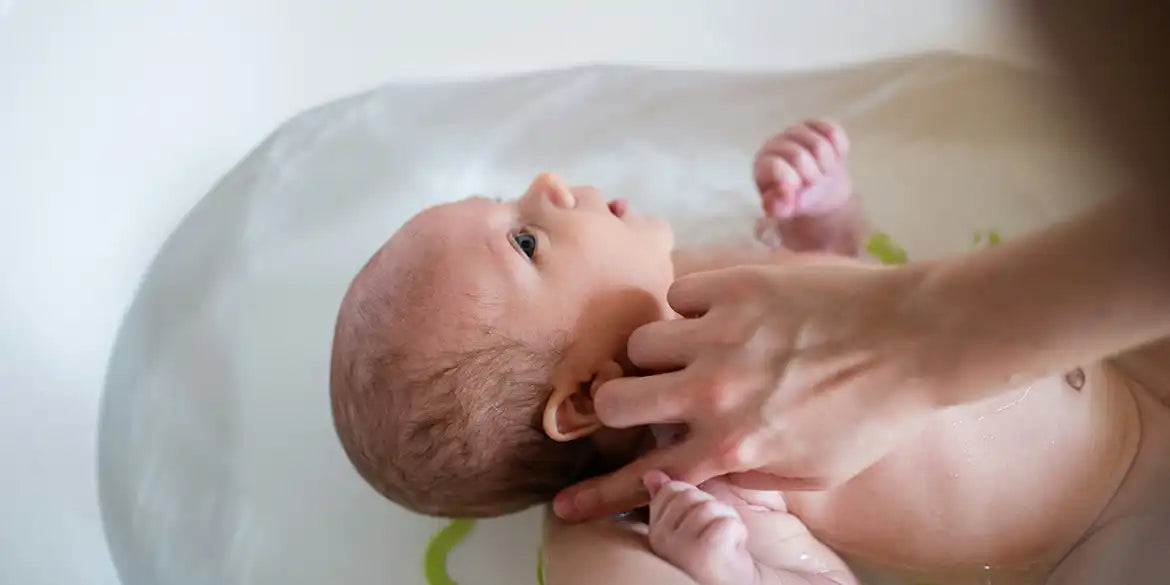
Newborns are virtually hungry for touch. This is hardly surprising, because even in the womb, the baby was last in permanent contact with the mother's belly. That's why babies have such a hard time being alone and without skin contact after birth. They miss the warmth, the feeling of being enclosed, and the security, especially since they experience the environment largely haptically in the early days. So touch is not just a comfort for your newborn, it is virtually vital. Through touch or massage, the bonding and happiness hormone oxytocin is released in the baby. The vegetative nervous system is stabilized and the baby's physical and mental development is promoted. Physical contact also helps with nipple confusion. Touch is just as important a basic need for your infant as eating and sleeping.
Emotional First Aid – a convincing concept
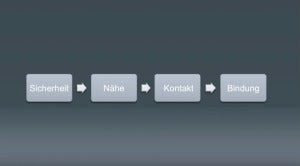
"Emotional First Aid" (EFA for short) is a concept developed to preventively strengthen the bond between parent and child through the power of touch or to use it specifically for crisis intervention. However, this idea is not entirely new: the latest findings in brain and attachment research already led to experiments in this field in the 90s, although its roots go back even further to Wilhelm Reich.
The idea behind it is actually quite simple: it assumes that loving touch on the part of the parents has immense positive effects on babies.
It allows them to relax much better, and their self-perception is positively influenced. It also strengthens the bond between parents and their baby. A weak bond is often one of the reasons why parents of colicky babies simply don't know what to do anymore. In fact, a weak bond can also be a reason why a child becomes a colicky baby in the first place.
What can parents expect from EFA?
Touching and being touched are one. Therefore, parents learn how to better assess their own physical signals. However, this goes far beyond the skin, or rather: it goes deep under the skin. Let's imagine a typical situation: the baby cries and cries and simply won't calm down. Is the emerging tightness in the chest a warning signal? When do you have to intervene and accept outside help? How do you deal with the stress that arises when the baby cries excessively?
The expectant mother is encouraged and supported to build a loving and intimate relationship with the baby already during pregnancy. She also learns how this is possible specifically through touch.
After birth, Emotional First Aid can support the young family during the first exhausting and sometimes even grueling weeks. Through close accompaniment of the parents, potential crises can be recognized quickly and positively influenced. In most cases, a way out is found very early on.
With EEH, parents learn how the relationship with their child can be intensified through special touch. In addition, there are body awareness exercises and relaxing breathing techniques for acute stress situations. Those who have already learned how to cope with such situations beforehand react more calmly and become more relaxed. This then also protects the bond between parent and child.
Excursus: Video – Lack of bonding and the consequences
In the following video, trauma therapist Dami Charf describes how important early childhood bonding and empathy are in order to avoid trauma that can cause impairments well into adulthood.
Emotional First Aid before and after birth

Emotional First Aid starts as early as pregnancy, so that a strong bond has already been built up by the time of birth and parents are prepared for any crisis situations. For example, the mother learns how she can establish a closeness to the unborn child through targeted abdominal breathing.
Loving support during crying
Extended crying phases of the baby are sometimes difficult to endure. Here, EEH provides support by giving parents tools to lovingly accompany their baby while crying, without losing the connection to them and without anger or frustration building up. In such crisis situations, it is important that the self-regulation powers of the baby and the parents are stimulated. With EEH, any physical tension in the parents can be reduced in good time before it is transferred to the baby.
Even if the baby does not stop crying immediately – it certainly perceives the subtle changes. This leads to a more relaxed environment, strengthens the bond and gradually makes crying fits rarer and rarer. It also enables parents to better survive such acute situations.
Where can you access EEH?
Courses in "Bonding through Touch" and EEH consultations can be found throughout Germany. Often both courses and individual consultation sessions are offered.
The page http://emotionelle-erste-hilfe.org/content/emotionelle-erste-hilfe provides addresses and contact persons from Germany, Austria and Switzerland.
Furthermore, many midwives have completed further training to become EEH specialist consultants.
If there are no EEH offers in your immediate vicinity, you can also acquire the basics with a book. In case of doubt, however, it is of course always better to have the techniques shown and explained by a trained person.
Conclusion
If you ask parents who have participated in the EEH program, the vast majority are of one opinion: It helped them a lot!
The many tips provided as part of such a program give participants security when it matters. In addition, the techniques used to calm the baby are often very easy to learn.
It is therefore worth taking a closer look at EEH – ideally before you despair of the situation, are completely exhausted and both the couple relationship and the relationship with your offspring are at risk. Of course, in the vast majority of cases, parents touch their child instinctively correctly. But it never hurts to learn a few more tricks that you might not have thought of otherwise. And besides, the mere fact that a person is there who knows and understands your problems, who simultaneously conveys security but also brings calm to the usually tense situation, can be an invaluable relief for you.