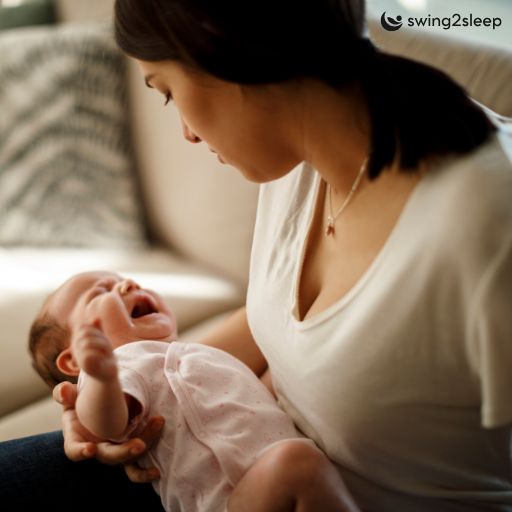



You're going to be a father! Your life is definitely going to change. It's wonderful, but also scary. As an expectant father, we'd like to give you a few helpful tips to make your start into fatherhood as smooth as possible.
Being present at the birth as a father?::/H2
Countless posts in relevant online forums testify to how often men are preoccupied with the question of whether they should be present at the birth of their child. In this article, we want to prepare you as an expectant father a little for the upcoming birth. To do this, we provide you with information on what precautions you can take, what to expect during the birth, and how you can better deal with any fears that arise.
In all likelihood, we are the last generation to even ask the question of whether a father should be present at the birth of his child. This uncertainty is a relic of the past. Back then, it was completely normal for women to have to give birth to the child alone in the delivery room, while the expectant father paced restlessly up and down the corridor outside. After the birth, they were allowed to hold the freshly bathed children in their arms for the first time. However, as an aspiring dad, we strongly recommend that you be present at the birth of your child! Your participation not only has advantages for your partner and your unborn child, you will also benefit from it in many ways. Not only because the birth of a child is an absolutely unique and wonderful experience. The relationship with your child is also significantly strengthened if you accompany them from their very first breath. And besides, your partner will feel more comfortable and secure if you are there as the expectant father. Even if you think you can't do much as a man during the birth. But even if you are only there to support your partner and give her a sense of security and safety, that is an extremely important contribution. Keep in mind that she may feel very vulnerable and exposed. Stand by her.
Fear of being helpless during the birth.
The closer the big day gets, the more uneasy you might feel. This is not uncommon, especially with the first child. This may be the fear of the unknown. You can only guess what to expect during the birth. Therefore, it is a good strategy to inform yourself about what happens during a normal birth and what you have to expect.
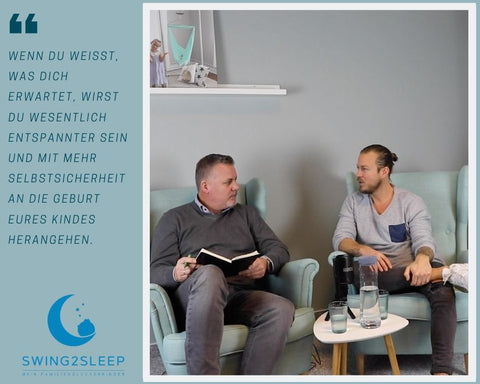
Arrival at the hospital
Upon arrival at your chosen clinic, the first thing to do is to register your partner. You should take care of this because your wife is busy with completely different things at this stage. Her pain is likely to be quite mean by then. Registering is not a big deal and doesn't take long. It is important that you have remembered the necessary documents:
- Referral from the gynecologist
- Health insurance card
- Birth certificates of the expectant parents
- The woman's ID card
On the ward
As soon as you have arrived in your room, the midwife on duty will introduce herself to you. She will support you during the birth and discuss the further process with you in detail. However, you can also bring your own midwife. In a normal birth, also called a "spontaneous birth", a cervical examination and a cardiotocography (CTG) follow.
At the beginning of labor, your partner is in the so-called "dilation phase." During this stage of birth, contractions open the cervix. This phase can last for several hours. At this point, your partner can still move around without restrictions and may even be encouraged by the midwife to take a walk or perhaps a hot bath. Your partner might want to try out different positions and postures now to find out what feels good during contractions and makes things a little easier.
The baby is coming!
Once your partner has made it through the dilation and transition phases, things get serious. The cervical opening is now 10 cm – enough to give birth to the child. While this doesn't mean the baby is coming right this second, you are on the home stretch. The baby is now sliding deeper into the pelvis. The expectant mother can now try out which position is most comfortable for her. You may have already discussed in advance which options are available to your partner during the birth.
Sometimes complications occur during birth. Therefore, it makes sense to prepare mentally for the birth together and discuss possible steps in advance. This helps your partner and, in an emergency, helps to make quick decisions (e.g., whether there should be an epidural if the pain becomes too intense, or which medications your partner tolerates and which she might be allergic to). If the baby is in the wrong position, e.g., breech, doctors and midwives will assess the case individually and consult with you on whether the baby should still be born naturally or if a C-section is necessary. Another possible complication is labor dystocia, where contractions are no longer strong enough to progress the birth.
Birth is an extreme situation, and things can certainly go wrong. Keeping this in mind is part of a realistic approach. However, it is also part of the picture that these are exceptions. And even if an emergency occurs, your midwives, nurses, and doctors are total professionals who bring children into the world every day and have mastered many dangerous situations. Trust in their skills and look forward to the birth of your child with anticipation and confidence. Here too: positive thoughts create positive feelings, and these are also transferred to the mother and the child.
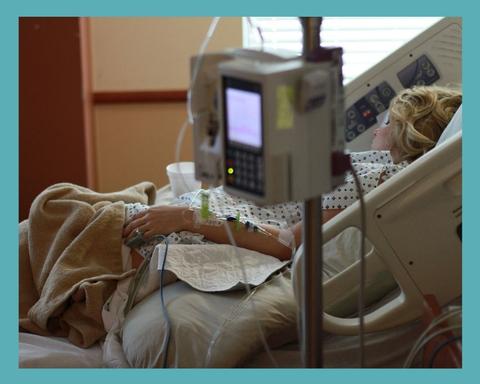
- Inform yourself beforehand about the birth process so that you don't have to ask unnecessary questions and disrupt the flow of the birth.
- The father is given the honor of cutting the umbilical cord after the birth. If you want, you can take on the task of completing the physical separation of mother and child.
- Don't run out immediately after the birth: After all the exhausting hours of cheering her on, the emotional moments of hope and anxiety for your wife and yourself, your child is finally here. Don't make the mistake now of running outside with your phone to immediately contact family and friends and send the happy news out into the world. First, enjoy this incomparable moment with your family. Cuddle together and simply be proud of your partner, your baby, and yourself. Your friends and family aren't going anywhere, but this moment will never come again.
Advice that mothers would give you
- Your partner wants to feel supported: It is understandable if you feel anxious or uneasy about the birth. But this is not your show. Your partner's feelings are certainly much stronger. She needs you now. Be her rock.
- Take over the things she doesn't want to worry about right now and, thanks to you, doesn't have to. This includes, for example, all the formalities upon arrival at the hospital.
- During contractions, your partner may find it difficult to speak. Therefore, pay special attention to her gestures and body language. Make sure she always has enough to drink, and provide her with something to eat during a long labor. You might place a cool cloth on her forehead or the back of her neck during contractions. Perhaps she would like a massage, or you can help her with breathing techniques and the various positions she might want to adopt.
Advice other fathers would give you
- You don't necessarily have to see everything: No one expects you to stand at the foot of the bed during the birth. You are much more helpful to your partner at the head end than at her feet anyway.
- Don't ask too many questions: Of course, your questions are well-intentioned and reflect the uncertainty you feel in this situation. However, they disrupt the process and are more of an additional burden for your partner in this exceptional state. You have months beforehand to inform yourself thoroughly about the birth. Make use of that time. During the preliminary consultations, you have many opportunities to grill the doctors and midwives. There is no room for that during the birth.
- You are not locked in the room: Many births are a process that lasts several hours, but that doesn't mean you are trapped in the room like a hostage. If you want to step out, feel free to take a break. Of course, this shouldn't happen during the most intense phase.
Your role during the birth
Preparation is everything. If you and your partner inform yourselves comprehensively before the birth and also discuss how you can work well together during delivery, what she needs and expects from you, you can play a crucial role on this important day. Agree on signals your partner can give you when she needs something. Remember that your main task is to support your partner as best as you can during the birth of your child.
For example, you can:
- support and hold her in various birthing positions
- massage and stroke her
- support her with learned breathing techniques or remind her of them if necessary
- relieve her of formalities
- provide her with food and drink
- let her feel that you are there every single second
Don't overdo it. No one expects you to act like a motivational coach during the birth and high-five your partner cheering at every contraction. Just be attentive, observe her, and recognize when she needs encouragement, comfort, and support.
The fear of seeing your partner differently after the birth
Many expectant fathers worry that they might no longer find their partner sexually attractive after the birth of a child. This can be prevented by staying above the waistline during the birth, especially during the final minutes. Also, try to flip the thought: You and your partner are facing a great challenge together. Why wouldn't you want to see her with different eyes after the birth? After all, she is the woman who brought your child into the world with great strength and effort. You will likely experience such a wonderful event with only one person, and that can bond you together instead of pulling you apart.
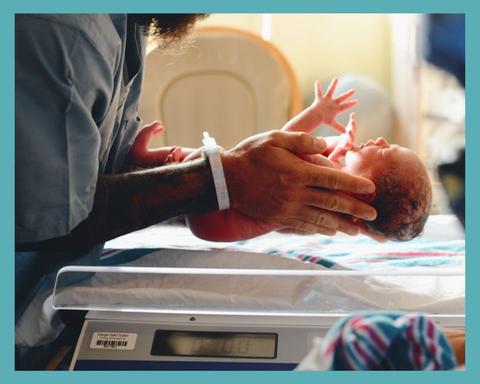
Your checklist for the birth of your child
At some point, it is time to pack your partner's hospital bag. To be well-prepared as an expectant father and ready for all eventualities, it is recommended that you also have your things together. This way, you are well-prepared if the birth stretches over a longer period of time. Therefore, at the end of this post, we provide you with a template for a personal checklist to download and fill out. Examples of what belongs on this checklist would be:
- Drinks: Of course, you will get tea, water, and coffee at the hospital. But if you want to be independent or drink something else, just bring it with you.
- Food: In most cases, your partner is taken care of. However, men often miss out. Therefore, bring snacks from home if necessary, so you don't end up with an empty stomach during the birth.
- Something to read (magazines): The initial phase (dilation phase) is usually very lengthy and rather unspectacular compared to later stages of birth. There will likely be several examinations during this time. It is recommended to have some reading material with you for this period.
- Change: You might want to stretch your legs in between and get something from the drink or snack machine.
- Your own music: Perhaps you would like to listen to your favorite music or your own relaxing sounds during the birth. Many hospitals offer this possibility.
- Change of clothes: Sometimes it takes a long, really long time until your baby sees the light of day. Therefore, you are definitely well-advised to have comfortable a change of clothes.
- Toiletries: Even if you don't plan on staying in the hospital for several days, it is pleasant to be able to freshen up a bit after a few hours. Deodorant, toothbrush, and toothpaste are part of the basic equipment.
- Neck roll: A neck roll can help you relax a bit even while sitting and perhaps take a small nap.
- Mobile phone: Of course, the mobile phone should not be missing to take photos and inform family members, friends, and acquaintances as soon as your baby is born and time permits.
- Charger: So that your phone still has power even after 20 hours.

The birth of your child together is an extremely beautiful moment. Don't feel like a third wheel, because you certainly aren't. Newborns can adapt to two primary caregivers from the start. Besides the mother, you will be the other number one for your child – right from the beginning.
The team at swing2sleep advises: Make decisions around the birth together, and don't let anyone talk you out of it.