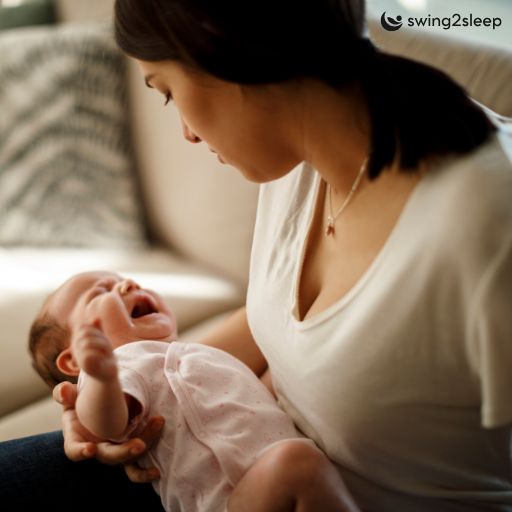



The time has finally come! For nine months you have been looking forward to your child and during the birth you hoped, trembled and suffered with your partner. For days you could hardly believe your luck. And now the young family is finally heading home. But suddenly uncertainty creeps in. Now it's getting serious. From now on you are on your own. And nothing is as it was before. The first few months with a newborn baby can push you to your physical and mental limits. So it's good to know what to expect for you and especially for you – as a new father.

Mother and Father and Baby – More than the Sum of its Parts
In all the anticipation, expectant parents often underestimate the dynamics inherent in the transition from couple to family. They also have to get used to the heavily changed daily and nightly routines. And that can be quite exhausting.
It is completely normal for the responsibility for the little human to feel like a huge burden at first. Suddenly you are not just responsible for yourself, but for a small family. In the months of pregnancy, being a parent was just grey theory for you. There were many conversations with doctors, midwives, your own parents and friends, and you attended courses and pored over books – and yet it is overwhelming when you take your child home from the hospital.
In fact, it is not the birth that marks the big upheaval. Rather, it is the moment you leave the hospital with the child. There, you and the child were cared for. Well-trained midwives were at your side with advice and support at all times, and all processes were organized for you.
By leaving the hospital, you basically become real parents. It is understandable if a chaos of emotions spreads within you now. On the one hand, you might be totally euphoric and overjoyed, and at the same time, a dark movie might be playing in your mind's eye. What could go wrong? How are you supposed to live up to this great responsibility? When you become a father for the first time, it's a jump into the deep end and initially catapults you far out of your comfort zone.
Take your time to adjust to the new situation first. Here are a few tips on what you can do as a couple and you alone to make the transition easier.
Good Preparation
Discuss in advance how you want to organize your life as parents and the care for the child. Seek contact with friends who already have children and get involved a little if you are allowed to. Imagine together exactly what life as a family will be like, but also take a close look at the downsides. This way you don't build unrealistic castles in the air and prepare yourself mentally for the fact that it won't be all sunshine and roses.
Distributing Tasks
In the first months of life, babies have almost no day-night rhythm. So divide up who has night duty and when. Also regulate who takes on which tasks. Ultimately, this relieves both of you and also avoids arguments that you really don't need right now. In the best case, it bonds you as a couple when you experience how you play together as a team and can rely on each other. If necessary, you can involve friends or relatives. It is written nowhere that you always have to manage everything all by yourself.
Make the Most of Parental Leave
Parental leave means that new parents can temporarily take time off from their jobs or reduce their hours. During this time, they receive partial financial support from the state. While the entitlement to parental leave exists until the child reaches the age of three, parental allowance is only paid in the first 12 or 14 months of the child's life and amounts to 65 to 67 percent of the net income of the parent applying for the parental allowance. Another variant would be Elterngeld Plus. In this case, the applying parent continues to work part-time. The amount received is reduced by half, but the duration of receipt is doubled. The legal regulations for parental allowance offer a lot of flexibility. First one partner can go on parental leave, then the other, or both go at the same time and continue to work part-time. It is best to check with the parental allowance office in your place of residence.

A Midwife
New parents are often still inexperienced and correspondingly insecure when dealing with the newborn baby at the beginning. Home visits from your midwife can be a real relief. In the first ten days after birth, your health insurance covers up to two home visits daily. After that, you are entitled to up to 16 further appointments within a period of eight weeks after birth, which can also take place by telephone. With the midwife, you can practice routines and clarify all questions that arise in everyday life. In addition, she certainly has one or two effective moves or tricks up her sleeve. This is an invaluable help during the transition period, which you should definitely make use of.
Parents and Friends
There are times when it is particularly valuable to have friends and family, and now is definitely one of them. Here you will find emotional support to let off steam, to ground yourself again, but also to get concrete advice and active support. Your parents in particular can be a great help. They have a wealth of experience and often have a completely different perspective and composure. You can certainly learn a thing or two from them.
Just Do It
Almost all expectant parents devour countless parenting guides, and as inspiration, this certainly has its justification. But it might often be better to listen to your own intuition. Otherwise, you run the risk of losing sight of the fact that your child is completely unique in the face of all the general instructions and suggestions from such guides. Many things don't have to work the way they are written in the book.
New Things are Always Weird at First
There are many first times ahead for you. And it can feel strange when you dress, change or bathe your baby for the first time. On such occasions, even the toughest guy's hands shake. As with many other things, the tip here is simply: get involved. Surrender to the situation. You have already mastered so many new things, and this is no different.
Too Small to Play Football
Many fathers don't know what to do with a baby, especially in the beginning. It can't do anything yet except cry, drink and fill its diapers. Nevertheless, you don't have to wait until your offspring can play football. You will quickly realize that a dad can do a lot with an infant too. Now is your chance, for example, to develop a strong bond with your child. Physical contact works wonders and can be surprisingly fun. But otherwise, you shouldn't miss any opportunity to see your child grow up from the very beginning. That only happens exactly once per child.

Dads Get the Baby Blues Too
The birth is an amazing experience for you as a dad too. It marks the beginning of something completely new. A new era is dawning in which an incredible amount will change for you. Until the birth of your child, there was only you and your partner. You were the most important people to each other until that point. Then a child enters your life, and everything changes. There are certainly men who have great problems with this change. They often feel like the fifth wheel, because everything now revolves only around the child, and your sex life is also on the back burner. Many young fathers now try to deal with the matter themselves and pick up on their supposedly freer life before the birth. They meet friends, throw themselves into their hobbies or escape into work. This causes additional tension and, if the phase lasts longer, often does not end well for the relationship. Instead, you should realize that the baby is also your child and you share the responsibility. Instead of running away from the situation, you should face it. Accept your child and establish a bond with them. It's not that hard. We have a few suggestions with which you too can get rid of your baby blues very quickly.
- Spending time together: In the first months of life, infants usually sleep a lot. In the womb, the child always had a background noise like the rushing of blood, the mother's heartbeat or external noises around them. Therefore, it doesn't have to be quiet as a mouse for the baby to sleep. On the contrary: often they don't sleep nearly as well in absolute silence. That's why you can easily take your baby into your office and let them keep you company. Whether music is playing, you are on the phone or working on your laptop – it will rather help your child sleep.
- Walking together: Whether with a stroller or a carrier system – fresh air is not only good for the child. Tip: Pay attention to feeding intervals even when out and about, so that the walk doesn't turn into stress and hectic.
- Housework together: Especially with the accumulating housework, the baby can simply be strapped on thanks to the carrier system, and off you go!
- Napping together: If the child sleeps so much in the initial phase, seize the opportunity and do the same – at least with a small, shared nap. Grab your baby and lay them on your stomach. Place yourself with the child in the middle of the bed and pull a thin blanket over you – and the little rest break can begin.
- Bathing or showering together: Babies love physical contact. That's why a shared bath with the baby is an incomparably beautiful experience. But be careful: the water must not be too hot. You can ensure this with a water thermometer.
- Cuddling together: Because babies enjoy skin contact so much, cuddling is extremely important for bonding. For the mother, this skin contact is regularly established through breastfeeding. But you can also snuggle with the child. Make sure the room is well heated. Then undress your child down to the diaper and lay them on your bare chest.
- Baby massage: A baby massage also promotes bonding because the bonding hormone oxytocin is released.
- Feeding: Not every woman can breastfeed fully, and sooner or later you might switch to the bottle. Then you can also take over some of the feeding times.
- Changing: The supreme discipline and at the same time a real relief for the mom. And there is hardly anything else that makes you feel as much like a dad.
The Father Instinct – Does it Exist?
Everyone has probably heard of the maternal instinct. But is there actually such a thing as a father instinct? In fact, there is, although it sets different priorities than the maternal instinct. Extremely simplified, one could say that the maternal instinct is about protecting and nourishing the child and is directed more inwards, while the father instinct is about protecting and nourishing the whole family and about defense outwards. Some fathers report that this instinct was a bit more sluggish for them and needed some time and bonding before it kicked in. But then they would have thrown themselves in front of a bus without hesitation to save their child. In any case, your role in the partnership and in the family will change. The sense of responsibility grows and suddenly the family comes before everything, even your own interests. And that's exactly where the maternal and paternal instincts are identical, whereas they complement each other in other respects. Mother Nature intentionally gave us different perspectives and tasks. So trust your father instinct and let it guide you. In doing so, both of you – your partner and you – must accept that your ways of behaving and thinking are sometimes quite different.
Don't try to become a bad mother imitation, just be a good father original!
Be authentic and be yourself. You are you. And your child needs both of you. Ideally, you are completely different from your partner. You romp more wildly with your offspring, are simply more physical, do more nonsense and trust your child more than their mother does. And that's a good thing. Children love these contrasts and need them for their development.
Do not try to be a male mother under any circumstances, but be exactly the true-blue father you want to be for your children – with your very own style.