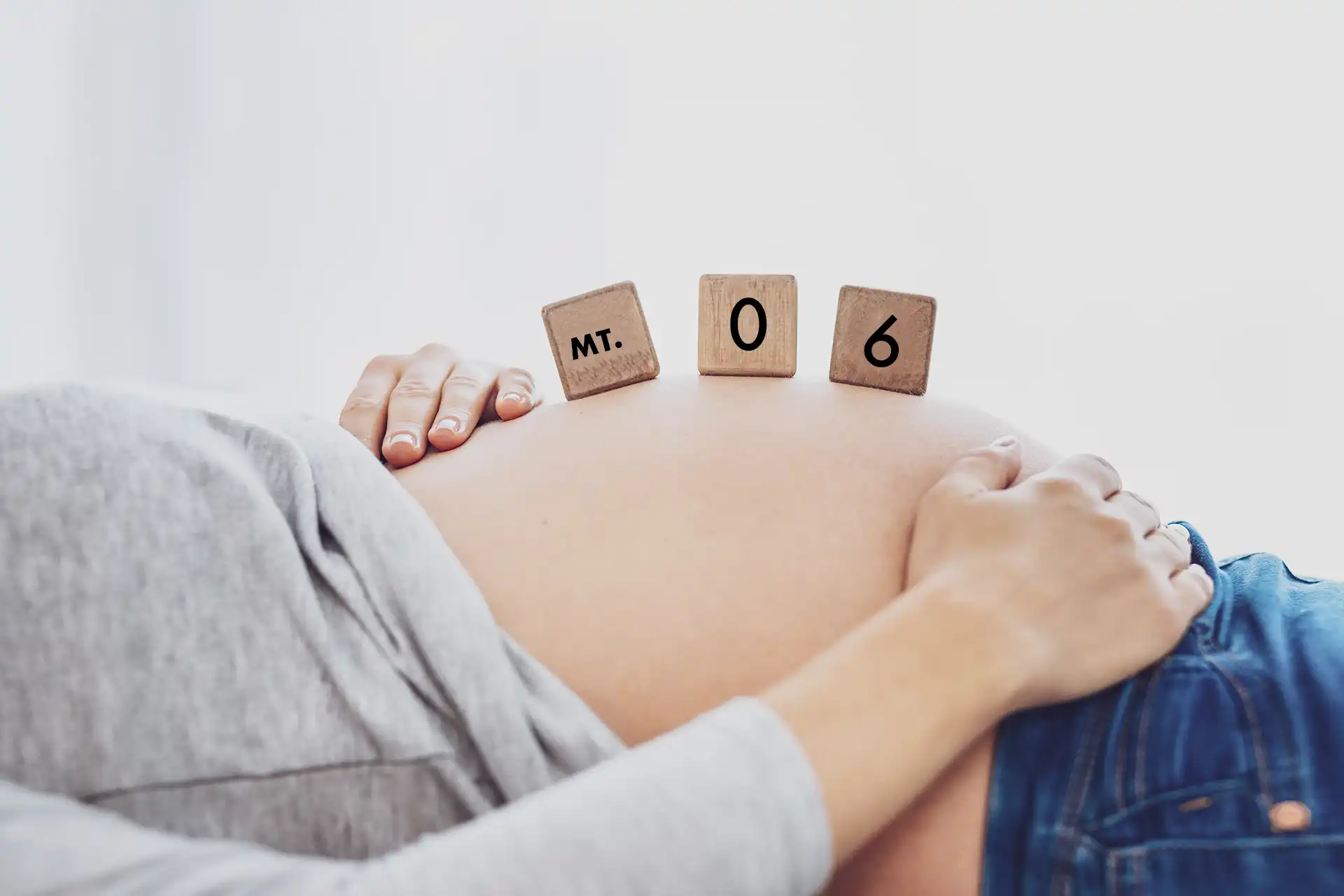


In the 6th week of pregnancy, your baby and your body are already undergoing several changes. The embryo grows rapidly at this early stage, while the beginnings of the first organs are already developing. Many women also experience the first symptoms, such as nausea, in the 6th week of pregnancy.
Perhaps you are noticing your pregnancy by now and perceiving the first signs of pregnancy. We summarize for you how your baby develops in week 6, what changes are taking place in your body, and which symptoms are typical. You will also learn which behaviors are particularly important for you now.
Week 6: What happens to your baby in the 6th week of pregnancy
If you are six weeks pregnant, you are surely wondering how your baby is developing. At this early stage, it is still an embryo that is growing rapidly to develop into a real baby in the coming months. The first appointment with the gynecologist is useful from the 7th or 8th week. So you still have to be a little patient until you can see your little miracle for the first time.
We therefore summarize for you how your baby develops in the 6th week of pregnancy:

Your baby's heart begins to beat
Towards the end of the 6th week of pregnancy, your baby's heartbeat begins. Your baby's heart beats almost twice as fast as your own. It is about 110 to 160 beats per minute. Theoretically, your doctor can already detect the heartbeat on the ultrasound.

The neural tube forms
This week, your baby's neural tube forms, from which the brain and spinal cord will develop over the next few weeks. Many doctors recommend taking folic acid during this sensitive phase to counteract neural tube defects.

Important organs are forming
In week 6, important organs such as your baby's liver and kidneys are forming. The lungs are also already present. However, your baby still receives oxygen via the placenta.
In this early phase of your pregnancy, your baby goes through many important developmental steps. Therefore, it is particularly important that you take good care of yourself and get enough rest.
Development of your baby: Size & weight in the 6th week of pregnancy
You are still at the very beginning of your pregnancy. Your baby is currently still tiny: it is about 4 mm in size. In week 5, the embryo was only 1 mm in size: so it has more than doubled its size.
At 4 mm, your baby is now about the size of a pomegranate seed. The weight cannot yet be reliably determined. It is at most one gram.
At this stage, your baby strongly resembles a tadpole. It currently has fin-like structures from which the arm buds will develop in the coming weeks.
These changes your body undergoes in the 6th week of pregnancy
In the first weeks of your pregnancy, you probably haven't noticed any major changes in your body yet. No belly is visible yet, so you and your partner are probably still the only ones who know about your little miracle.
But your body is changing nonetheless – even if you might not notice it yet. Your uterus grows from day to day. The muscles and connective tissue loosen up. At the same time, your vessels expand and your entire body has better blood circulation. You might notice this by the fact that your hands and feet are warmer than normal.
Many women report in the sixth week of pregnancy that their breasts are growing or feel tight. This is due to hormones and can be the first sign of pregnancy for women. But it can also just as well be that you don't feel pregnant at all yet and don't notice any changes in yourself. This is completely normal, as every pregnancy is very individual.
In the 6th week of pregnancy, you can calculate your baby's due date. This is also called the EDD, or estimated due date. The first day of your last period is the key date for this. From this date, the weeks and days until birth are counted. Your gynecologist will also calculate the possible due date for you at your first appointment in a few weeks and note it in your maternity record.
Typical symptoms in the 6th week of your pregnancy
An expectant mother in the 6th week of pregnancy can already perceive the first signs of pregnancy. Due to pregnancy hormones, changes occur in your body that become increasingly clear over the course of the first trimester.
You will notice that your body is changing, among other things, by the following symptoms:

Nausea
Around 80 percent of all pregnant women struggle with nausea in the first trimester. At the beginning of a pregnancy, the pregnancy hormone hCG rises rapidly, which can lead to nausea. As the pregnancy progresses, the level usually levels off again and you feel better. If you can hardly eat any meals, you should consult your doctor.

Sore breasts
Pregnancy increases the blood flow in your body. As a result, your breasts may feel sore, tingly, or tight. These are the first signs that your body is adjusting to breastfeeding your baby later on.

Abdominal pulling
Some women complain of pulling in the lower abdomen as well as abdominal pain in the first weeks of pregnancy. Your muscles and ligaments are already stretching or loosening, which can lead to pain. If these become very strong, you should inform your gynecologist and have yourself examined.

Constipation
Due to your pregnancy, the hormone progesterone increases in your body. This slows down digestion, which can cause your stomach to bloat. Many women also complain of a feeling of fullness, gas, and abdominal pain. If you are also taking iron supplements, the symptoms may intensify further. Sufficient fluids and a healthy, high-fiber diet can help.
In week 6 of pregnancy, the growth of your baby can already make itself felt and you will notice the first symptoms.
Occasional bleeding can also occur. This is often implantation bleeding. When the egg penetrates the uterine wall, blood vessels can be injured, leading to light bleeding. This is no cause for concern at first. However, heavier bleeding can also be a sign of an ectopic pregnancy or a miscarriage. In case of complications, you should consult your doctor to be on the safe side.
6th week of pregnancy: This is important now
If you are in the 6th week of your pregnancy, you want to ensure the healthy development of the embryo. Especially at the beginning of a pregnancy, there are a few things to consider: Your baby is currently going through many sensitive steps that are crucial for its further development.
We have therefore summarized some aspects for you that you should keep in mind:

Avoid heavy lifting
During your pregnancy, you should take it easy. This includes avoiding heavy lifting. Most gynecologists recommend a limit of 5 kilograms. Also, treat yourself to regular breaks and avoid stress whenever possible.

Ensure a safe workplace
Some professions are associated with risks for your unborn baby. If you work with dangerous substances or have to do heavy physical work, you should inform your employer about your pregnancy immediately. They are obliged to assign you suitable tasks.

Drink enough fluids
Make sure to drink 2 to 3 liters per day. It is best to stick to water and unsweetened teas. Avoid caffeinated coffee, as your baby cannot metabolize caffeine.

Avoid alcohol
If you drink alcohol during pregnancy, it enters your baby's metabolism via the placenta. Even small amounts of alcohol can lead to developmental disorders. Since your baby is currently in important developmental phases, you should definitely avoid alcohol. This applies to your entire pregnancy.

Avoid nicotine
If you smoke during pregnancy, your blood vessels can narrow. The blood flow to the placenta suffers and your baby is not supplied with enough oxygen and nutrients. This can cause permanent damage to your baby. Experts advise women who wish to have children to stop smoking even before pregnancy.