

Have you ever heard of Attachment Parenting? Not yet? Then pay attention, because it is a parenting principle with interesting approaches that also raises a few questions.

What does Attachment Parenting actually mean?
Attachment Parenting is a term that has been known for some time and focuses on building a strong emotional bond between parent and child..
The principle behind it is based on giving the child as much closeness as possible, as early as possible and for as long as possible. This is intended to fulfill the child's natural needs and ensure a secure attachment between mother and child. At its core, everything is oriented purely towards the needs of the child.
The founder of Attachment Parenting
This method was developed by the American pediatrician Dr. William Sears, who has eight children himself. He holds the view that mothers must learn to understand their infant's signals and respond to all of them. Sears and his wife Martha developed the basics of the Attachment Parenting method back in the 1980s. In 2001, they jointly published "The Attachment Parenting Book," in which they formulated their theory of parenting oriented towards instinct and based on a harmonious mother-child bond. One of the core points is the so-called 7 Baby Bs.
The 7 Baby Bs
Birth Bonding: Establishing physical and eye contact between mother and child directly after birth.
Breastfeeding: Breastfeeding instead of bottle feeding
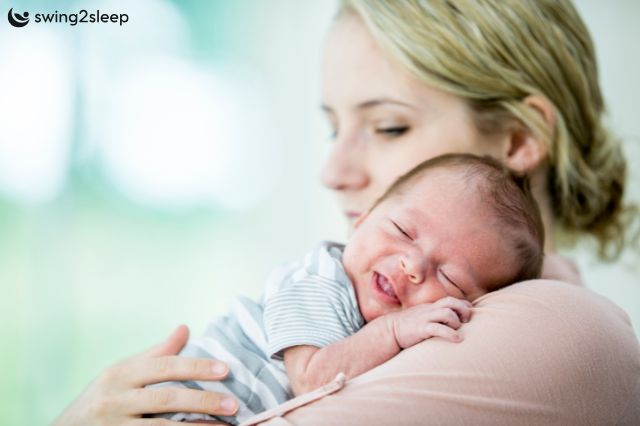
Babywearing: Carrying the baby on the body as often as possible
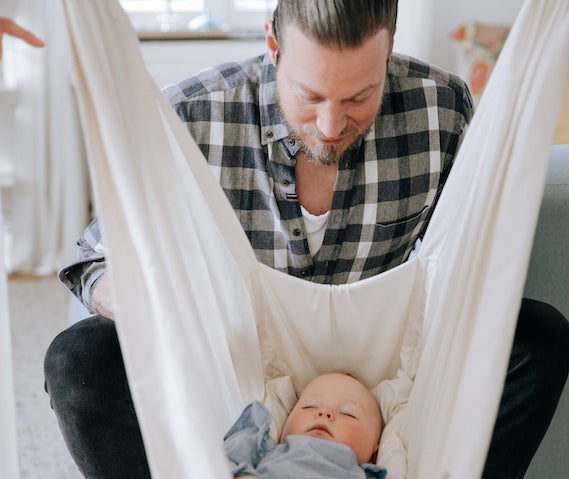
Bedding close to baby: Sleeping near the child
Belief in the language value of your baby's cry: Crying is the child's language and should be treated and respected as such
Beware of baby trainers: No sleep training
Balance: Finding the balance between the baby's needs and those of the mother
In summary, these seven points essentially call on parents to follow their natural instincts and provide the baby unconditionally with everything it needs. A deep bond and absolute trust between child and mother is considered the foundation of everything here and is ultimately even intended to ensure that the child will be easier to raise later on due to a pronounced willingness to cooperate.
However, there is also criticism of the concept
Criticism
Critics were not long in coming, and so the Sears couple faced a wide range of accusations. They were denied knowledge of relevant contemporary specialist literature, and it was criticized that the theories were largely based on their own parental experiences as well as those of parent friends. From another corner, they were accused of misogyny because it pushed mothers back into outdated role models, and the concept of instinct also met with resistance because, according to contemporary human research, it is considered outdated in connection with human behavior.
But while these points of criticism, whether justified or not, are largely fought out on an ideological playing field, affected mothers often face a much more mundane problem.
Given the pressures of modern life, it is sometimes extremely difficult for them to meet the requirements of attachment parenting. This leads to overwhelm, feelings of guilt, and an exaggerated fear that they will cause their child serious harm if they fail to be there within seconds at every slight expression of displeasure from the little being.
Staying relaxed with a sense of proportion
With such fears, the seventh point of the "7 Baby Bs" is often forgotten: Balance. The mother also has needs and obligations. You are only human too, and you can only do as much as your reality of life and your own resilience allow. Otherwise, the line to self-sacrifice or even self-abandonment may eventually be crossed. And that cannot be the point of it all. Furthermore, the partnership also runs the risk of being neglected. Or the sibling, because only the baby is the center of attention and the parents are constantly fixated on pleasing them.
Many actually useful ideas become harmful when they become dogma and allow for no deviation. If everything else is fine, your child will not be immediately traumatized just because you cannot get to them right away or react annoyed.
One may argue about the term "instinct," but we can just as easily replace it with intuition and empathy. The whole idea of attachment parenting is basically just about responding to the child's needs with understanding and empathy. However, even when implementing these ideas, it is important to maintain tact and flexibility. Bonding is good, but too much closeness can also be stifling for some children when they begin to develop a desire for autonomy.
In the case of misconduct, it is not always necessary to reprimand or sanction. Rather, it is important to explore the causes and, if necessary, start there. Is your child afraid, frustrated, or perhaps feeling stressed? Could it be that you yourself triggered the child's misconduct?
Even with as much attachment parenting as possible, it should be clear to you that the goal cannot be to have a child who is always well-behaved and compliant, meets your needs, and always appears perfectly raised. A child is an independent human being with their own will as well as their own ideas and wishes. As parents, it is our job to accompany them on their way and help them without dictating the direction. If you have to forbid your child from doing something because it is dangerous or because you cannot tolerate this specific behavior, you should take the time to explain why they are not allowed to do it. Why are they not allowed to kick the ball into the street? Why exactly should they not just run into the street? Why do they have to wash their hands before eating? Anyone can just forbid things. The more logically you explain it to your child, the more likely they are to accept the prohibition out of their own understanding. And above all, they will then not try to circumvent it when they feel unobserved. After all, children want to understand the world!
Basically, you could say: Attachment Parenting means treating your child the way you would have wanted your parents to treat you.
Bonding and Letting Go
The smaller the child is, the more important is a stable parent-child bond. During the toddler years, the foundations are laid for a bond that lasts a lifetime. This pays off especially when the teenage years arrive. Particularly when children are spreading their wings, when tendencies toward independence and battles for self-assertion occur, a deep bond protects both sides from a serious rift.
Attachment Parenting follows the approach that children who know exactly that they can rely on their parents are much more balanced and capable of learning than their peers with a poorer bond. They are psychologically more stable and usually also possess a better self-esteem.
Two principles stand in opposition here: The child should always receive attention when they need it, and unconditionally. At the same time, however, they also always need a certain degree of freedom, which should be adapted to their age.
A bond that is too close can deprive the child of the freedom they need to explore the world. Ultimately, they are meant to grow into an independent adult. This requires sensitivity to give the child the freedom that is appropriate for their age and temperament.
With babies, needs must be met immediately without any ifs or buts. A toddler can eventually also understand that besides them, there are also other people who have needs, and they sometimes have to take a back seat.
Attachment parenting or not – is this method right for us and our child?
Attachment parenting is a valuable approach in many ways. There is no question that babies need a lot of love and closeness. It also makes perfect sense that the bond between parents, especially the mother, and the child plays an extremely important role. Beyond that, however, your intuition is required, because the method is not a universal remedy. The needs and characters of children are too individual as they get older. If you do not start a gentle detachment process in good time, you run the risk of actually spoiling the child or depriving them of the chance to develop independence. If you start too early and to too great an extent, their basic trust may suffer. However, attachment parenting is also based on the idea of functioning communication between child and parents. If you are attentive, you will be able to read your child's signals. And you should by no means ignore your own inner voice either.
In any case, attachment parenting is a wonderful approach to give your baby a feeling of security, safety and love, and that is so important. That's why you certainly don't need to have a guilty conscience if you carry them a lot or do not let them cry.
Whether and to what extent attachment parenting is useful and sensible for you, however, depends on the general conditions and your child. Above all, it is important that you give your child a loving home in which they feel safe and secure. Treat attachment parenting more like a guideline and not like a rigid law that leaves you with hardly any room to breathe.
Upbringing completely individual
A good mix of affection, love, distance and closeness, setting boundaries and granting freedom – without any hitting and shouting – is always better than having to strictly adhere to a rigid, predefined concept.
There is no patent remedy for the best way to raise a child anyway. But it goes without saying that love and care should come first.
And that brings us back to instinct – excuse me! To intuition and empathy! In any case, good ingredients for supporting a child lovingly as they grow up.