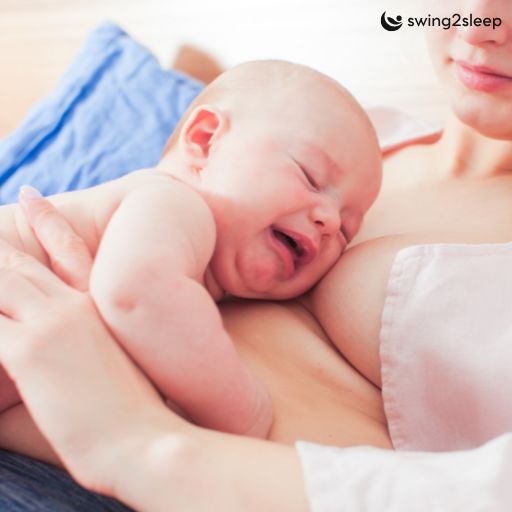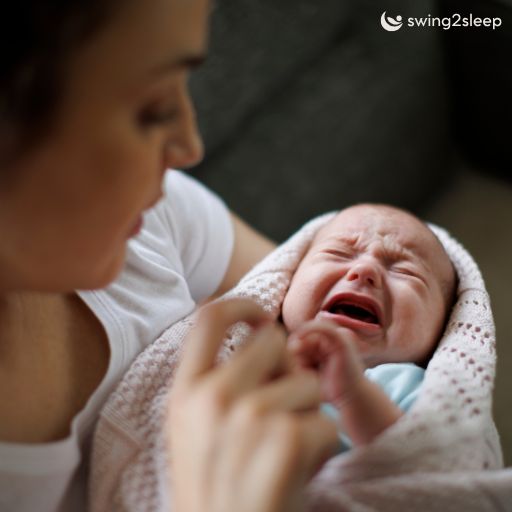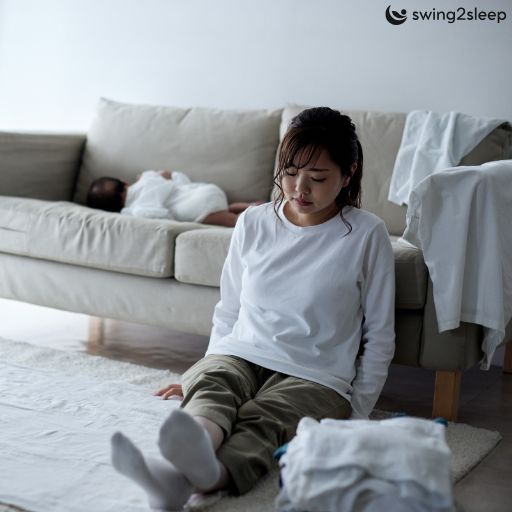



There are those moments that catch you completely off guard: your little one screams bloody murder for no reason, suddenly, loudly, and so intensely that it cuts right through you. You've just fed them, changed them, carried them, and yet nothing seems to help. Perhaps you go through everything in your head and ask yourself: What am I overlooking? Am I doing something wrong?
Many parents know this feeling. And it can be incredibly stressful.
When your offspring cries bloody murder for no reason, it often seems as if there is no trigger. Everything seems fine and yet the situation escalates within seconds. That is exactly what makes these moments so unsettling. You can't "read" your little one, even though you want nothing more than to help them.
The important thing at this point is: You are not alone. And you are very likely not doing anything wrong.
Babies don't scream to annoy or manipulate you. Screaming is their only way to communicate. Especially in the first few months, their nervous system is still immature. They cannot yet categorize or regulate feelings, stimuli, and physical sensations. What seems small to you can feel overwhelming for your little one.
And that is exactly why a baby can scream bloody murder for no reason, even though from your perspective there is no clear cause recognizable.
Sometimes there is something physical behind it or it is overstimulation. Perhaps also simply development.
And sometimes it is a mixture of everything.
In this article, we will take a calm look together at:
- what causes can lie behind the screaming
- why it often happens so suddenly
- what concrete steps you can take
- and how you can remain stable yourself in these moments
You don't have to figure this out alone. Step by step, it will become more understandable.

When your baby suddenly screams bloody murder
Perhaps you know exactly this moment: everything was just quiet and suddenly your little one screams bloody murder. Without warning. Without any apparent reason. The screaming is shrill, intense, and seems almost panicked.
In such situations, it often feels as if something is "wrong." Many parents are genuinely startled because this screaming sounds completely different from the usual crying. It is louder, more urgent, sometimes almost desperate. And that is exactly what triggers stress.
Your body reacts immediately. Your heart beats faster. You become restless. Perhaps you become hectic, try many things at once, picking them up, breastfeeding, carrying, singing. And yet nothing seems to help. This can quickly push you to your limits.
An initial, very crucial thought is important here:
Even if your offspring suddenly cries bloody murder, it does not automatically mean that something dangerous is behind it.
For your little one, this moment still feels real and overwhelming.
Babies experience their world much more intensely than we do. Noises, light, touch, tiredness—all of this hits them unfiltered. They cannot yet sort or process these impressions. When it becomes too much, it often "discharges" abruptly. And that is exactly when this seemingly sudden, violent screaming occurs.
Sometimes a small trigger is enough:
- a noise
- a full day with many impressions
- a brief moment of uncertainty
- a transition from awake to tired
To you, it seems sudden. For your offspring, it is often the point where they simply can't take any more.
Perhaps you have also experienced that your baby:
- cannot be calmed by anything
- stretches out in your arms
- cries even louder when you try to help
This is also typical in such moments. Your little one is not "against you." They are simply overwhelmed.
The most important thing in this situation is not to find the perfect solution immediately. But rather to be there, stay calm, as best as you can.
Because your baby looks to you for guidance. They feel your proximity, your voice, your presence. Even if they don't calm down immediately, you are giving them security. And sometimes that is exactly the first step out of the storm.
Is your baby really crying for no reason?
When your offspring cries bloody murder for no reason, it often feels as if there is absolutely no trigger. You have checked everything: full, changed, carried, and yet your little one continues to scream. This feeling of "I just can't find the reason" can be incredibly frustrating.
But here is an important thought that might take some pressure off you:
In most cases, your baby is not really crying for no reason. The reason is just not immediately visible.
Why "no reason" feels that way
Babies live completely in the moment. They cannot make connections like we do. If something feels unpleasant, it is immediately "too much" for them.
The problem: Many of these triggers are not directly recognizable to you.
For example:
- your baby is overtired but still seems awake
- they are overstimulated, even though the day was normal for you
- a small tummy ache feels huge
- an inner feeling of tension suddenly discharges
For you, this doesn't create a clear picture. For your little one, however, it is a real state of being overwhelmed.
That's why the impression quickly arises: My baby is crying for no reason.
In reality, it's more like this: The reason lies within and not outside.
And that is exactly what makes these situations so difficult.
colic baby guide:How babies communicate
Your baby has only one language: screaming.
They cannot tell you:
- "Everything is just too much for me right now"
- "I'm exhausted but can't find my way to sleep"
- "My tummy feels funny"
So all that's left is screaming.
There are very different types of screaming:
- a more "searching" scream when hungry
- a fussy scream when tired
- and this intensive, piercing scream that feels like screaming bloody murder
Especially when your baby cries at the top of their lungs for no apparent reason, it is often a combination of:
- Tension
- Overstimulation
- and a lack of self-regulation
At this age, your little one cannot yet calm themselves down. They need you as a "regulation aid". You can read more about this in the article on self-regulation in babies.
And yet: Even with your support, it doesn't always work immediately. This doesn't mean you are doing anything wrong. It just means your offspring currently needs more than they can process at the moment.

What causes can really be behind the crying
When your little one cries at the top of their lungs, it often seems dramatic and frightening. You might feel like something is completely wrong. But in many cases, there are several completely normal, developmental causes behind it that come together.
Especially when your offspring cries at the top of their lungs for no reason, it is rarely just one cause. Much more often, it is a mixture of different factors that are currently overwhelming your baby.
A look at the most common reasons can help you better categorize the behavior and relieve some of your internal pressure.
Overstimulation and too many impressions
Babies experience an incredible amount of new things every day. Noises, light, voices, faces, movements—all of this hits them unfiltered. What looks like a normal day to you can already be too much for your little one.
Typical situations:
- Visits from family or friends
- Shopping or being out and about
- Many stimuli in a row without a break
The problem: Your baby cannot yet process these impressions.
When too much accumulates, the tension often discharges suddenly.
Tiredness and over-tiredness
A very common but often underestimated trigger is tiredness. Many babies do not show tiredness clearly.
Instead of becoming calm, they become:
- Restless
- fidgety
- overstimulated more quickly
If the right time to fall asleep is missed, the situation quickly tips over. Your little one is then over-tired and finds it even harder to fall asleep.
The result:
Intense crying that is hard to soothe. This pattern often occurs especially in the evening.
Stomach ache and physical discomfort
Physical causes can also be behind it.
Typical are:
- Flatulence
- a bloated stomach
- digestive problems
For your offspring, such sensations often feel much stronger than they do for us. A small "fart" that is stuck can feel like a major pain.
Typical signs:
- your little one pulls up their legs
- they seem tense
- they cry suddenly and violently
Here, too, the crying can quickly reach an intensity that feels like they are crying "at the top of their lungs".
Need for closeness and insecurity
Babies rely on closeness. Not just physically, but also emotionally.
If your baby feels insecure, for example:
- when waking up
- when being put down
- in a new situation
they can enter a kind of "alarm state".
For your little one, being alone doesn't just mean peace and quiet. It potentially means insecurity.
The crying is then a call for:
- Protection
- Closeness
- Orientation
This need in particular is often underestimated. Yet it is a very central reason why a baby cries at the top of their lungs for no reason. You can find more background information on this in the article "Infant crying."
It is important to note: In most cases, all these causes are normal and temporary. Even if it feels very intense at the moment.
Why the crying often comes suddenly
Perhaps one thing irritates you most of all: This crying seems to come out of nowhere. One moment your baby was calm, and the next moment your little one is crying at the top of their lungs for no reason. These sudden changes can be unsettling and often leave you feeling helpless.
But here, too, the following applies:
For your offspring, it doesn't happen suddenly. It is rather the moment when too much comes together.
Processing stimuli in the evening
Many parents know it: During the day everything still seems relatively calm, but in the late afternoon or evening the mood tips.
This is no coincidence.
Throughout the day, more and more impressions accumulate for your offspring:
- Noises
- Experiences
- New stimuli
- Physical sensations
These must be processed. But that is exactly what babies still find difficult.
In the evening, the "system" is then often simply full.
The result:
- Restlessness
- Crying
- or precisely this intense screaming
Your little one discharges the accumulated tension. And that can then manifest as sudden, violent crying.

Growth spurts and development
Babies develop rapidly. In short intervals, an incredible amount happens in the brain and body.
During such developmental steps, your offspring can:
- react more sensitively
- be overwhelmed more quickly
- find it harder to settle down
These phases are often perceived as crying phases, in which your little one cries significantly more than usual.
Important to know: These phases are temporary. Even if they feel very intense in everyday life.
What you can specifically do when your baby cries
When your little one cries at the top of their lungs for no apparent reason, you want one thing above all: to help. Immediately. Ideally with a solution that works right away. But that is often exactly what is not possible.
Not because you are doing something wrong, but because your offspring is usually already very tense at that moment. In such cases, frantic trial and error doesn't help; instead, a calm, simple approach is needed.
Not perfect. But clear.
When your baby cries intensely, go through a small internal checklist:
- Are they hungry?
- Is the diaper full?
- Are they too warm or too cold?
- Do they seem tired?
- Could they have a tummy ache?
The important thing is not to test everything at once. That is exactly what often makes the situation even more restless. It is better to check one thing after another. Sometimes you find a trigger quickly. Sometimes you don't. That is also normal.
Because even if the need is already met, your little one may continue to cry because the internal tension is still there.
1. Reduce stimuli
When your baby is very upset, less input often helps.
This can mean:
- Dimming the lights
- Keeping voices lower
- Turning off the TV or music
- Changing the room
- Only one person calms the baby
Especially in cases of overstimulation, a calmer environment can provide noticeable relief. Many babies settle down better when things around them become quieter, darker, and more consistent.
You don't have to create a perfect sleeping environment. Often, it is enough to consciously slow down the pace.
2. Use proximity and movement
Many babies are calmed by physical contact and gentle movement.
What can help:
- Carrying in your arms or in a carrier
- Slow rocking
- Calm walking
- Quiet humming or speaking
- Skin-to-skin contact
Your proximity gives your offspring orientation. They feel your heartbeat, your voice, your warmth. This can help to slowly calm the overwhelmed nervous system again.
The important thing is: stay gentle. Not too much, not too fast.
Some babies do not want to be held more tightly in such moments, but rather a bit more loosely. In those cases, it is worth observing your baby's muscle tension closely.
crying baby guide:3. Create rituals
Repetition provides security. Babies in particular benefit greatly from small, reliable routines.
These could be, for example:
- A specific song
- The same sequence in the evening
- Calm carrying after an exciting day
- A darkened room before falling asleep
Rituals do not solve every crying fit immediately. But they help your little one to manage transitions better and to experience stimuli more predictably. This is especially valuable if your baby gets out of balance quickly.
What really helps your baby now (and what doesn't)
When your offspring cries at the top of their lungs for no reason, you want to do everything right. You might try many things, read tips, listen to advice, and yet uncertainty often remains: Am I doing enough? Or maybe even too much?
The truth is: There is no single perfect solution. But there are things that are likely to really help your baby in such moments and others that might make them even more restless.
5 tips: What really helps your baby now
In intense crying phases, it is primarily about regulation. Your baby needs support to calm down again.
The following are particularly helpful:
- Calmness and consistency: Gentle, repetitive movements, a calm voice, few changes. Your baby orientates themselves on consistency.
- Physical contact: Proximity provides security. Your offspring feels your heartbeat, your warmth, and your breath. This can help to reduce internal tension.
- Stimulus reduction: Less light, less noise, less input. Especially when your baby is overstimulated, this is often crucial.
- Patience: Sometimes it just takes time. Even if you do everything "right," the crying may continue for a while.
- Your presence: You don't have to stop the crying immediately. It is often enough that you are there and accompanying your little one.
This sounds simple, but is often difficult to implement in everyday life. Especially when your own nerves are already frayed.

4 things that tend not to help (even if they are understandable)
When your baby cries so intensely, it is completely understandable that you look for quick solutions. However, some things can unintentionally intensify the situation:
- Constantly changing strategies: Nursing, carrying, lying down, picking up again—everything in quick succession can further overwhelm your little one.
- Too many stimuli at once: Music box, light, noise, movement. It is well-intentioned, but often too much.
- Hectic and tension: Your baby senses your inner restlessness. This is not a reproach, but simply a natural mechanism.
- The pressure to stop the crying immediately: This pressure often transfers to the situation.
A particularly sensitive topic is also the question of whether you should let a baby cry. You can read more about this in the article: Letting a baby cry.
The important thing is: It's not about doing everything perfectly. It's about giving your offspring as much security as possible.
And perhaps the most important thought in this section:
You are allowed to accompany your baby, even if they are crying. You don't have to "fix" them.
When your baby cannot be calmed at all
There are those moments when seemingly nothing helps anymore. You carry your baby, speak calmly, try everything that usually works, and yet your baby continues to cry at the top of their lungs for no reason.
This can be incredibly draining. Especially when these situations repeat themselves.
You might then ask yourself: Is this still normal? Or is something wrong?
Colicky baby or normal phase?
In such moments, many parents quickly come across the term "colicky baby." This can cause additional uncertainty.
As a general rule: Intensive crying phases are not unusual in the first months of life.
Particularly typical:
- your little one cries for several hours a day
- they are difficult to soothe
- the phases occur mainly in the evening
Excessive crying is often spoken of when a baby:
- on several days per week
- for several hours
- cries intensely over a longer period of time and can hardly be soothed
But here too, it is important: This says nothing about whether you are doing something wrong.
You can find more on this in the article: Colicky baby and the parents are to blame.
Many of these phases are related to development, sensory processing, and temperament. They are stressful, but often temporary.
When you should seek help
Even if much is normal, there are situations in which support is sensible.
For example, if:
- your baby cannot be soothed at all over a long period of time
- the crying seems very sudden and unusual
- your baby also drinks or sleeps poorly
- you have the feeling that something is not right
And just as important: If you notice that the situation is putting a heavy strain on you. You don't have to endure this alone.
Possible points of contact:
- your midwife
- pediatrician
- Crying clinics
- counseling centers
Sometimes just a conversation helps to gain confidence. And sometimes it is simply important to have someone from the outside take a look.
What is often not said enough:
It's not just about your little one.
It's also about you.
What you can do for yourself in such moments
When your baby screams their head off for no reason, it doesn't just go through your baby's whole body, but yours too. This intense crying can trigger stress, make you feel tense inside, and sometimes even evoke feelings that frighten you.
You might notice:
- that you become restless
- that the crying overwhelms your nerves
- or that anger suddenly wells up
All of this is allowed to be there. Even if it feels wrong at first. If you are familiar with such thoughts and want to better categorize them:
The article, Baby makes me aggressive, might help you.
The important thing is:
You are not a bad parent just because this situation pushes you to your limits.
5 small strategies that can help you
You don't have to just "deal with" these moments. You are allowed to actively do something for yourself.
For example:
- Breathe in and out consciously and deeply: Sounds simple, but can help calm your nervous system.
- Take turns, if possible: If another person is there, hand over your little one for a moment.
- Put your baby down safely: If you notice that it's becoming too much for you, it's perfectly fine to put your baby in their crib for a moment and leave the room.
- Create small breaks: Even a few minutes can help you clear your head again.
- Talk about it: With your partner, friends, or family—you don't have to carry this alone.
How an automatic baby hammock can help
In some situations, it can be helpful to get additional support for everyday life. Especially if your baby reacts very sensitively to stimuli or is difficult to soothe, a steady movement can have a relieving effect.
An automatic baby hammock addresses exactly this.
The gentle, rhythmic movements create a steady stimulus that reminds many babies of their time in the womb.
This movement can help:
- calm the nervous system
- reduce stimuli
- facilitate transitions into sleep
Especially in phases where your baby screams their head off for no reason, this steady movement can help your baby find a calmer state more quickly.
Important to know: An automatic baby hammock is not a "miracle cure."
But it can be a supportive option to allow your baby more rest and at the same time give you small moments of relief in everyday life.
Conclusion: Your baby doesn't cry for no reason
When your baby screams their head off for no reason, it often feels exactly like that: groundless, sudden, incomprehensible. You look for answers and find none at first. This can cause uncertainty, exhaustion, and make you doubt yourself.
But even if it feels that way:
Your baby does not cry for no reason. The reason is just not always visible.
Maybe it's overstimulation after a long day.
Or tiredness that is discharging.
Maybe a small physical discomfort.
Or simply an immature nervous system that is currently overwhelmed.
Often it is a mixture of everything.
The important thing is: You don't have to recognize every cause immediately. And you don't have to "solve" every crying fit directly.
In these moments, your baby primarily needs:
- your closeness
- your calmness, as much as possible
- and your presence
Even if they continue to cry. You are there. And that counts.
Over time, you will understand your baby better and better. You will recognize patterns, sense more quickly what might help, and gain more confidence in dealing with such situations.
And these intensive phases will also pass.
Maybe not immediately.
But step by step.
Until then, you can tell yourself again and again:
You are doing your best. And that is enough.