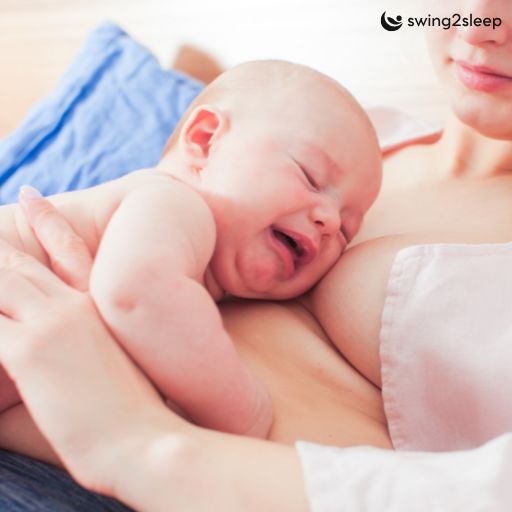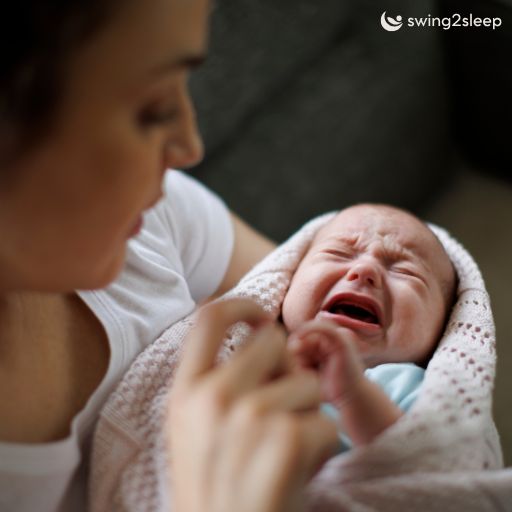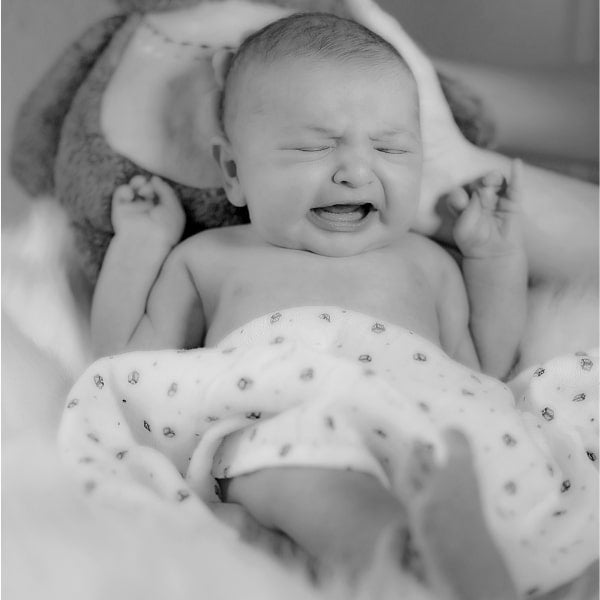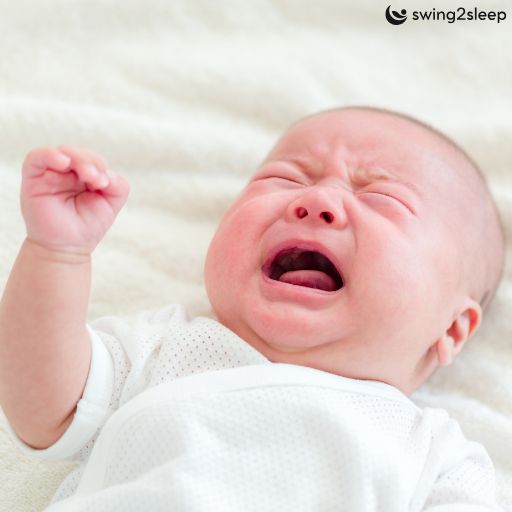
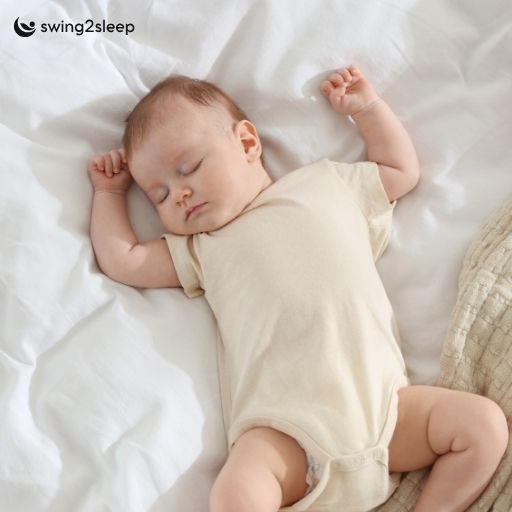


The Moro reflex is a startle response in which the baby extends its arms and legs as well as both hands and spreads its fingers or forms a fist. It is a remnant from our time as active clingers.
When their position changes, babies wake up from it and never really settle down. All too often, the night's rest is gone once again and the struggle to fall asleep begins anew.
But when is the Moro reflex vital for survival and when is it dangerous? What effects does it have on the nervous system and how can you prevent the Moro reflex from frequently jolting a child out of sleep? We address these and other questions in this article.
The Moro reflex: When the baby twitches in its sleep
The Moro reflex in babies is an early childhood survival reflex. It was named after the pediatrician Ernst Moro, who first described it in 1918. This reflex occurs during sudden changes in the child's position, but also in frightening situations.
The baby's mouth opens, it takes a deep breath and at the same time moves its arms upwards away from the body. The hands are open at first, the little fingers fully extended. Then the child exhales, brings its arms back to its body and clenches its hands into fists.
The inhalation and exhalation sounds almost a bit like a sigh. Put a bit more simply, the clasping reflex can also be described as the baby flinching and throwing its arms in the air, just as if it were getting a fright and reaching for something with its hands.
This reflex used to be vital for newborns because it allowed them to cling to their mother in dangerous situations. Even today, in the first months of life, it helps to expand the lungs so that there is no threat of suffocation.
The Moro reflex exists not only in humans, but also in other primates and some other mammals, but especially in active clingers. These are mammals that cling to the mother's body and are carried.
In most cases, the Moro reflex subsides between the 3rd and 6th month of life and is replaced in adulthood by the adult startle reflex.
How is this reflex triggered?
The Moro reflex is also known as the startle reflex, among other things, because it is an immediate startle reaction. However, it can also be triggered by loud noises, light or other stimuli.
It can even occur during the transition from a REM phase to a deep sleep phase. For parents, it then looks as if their baby is twitching abruptly in its sleep, but this is a reaction of the baby's nervous system intended to prevent the infant from forgetting to breathe.
When the Moro reflex disturbs sleep
Children are very easily startled and especially easily startled babies often have problems with sleeping because they are repeatedly woken up by their own movements due to the Moro reflex triggered during sleep. So it is not always noises or vibrations that trigger the Moro reflex; your baby's body can also bring about the early childhood reflex.
At that age, the child does not yet have a sense of self: it does not know that the arms flailing next to its body are its own! Almost everyone finds sudden hectic movements near their face threatening, and the child even more so.
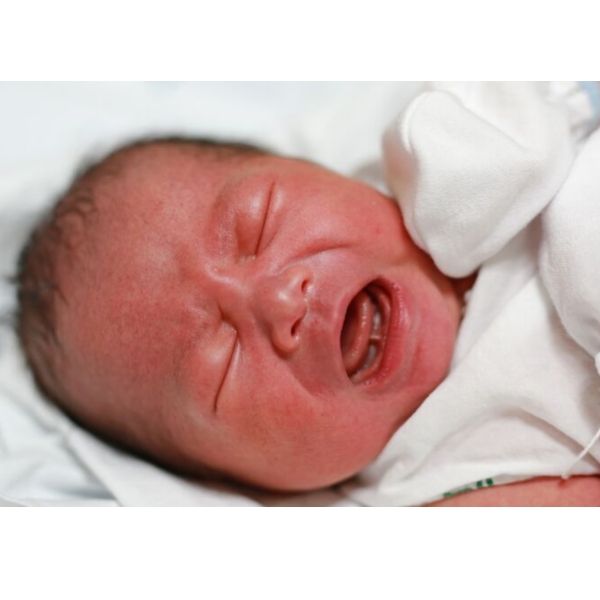
The consequence: It wakes up, gets a fright, the stress hormones adrenaline and cortisol are released, the heart rate increases and the baby cries. Sometimes a child frequently has a whole series of startling moments that force it to wake up again and again.
Can swaddling ensure the sleep of newborns during the Moro reflex?
It was practiced a long time ago, then it was out of fashion for a long time and in recent years it has been increasingly recommended by midwives again: swaddling.
In many countries, babies have always been swaddled; it was only here that this tight wrapping of the child had been forgotten for a long time. Now people are returning to it.
With good reason: By wrapping them tightly, you prevent the Moro reflex in your baby, which is responsible for uncontrolled twitching until the fifth month of life.
By keeping the arms close to the body, this reflex is suppressed so that your baby can sleep more peacefully and without disturbances. In addition, swaddling has a calming effect on your child, because the tightness in the cloth reminds your baby of the womb.
After birth, the newborn is suddenly confronted with a shrill, bright, cold and vast outside world. There it understandably feels lost and responds by crying.
If you put it in a normal crib, it lacks the surrounding boundaries that previously gave it support and security. In the first months of life, the Moro reflex persists. Swaddling can help ensure that your baby is no longer woken up by the reflex.

Swaddling: More benefit than harm
Swaddling is considered by many to be an effective remedy against the Moro reflex. Not only because the child feels safe and secure in the cozy tightness, but also simply because the tight wrapping prevents the jerky lifting of the arms and prevents the child from being startled out of sleep. However, swaddling is not without controversy.
In fact, some safety measures must be observed when swaddling. The wrapping must not be too tight, and the legs should enjoy freedom of movement (for example, through a swaddle bag) to avoid hip dysplasia.
You must also ensure that your child drinks enough and does not overheat. In case of doubt, however, the following always applies: Discuss it with your pediatrician or midwife if your baby obviously finds the reflex disturbing.
The automatic baby hammock from swing2sleep helps against the Moro reflex
Parents have also had good experiences with motorized automatic baby hammocks in suppressing the Moro reflex. Although your child also lies in a swing2sleep in cozy closeness, it is nowhere near as restrictive as swaddling. This, of course, also eliminates the danger of constricting the child too much.
The secret of the swing2sleep is its gentle up and down movements, which have a calming effect on the child. The Moro reflex is also suppressed by the rocking of the baby.
With a swing2sleep, cozy closeness and gentle rocking combine to form an effective remedy against the Moro reflex, which allows you and your child to sleep through the night more often. It glides, without any startling, from light sleep into the deep sleep phase.
Alternative: The swaddle cloth
In principle, any slightly elastic cloth is suitable for swaddling (e.g., a knitted blanket). When swaddling, care must be taken to ensure that the baby cannot slip into the cloth. The child is wrapped tightly and the ends of the cloth are pinned so that the whole thing holds. You can find out exactly how this works in this step-by-step guide.
- Lay the cloth in a diamond shape in front of you on the changing table.
- Fold the top point downwards.
- Place the baby with its neck on the resulting fold in a supine position.
- Make sure that your baby's arms are at the sides of the body.
- Cover your baby with the right side of the cloth. Then tuck the cloth firmly under the back on the left side of the body.
- Now fold the bottom point of the cloth upwards to your baby's chest.
- Place the left side of the cloth over your baby's body and tuck the end under the back.
If you have any questions, your midwife can certainly help you. If you want it to be very convenient, there are also swaddle cloths that are easier to put on. These are usually already pre-shaped and can be closed with a Velcro fastener.
It could hardly be easier. Studies show that swaddled babies fall asleep faster, sleep longer, sleep through the night better, and cry less overall. In this respect, swaddling is definitely worth a try.
If you are not yet familiar with it, this guide might help you:
For twice as restful sleep, you can also try placing your swaddled baby in a swing2sleep. This is almost certain to send your child straight to slumberland. Swaddling and the gentle rocking of a swing2sleep: an unbeatable combination!
FAQ: Frequently Asked Questions
Why does my baby twitch in their sleep?
Twitching during sleep is very common in babies and usually completely normal. The brain is still immature and does not always fire nerve impulses in a cleanly synchronized manner. Especially in the REM sleep phase (dream sleep), arms, legs, or the face can twitch briefly.
The so-called Moro reflex (startle reflex) can also occur during sleep: The baby suddenly stretches out arms and legs and pulls them back in. This is not a sign of pain or illness, but a remnant of early development.
What does heavy twitching during sleep mean?
"Heavy" does not automatically mean "dangerous".
What matters is the pattern:
- Normal is: short, irregular twitching of individual body parts that stops when the baby enters another sleep phase or is gently moved.
- Conspicuous would be: rhythmic, steady twitching over a longer period of time, especially if it always happens the same way and the baby seems difficult to wake.
In the vast majority of cases, it is still benign sleep myoclonus, harmless muscle twitching of no clinical significance that disappears with age.
How do I tell if my baby is having a seizure in their sleep?
A real seizure differs significantly from normal twitching. Warning signs can be:
- steady, rhythmic movements that last for several minutes
- change in breathing (very shallow, pausing, or unusual)
- staring gaze, rolled-back eyes, or lack of reaction
- bluish lips or skin
- the twitching does not stop when the baby is gently touched or woken up
This is rare, but requires medical clarification. A single short twitch without further symptoms is not a seizure.
How does a baby with KISS syndrome behave?
The so-called KISS syndrome (Kinematic Imbalance due to Suboccipital Strain) is medically controversial and not uniformly recognized. Frequently described are:
- pronounced preferred side of the head, hardly changing
- asymmetrical posture
- frequent crying that is difficult to comfort
- breastfeeding or drinking problems
- increased muscle tension or appearing "stiff"
Important: Twitching during sleep alone is not a typical sign of KISS syndrome. Many of the symptoms mentioned also occur in completely healthy babies or have other, easily explainable causes.