

If you found out a few weeks ago that you are pregnant, we would first like to congratulate you. The first weeks of pregnancy are very exciting for many expectant parents. At the same time, however, many fears also arise: You are probably wondering whether your baby is healthy. During the first-trimester screening, your baby is examined for malformations and chromosomal disorders.
In this article, we explain exactly what is examined during a first-trimester screening and how reliable the results are. At the same time, we discuss how to proceed after an abnormal finding.
First-trimester screening: What is it & which malformations are detected?
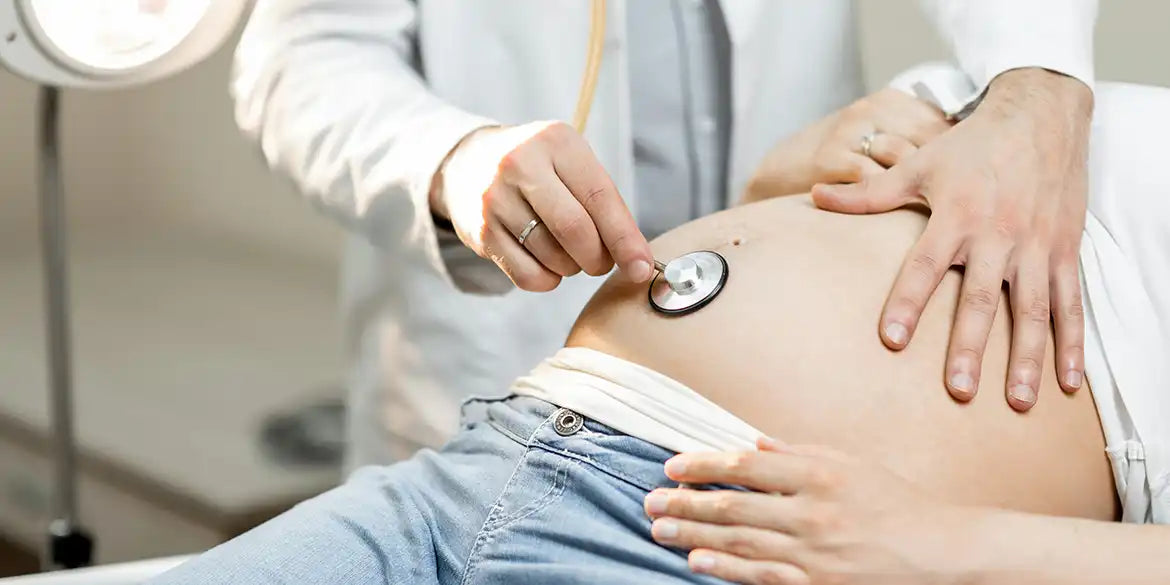
A first-trimester screening is a prenatal diagnostic examination. It is usually carried out in the first third of pregnancy between the 11th and 14th week of pregnancy. During this examination, various tests are performed to detect possible malformations or chromosomal disorders.
For example, a detailed ultrasound examination is carried out. This checks your baby's development and looks for malformations. The organs are often examined particularly thoroughly. Serious malformations, heart defects, or disorders in the unborn child can usually be clearly identified in the high-resolution ultrasound.
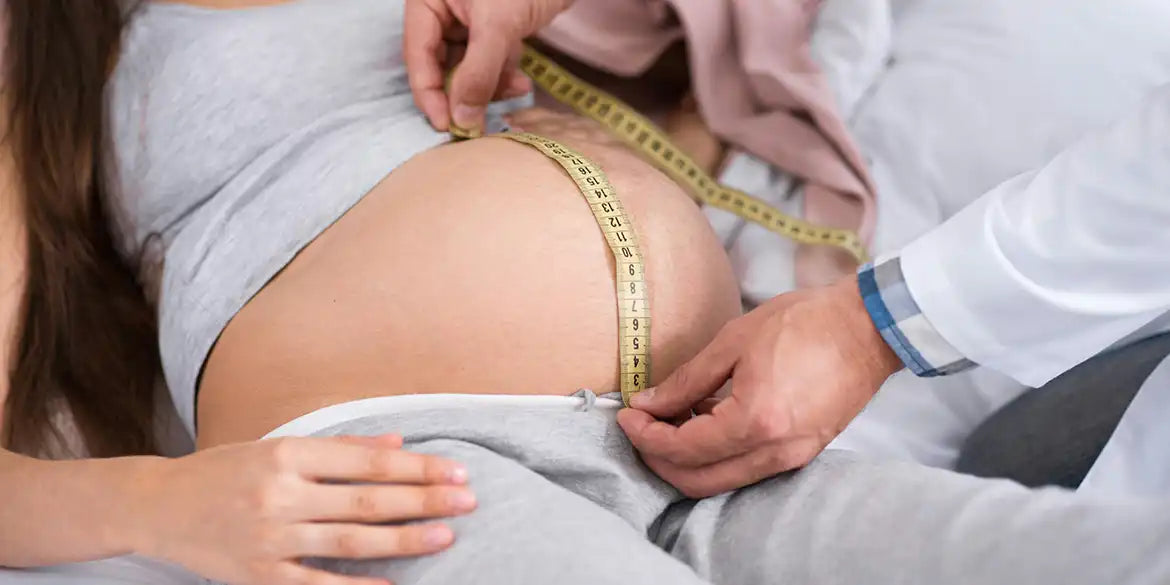
A nuchal translucency test is also performed during the ultrasound. The doctor measures the child's nuchal fold. This can provide information about whether your baby might be suffering from trisomy (especially trisomy 21). During the ultrasound, a precise assessment and measurement of the nasal bone can also be carried out.
At the same time, the maternal blood is also examined (NIPT). Crucial factors here are, for example, the hormone HCG and the protein PAPP-A. If these values deviate, this can be associated with a risk of chromosomal disorders. Your risk of pre-eclampsia (pregnancy-related high blood pressure) is also determined and the blood flow pattern (ductus venosus) of your unborn child is checked.
The decisive factor is that all examinations in the first-trimester screening are non-invasive procedures. Blood is merely taken from the expectant mother, which represents only a minimal intervention in the body.
How reliable are the results of the examination?
You will most likely not receive a diagnosis during a first-trimester screening. The tests only perform a risk calculation: it is determined how high the risk of a chromosomal disorder or malformation is.
The results of the tests are not the only decisive factor. Maternal age and the week of pregnancy are also taken into account. From the maternal blood pressure and the resistance of the uterine artery, your doctor can also determine your risk of pre-eclampsia.
So do not expect to receive a diagnosis during the examination. Rather, a probability for trisomy 13, 18, and 21 as well as for other diseases is calculated. To illustrate this, you should be clear about what the results mean.
If your doctor has calculated an individual risk of 1:1000 for a genetic abnormality, then the child of one mother out of 1,000 mothers has a trisomy. Often such values are abstract, and doctors therefore provide the result in the form of a traffic light. Red, orange, and green indicate how high the risk is and allow you to assess the values much better.
You should also be aware that the first-trimester screening is not 100% accurate. During the examination, a correct diagnosis is made in about 85% of babies with trisomy 21. However, this also means that the disease is not detected in 15% of babies. Furthermore, false suspicions are also possible. An estimated 5% of abnormalities are not confirmed.
Ultrasound & invasive diagnostics: What happens after an abnormal first-trimester screening?
If a high risk of a chromosomal disorder was determined during the first-trimester screening, further examinations for a more precise diagnosis are often necessary. However, these tests only take place if you agree to them. They are completely voluntary and there is therefore no obligation to have them carried out.
If you decide that you want to have further diagnostic examinations carried out, the following procedures can be used:

Ultrasound:
If an abnormality was detected in your baby, an ultrasound examination is usually carried out again. Ask for an experienced doctor who is well-versed in prenatal diagnostics. They can better assess whether a malformation or chromosomal disorder actually exists.

Placental puncture:
Placental puncture (chorionic villus sampling) is an invasive examination. Cells are taken from the placenta and examined. These cells allow for a precise diagnosis because they are identical to those of the baby. Whether a disease is present can be determined with certainty. However, the procedure is also associated with a risk.

Amniocentesis:
Amniocentesis (amniotic fluid test) is also one of the invasive procedures. In this method, cells from the baby are examined from the amniotic fluid. For example, hereditary diseases, chromosomal deviations, and infectious diseases can be detected.
Before one of these examinations can be carried out, your doctors must inform you in detail about possible risks. Although invasive procedures are much safer today than they used to be, they can be associated with a risk of miscarriage. Whether an invasive examination is carried out during pregnancy should therefore be carefully weighed. You can make this decision freely.
Automatic baby hammock from swing2sleep: Cozy sleeping place for all babies
Regardless of whether you received an abnormal or normal result during the first-trimester screening: As expectant parents, you certainly want to create the best conditions for your child after birth. If you are currently dedicating yourself to the preparations for your baby's arrival, then you should take a look at the automatic baby hammock from swing2sleep.
It offers your baby a cozy nest in which it can sleep restfully. To do this, you place it in the hammock, where it lies closely embraced. This feeling reminds your baby of the time in the womb and therefore calms it down. If you turn on the automatic baby hammock motor, your baby will be rocked to sleep with gentle movements. This makes not only falling asleep but also staying asleep much easier.
We have already been able to convince more than 192,000 families of our automatic baby hammock. In the meantime, it is even recommended by midwives and osteopaths. If you are also looking for a cozy nest for your baby, then feel free to take a look at the automatic baby hammock from swing2sleep.
Conclusion: The first-trimester screening has advantages and disadvantages
A first-trimester screening is a voluntary examination – expectant parents do not have to have it carried out. If you want to ensure that your baby is healthy and has no genetic abnormalities, then the tests can give you certainty.
At the same time, there are many parents who consciously do without this examination. Always keep in mind that it is your voluntary decision whether you want to have a first-trimester screening or not.