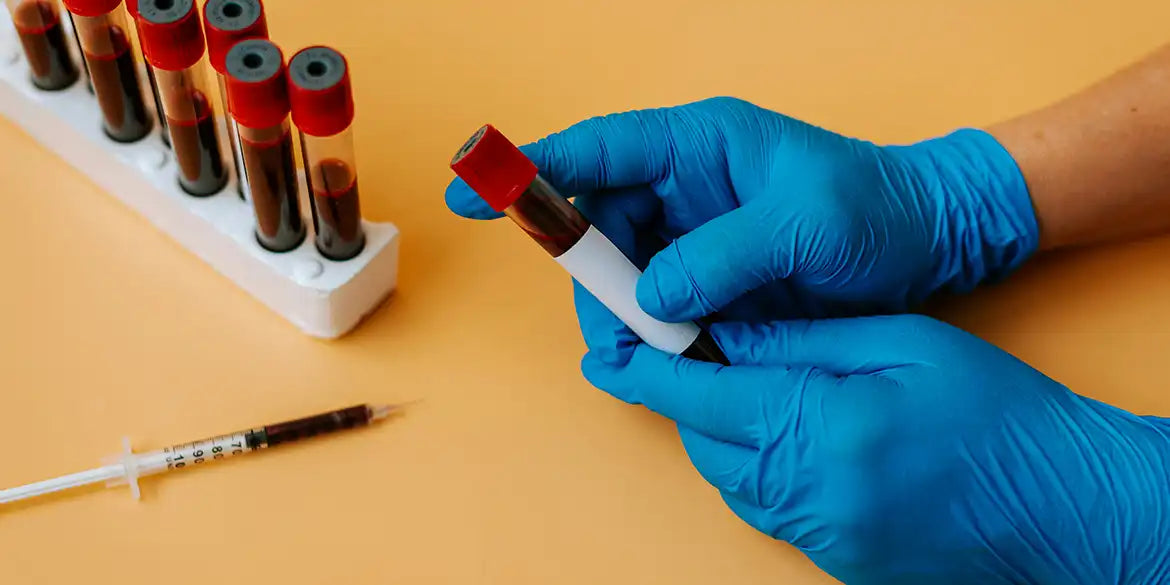



All expectant parents hope that their baby will be born healthy. During your pregnancy, you will regularly attend check-ups to ensure your baby's healthy development. As part of prenatal diagnostics, you have the option of having additional examinations carried out that go beyond standard prenatal care.
In this article, you will find out exactly what prenatal diagnostics are and which invasive and non-invasive examinations are offered. We also discuss the cases in which the examinations are advisable and who covers the costs.
What is meant by prenatal diagnostics (PND)?
The term "prenatal diagnostics" refers to prenatal testing. These are various tests, examinations, and procedures that can be carried out before your baby is born. Their aim is to diagnose or rule out malformations and genetic abnormalities in your baby.
If you are pregnant, your doctor will regularly take blood samples, perform an ultrasound, and listen to your child's heartbeat. In the course of prenatal diagnostics, however, examinations are offered that go far beyond conventional prenatal care.
Many of them are only carried out after an initial suspicion or a family history: If a doctor suspects a malformation in the unborn child, these more specific prenatal diagnostic examinations can be performed.
Invasive and non-invasive prenatal diagnostics: What is the difference?
When you are pregnant and find out about prenatal diagnostics, you will repeatedly hear the terms "invasive" and "non-invasive". The examinations, tests, and procedures of prenatal diagnostics are divided into these two categories, which you should definitely know.
If an examination is non-invasive, it does not interfere with your body. No tissue is injured and no instruments are inserted into your body. As a result, non-invasive physical examinations are associated with a particularly low risk.
The situation is different for invasive examinations: These are procedures in which your body is entered. This is the case, for example, when amniotic fluid is taken from you with needles. Invasive proc
Which non-invasive examinations can be carried out during pregnancy?
As part of normal prenatal care, your doctor will carry out non-invasive examinations at regular intervals. These are intended to ensure that your baby is developing healthily and does not have any illnesses. On request, expectant parents can have several other non-invasive tests carried out.
We summarize the most important non-invasive prenatal diagnostic examinations:

Ultrasound:
During pregnancy, your doctor will look at your baby several times via ultrasound. They check whether it is developing according to its age, whether the organs have formed correctly, and how the heart is beating. Ultrasound is one of the most popular prenatal examinations, as expectant parents can also take a look at their baby.

Doppler ultrasound:
Doppler ultrasound allows your doctor to examine the blood flow in your baby's body. For example, they can see how the blood flows through the vessels and to the heart.

First-trimester screening:
Between the 11th and 14th week of pregnancy, expectant parents can have a first-trimester screening carried out. During this, your doctor examines your baby's organs, for example, and determines the risk of malformations or disabilities. In particular, the risk of trisomy 21 is calculated during the screening.

Nuchal translucency scan:
As part of the first-trimester screening, a nuchal translucency test is performed on your baby. This test can provide an initial indication of Trisomy 21 in your baby.

NIPT blood test:
The non-invasive prenatal diagnostic tests also include the NIPT blood test. In this procedure, blood is taken from the expectant mother, which can then be analyzed for signs of genetic abnormalities in the unborn baby. Usually, further tests are required afterwards to make an accurate diagnosis.
As you can see, conventional ultrasound examinations are by far not the only way to examine the baby before birth. Non-invasive examinations and tests have the advantage of being associated with a low risk of complications, as they do not interfere with your body.
If an abnormal finding is made during one of the examinations, further tests and procedures within the framework of invasive prenatal diagnostics are often necessary.
Overview of invasive prenatal examinations
If your doctor has received an abnormal result from a non-invasive test, further examinations are usually necessary. As a rule, invasive examinations and procedures are only recommended at that point. They carry a higher risk for mother and child and are therefore not performed without specific indications.
Within the scope of prenatal diagnostics, for example, an amniocentesis can be performed. During this procedure, your doctor uses a fine needle to remove a small amount of amniotic fluid from your uterus. The amniotic fluid contains cells from your baby that can then be analyzed. This also allows your baby's DNA to be examined.
Should there be a genetic abnormality, it can be detected during the amniocentesis. Diseases that can be diagnosed this way include, for example, trisomies and hereditary diseases. Infections or malformations can also be detected during an amniocentesis.
Another prenatal examination is chorionic villus sampling (CVS). A fine needle is used to remove tissue from the placenta: the cells match those of your baby. If they are examined in the laboratory, changes in the chromosome structure can be detected. Blood disorders, hereditary diseases, and trisomies can be diagnosed this way.
Alternatively, a cordocentesis (umbilical cord blood sampling) can be performed. In this procedure, blood is taken from the umbilical cord. A laboratory test can then determine whether your baby has certain diseases or disabilities.
Procedures can be associated with a higher risk and are therefore usually only performed if there is a medical indication.
If your doctor classifies your baby as healthy after the check-up, they will likely not advise you to have an invasive examination.
Which non-invasive examinations can be performed during pregnancy?
As part of normal prenatal care, your doctor will perform non-invasive examinations on you at regular intervals. These are intended to ensure that your baby is developing healthily and has no diseases. Upon request, expectant parents can have several other non-invasive tests performed.
We summarize the most important non-invasive prenatal diagnostic examinations:
Ultrasound:
During pregnancy, your doctor will examine your baby several times via ultrasound. They will check whether development is age-appropriate, whether the organs have formed correctly, and how the heart is beating. Ultrasound is one of the most popular prenatal examinations, as it also allows expectant parents to catch a glimpse of their baby.
Doppler ultrasound:
Doppler ultrasound allows your doctor to examine the blood flow in your baby's body. For example, they can see how blood flows through the vessels and to the heart.
First-trimester screening:
Between the 11th and 14th week of pregnancy, expectant parents can have a first-trimester screening performed. During this, your doctor examines your baby's organs, for example, and determines the risk of malformations or disabilities. In particular, the risk of Trisomy 21 is calculated during the screening.
Nuchal translucency scan:
As part of the first-trimester screening, a nuchal translucency test is performed on your baby. This test can provide an initial indication of Trisomy 21 in your baby.
NIPT blood test:
The non-invasive prenatal diagnostic tests also include the NIPT blood test. In this procedure, blood is taken from the expectant mother, which can then provide clues to genetic abnormalities in the unborn baby. Usually, further tests are then required to make an accurate diagnosis.
As you can see, conventional ultrasound examinations are by far not the only way to examine the baby before birth. Non-invasive examinations and tests have the advantage of being associated with a low risk of complications, as they do not interfere with your body.
If an abnormal finding is made during one of the examinations, further tests and procedures within the framework of invasive prenatal diagnostics are often necessary.
Overview of invasive prenatal examinations
If your doctor has received an abnormal result from a non-invasive test, further examinations are usually necessary. Generally, invasive examinations and procedures are only recommended at that point. They carry a higher risk for mother and child and are therefore not performed without specific indications.
As part of prenatal diagnostics, an amniocentesis can be performed, for example. During this, your doctor uses a fine needle to remove a small amount of amniotic fluid from your uterus. The amniotic fluid contains cells from your baby that can then be analyzed. This also allows your baby's DNA to be examined.
Should there be a genetic abnormality, it can be detected during the amniocentesis. Conditions that can be diagnosed this way include trisomies and hereditary diseases. Infections or malformations can also be detected during an amniocentesis.
Another prenatal examination is chorionic villus sampling (CVS). A fine needle is used to remove tissue from the placenta: the cells match those of your baby. If they are examined in the laboratory, changes in the chromosome structure can be detected. Blood disorders, hereditary diseases, and trisomies can be diagnosed as a result.
Alternatively, a cordocentesis (umbilical cord blood sampling) can be performed. In this procedure, blood is taken from the umbilical cord. A laboratory test can then determine whether your baby has certain diseases or disabilities.
Will the costs of the examinations be covered by health insurance?
Whether the costs for prenatal diagnostics are covered by health insurance depends on the examination and your individual situation. If you are pregnant, your regular check-ups and ultrasound scans are covered by health insurance. However, you have to pay for the first-trimester screening and the NIPT blood test yourself. The costs are around 200 euros, but can vary depending on the practice.
The situation is different, however, if an examination or procedure is recommended by a doctor. If the doctor suspects a disease or malformation in an unborn child and recommends an amniocentesis, for example, the costs are usually covered by health insurance. Whether you have to bear the costs for prenatal tests yourself therefore depends on the medical indication.
If you have private insurance, you should check with your health insurance provider about cost coverage. There can be major differences depending on the insurer and the tariff.
What are the advantages and disadvantages of prenatal diagnostics?
Expectant parents are faced with the decision of whether or not they want to have various prenatal diagnostic tests performed. Prenatal care is certainly part of it for you: But do you want to be absolutely sure that your baby will be born healthy? This decision can give many expectant parents sleepless nights.
The advantage of prenatal diagnostics is that you gain certainty. After a suspicious ultrasound, the various tests will tell you whether your baby is healthy or has a genetic abnormality. This can also be an important point for expectant parents with a family history. At the same time, prenatal diagnostics can also detect and rectify deficiencies at an early stage.
On the other hand, invasive prenatal diagnostic tests in particular are associated with a risk of complications, infections or even miscarriage. In addition, the procedures can detect diseases for which there is no treatment.
Many parents therefore come to the conclusion that prenatal diagnostics have both advantages and disadvantages. It remains an individual decision which tests you want to have performed and which you do not. Weigh this decision carefully and make it together as expectant parents.
Automatic baby hammock from swing2sleep: Offers all babies a cozy place to sleep
Expectant parents usually make the decision for or against certain prenatal diagnostic tests in the first trimester of pregnancy. Once you have passed this phase, you have certainty and can look forward to your baby.
Do you already have a cradle for your baby? The automatic baby hammock from swing2sleep is a wonderful sleep aid for babies. It offers your little treasure a cozy hammock in which they are protected from noise and light. Tightly enclosed as if in the womb, they are gently rocked to sleep by the intelligent automatic baby hammock motor.
These movements have a particularly calming effect and help your baby to fall asleep and stay asleep better. Conveniently, you can control the motor simply via an app and receive push notifications when your baby wakes up.
Take a look at our automatic baby hammock now and see for yourself our clever sleep aid for your baby.
Conclusion: Weighing up the benefits & risks of prenatal diagnostics
All parents hope for a healthy child: prenatal diagnostic tests can determine before birth whether the child has malformations or genetic abnormalities. This can offer you as expectant parents certainty. At the same time, however, you should also be aware that some procedures involve risks and could potentially have a serious outcome.
Ultimately, expectant parents must make this decision for themselves. If you are unsure, seek advice from your doctor and find out in detail about the possible examinations.