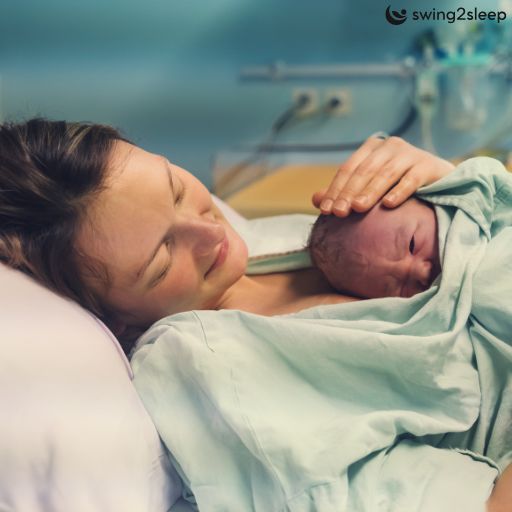
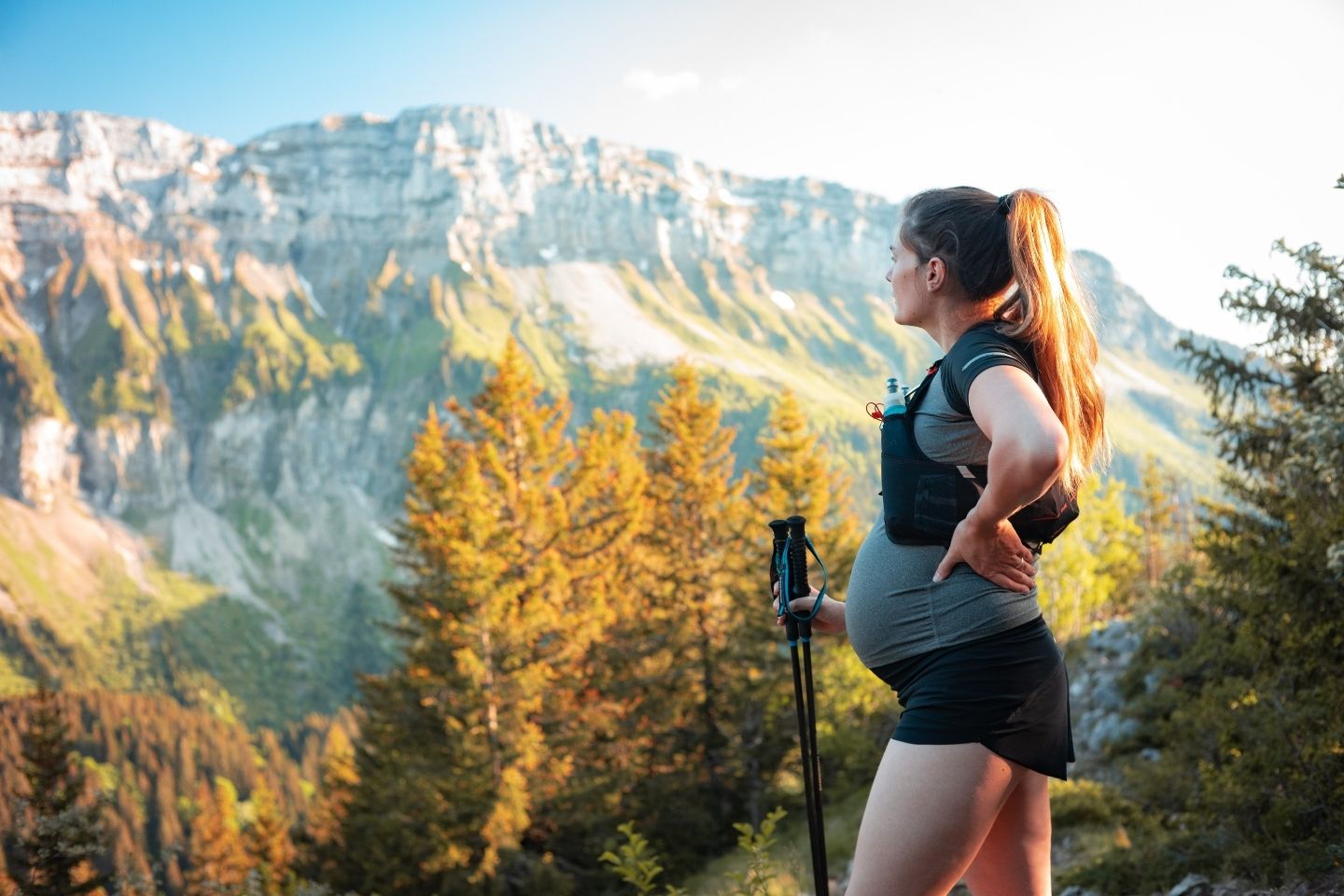


The most important message first: Exercise during pregnancy is a really good idea and is recommended in any case. Because movement keeps you fit and healthy. But how much sport is allowed? And what should you look out for during your fitness sessions? We clarified the most important questions with fitness expert, mother of two, and actress Birte Glang.

Why is exercise during pregnancy good?
"Exercise helps to prevent and counteract pregnancy complaints ranging from back pain and incontinence to pregnancy depression," explains Birte Glang. The mother of two developed the MOVE IT MAMA app together with experts. The fitness program is precisely tailored to the needs of pregnant women and offers a mix of muscle toning, cardio, pelvic floor, and relaxation workouts. Sound exciting? The best thing to do is click through the MOVE IT MAMA workout series yourself.
"With such an adapted sports training, you prepare yourself and your baby perfectly for childbirth," Birte knows. Because: It has been proven that a fit woman suffers from less pain during delivery. Regeneration after birth is also usually faster if you are fit. In short: Movement and pregnancy-friendly exercise are always a good idea.
Exercise during pregnancy: Which sports are good?
Basically: You should not overexert yourself during pregnancy. "All moderate sports such as swimming, walking, or cycling are excellent for you," says the fitness expert. In principle, however, you should coordinate your fitness program with your trimester.
Exercise in the first trimester
Even if the belly is not yet that big, a lot happens physically in the first trimester. That's why many women struggle with fatigue and exhaustion. If you don't feel fit, you should rather just take long walks in the fresh air. With fewer complaints and good basic fitness, you can continue training as normal. Only intensity and frequency should not increase. All sports that were practiced before pregnancy are allowed; apart from extreme sports or hard abdominal muscle training.

Exercise in the second trimester
From the second trimester onwards, it is important to eat and move in a health-oriented way. The fatigue from the first trimester subsides, and you regain your strength – which is why strength training is definitely worthwhile for you. Focus on your core and lower back during your exercises. Because your belly is now growing steadily, and with it the strain.
A good exercise is the Dolphin Plank, a special variation of the forearm plank. And here's how it works:
- Place your forearms on the floor, elbows under your shoulders, feet on tiptoes.
- Now lift your bottom until your body forms a V. The legs remain straight. This way you don't strain the straight abdominal muscles too much – and you also stretch the hips a little.
- Then lower your hips a little. Move your feet back until your body forms a horizontal line.
- Hold for a moment. Now perform the same movement backwards.
Repeat this exercise five to eight times on four days a week for a strong back.

Exercise in the third trimester
Your belly is getting bigger and bigger and might sometimes be in the way. Many women feel sluggish from the third trimester onwards. Even putting on shoes becomes an effort. Take it a bit easier during this time. Swimming or aqua aerobics, for example, are sports that are also gentle on your joints and make you feel nice and light.
By the way: "Many gynecologists recommend yoga during pregnancy," Birte explains. "The breathing and stretching exercises can actually be very helpful. But here, too, it's important to find a program that is adapted to your level!"
Which sports are more risky for pregnant people?
"Anything that involves extreme contortions or explosive movements should be avoided," says Birte and continues: "Generally speaking, a pregnant person should avoid all high-risk sports."
Pregnancy is also not the time to start a new sport.
You should refrain from training the straight abdominal muscles throughout your pregnancy. This is because they separate as your belly grows. Training them would be counterproductive.
What should pregnant people pay special attention to?
"A balanced diet and a regular exercise program can help prevent many complaints and increase the chance of a relaxed birth," Birte knows. The prerequisite for this is that the pregnancy proceeds without complications. If this is not the case, consult your doctor before rolling out your exercise mat.
Also, always make sure that you do not overexert yourself. During pregnancy, your body is working at full speed. Movement should support your body and keep it fit; not add extra stress. It is also helpful if you pay attention to your heart rate during your fitness sessions. Here is an overview.
- Pregnant women up to and including age 29: 135 to 150 beats per minute
- Pregnant women between 30 and 39 years: 130 to 145 beats per minute
- Pregnant women over 40 years: maximum 125 to 140 beats per minute
When is sport taboo during pregnancy?
As already mentioned: In the event of complications during pregnancy or certain types of high-risk pregnancies, you should only exercise in consultation with your doctor. These can include:
- Multiple births
- Previous miscarriages
- Heart disease
- Bleeding in early pregnancy
- Preterm labor
- Infectious diseases
Caution is also advised in the case of symphysis separation. This is because excessive exertion can in turn lead to a symphysis rupture. This is extremely painful. And a natural spontaneous birth is then hardly possible.
"The general rule is also: If you feel unwell, or experience severe pain, if bleeding occurs, dizziness or breathing problems – then stop your training immediately," advises Birte. "In any case, you should then consult your doctor."
And after the birth?
"Here, too, there is no 'one-size-fits-all solution'," says the fitness expert. "Personally, however, I would like to encourage moms to start again as early as possible." For example, you can start with the first very gentle breathing exercises during the postpartum period. "We have also developed a special program for this at MOVE IT MAMA."
By the way, Birte Glang recommends the swing2sleep to all sports-loving moms. "I have personally experienced that it is difficult to put the child down in the first few weeks and then there is really hardly any time for movement or sporting activity," says the mother of two. With a swing2sleep, young mothers can create the free space they need to quickly regain their own strength.
Photo by lucas Favre on Unsplash
Photo by Amelia Bartlett on Unsplash
Birte Glang