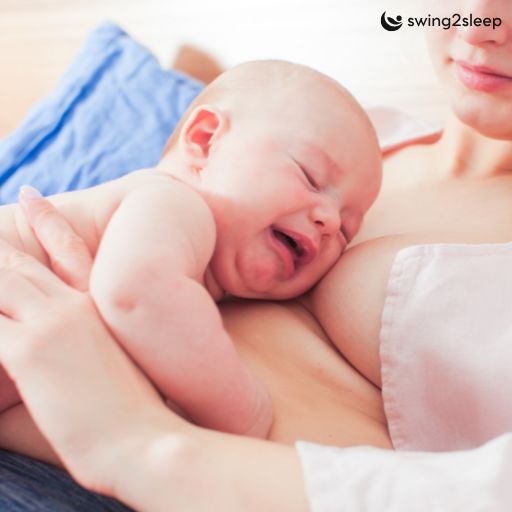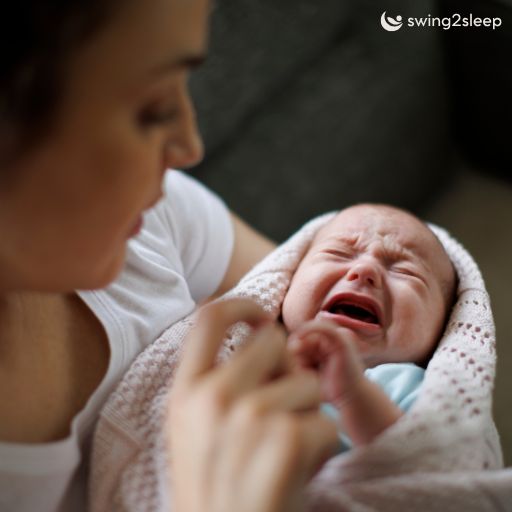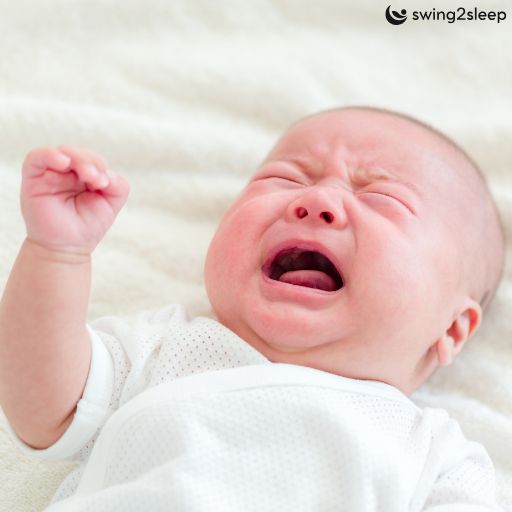


Every infant cries, but when is it too much?
It is still perfectly normal if your baby cries for up to one hour a day. The vast majority of infants cry for up to half an hour within a 24-hour period. Only when the crying occurs particularly frequently and for long periods over an extended timeframe and, above all, when the child is difficult or impossible to soothe, is it referred to as excessive crying.
What is a colicky baby?
The common term colicky baby refers to children who cry excessively often and for long periods, seemingly for no reason. Experts define a colicky baby according to the so-called rule of three.
Excessive crying is defined as when the baby:
cries for at least 3 hours a day
on at least 3 days a week
and this behavior persists for longer than 3 weeks
(see also the following video)
The purpose of such definitions is the subject of much discussion, but at the very least they provide an initial orientation.
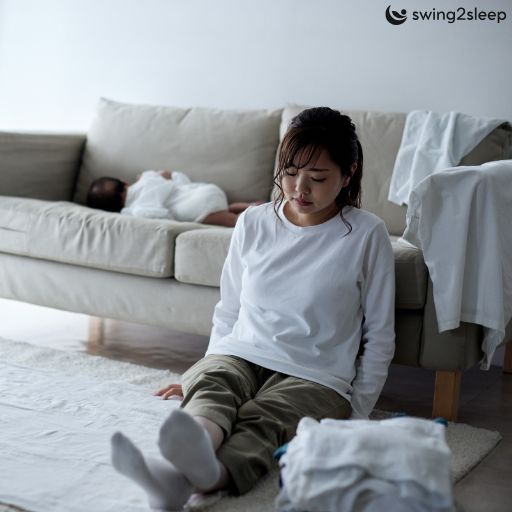
However, it is also important how you as parents feel when your child cries. As soon as you perceive the situation as particularly stressful or problematic and perhaps experience feelings of helplessness or despair, you should urgently seek help.
Because one thing is certain: colicky babies push their parents to their breaking point.
Symptoms
There are typical characteristics found in most colicky babies. These include:
- motor restlessness & tension
- general dissatisfaction
- conspicuously demanding behavior
- unpredictable behavior
- low stimulus threshold
- easy irritability
- difficult to soothe and comfort
- sleep disturbances
- overtiredness
In cases of long-lasting crying, babies also experience the following symptoms:
- increased muscle tension
- bloated belly
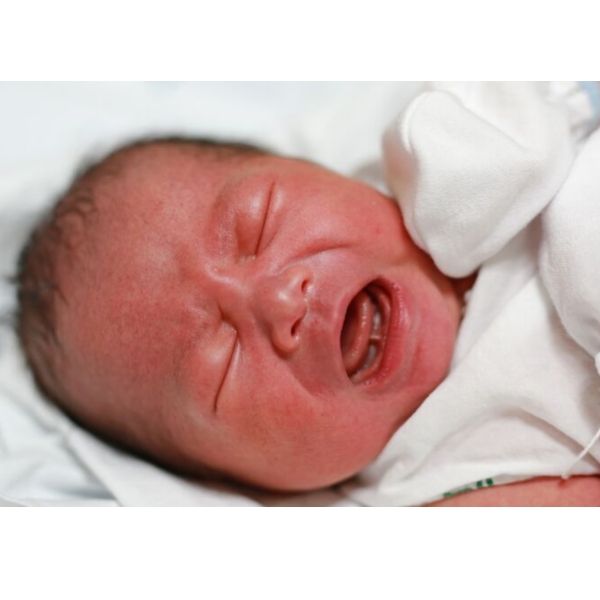
- reddish skin discoloration
Many so-called colicky babies also have a constant need to be breastfed and often drink very vigorously at the breast. They also display more intense behavior than other babies in other areas (e.g., when laughing).
Contributing factors during pregnancy
It seems obvious that the course for a colicky baby is already set during pregnancy. But has this really been proven? Can it be influenced before birth whether the child will become a colicky baby?
The data is still quite sparse, however, existing studies and findings point to several contributing factors.
Unwanted pregnancy
It was shown that mothers who had become pregnant unintentionally seemed to have up to a 13-fold higher risk of having a colicky baby.
Stress during pregnancy
It is also a natural thought that mothers who were exposed to high levels of stress during pregnancy also have stressed children. In fact, studies showed that socially burdened pregnant women have colicky babies more frequently than mothers for whom everything went smoothly during pregnancy. Social burdens can, of course, be all sorts of things and also include the unwanted pregnancy already mentioned as a separate point. Furthermore, this also includes depression, depression, stress at the workplace, problematic life situations, and relationship crises.
The placenta separates the child from the mother's bloodstream. This protects the fetus when the cortisol level in the mother's blood rises briefly. However, during prolonged periods of stress, this also affects the baby and can have far-reaching consequences. From premature birth or low birth weight to long-term childhood effects such as depression or asthma. For a child who was already stressed before birth, the probability of becoming a colicky baby is relatively high – 17 times higher than usual.
Smoking during pregnancy
Smoking during pregnancy is responsible for all sorts of problems and deficits in the baby and also contributes to the child potentially becoming a colicky baby.
Scientists at the Swedish University of Lund found that smokers have colicky babies significantly more often than non-smoking pregnant women. However, it does not matter whether the mothers continue to smoke beyond the pregnancy. The decisive factor is solely smoking during the pregnancy.
Vitamin B12 deficiency
Something quite astonishing was revealed not too long ago in another Dutch study: If the mother suffers from a vitamin B12 deficiency during pregnancy, this is also a risk factor that can lead to a colicky baby. Vitamin B12 is responsible for the development of nerve cells. A deficiency leads to a weaker nervous system and more irritability – also in the baby. Furthermore, a vitamin B12 deficiency also impairs the production of melatonin, the sleep hormone. Therefore, pregnant women should ensure a sufficiently high vitamin B12 level, even if they do not follow a vegan diet. If necessary, your gynecologist can certainly recommend good dietary supplements to compensate for the deficiency.
Even if not all of the factors mentioned can be influenced, your hands are not tied. You can compensate for a vitamin deficiency, you can counter stress to a certain extent with relaxation techniques and, if necessary, therapeutic support, and smoking is out of the question during pregnancy anyway. But even if you do everything right, want nothing more than a baby and are happy and content during your pregnancy, you can still end up with a high-need baby. With everything you do, you can only reduce the probability; a residual risk always remains.
But even if this happens, there is no reason to despair. While the baby is in its crying phase, numerous resources and facilities are available to support you. Inform yourself in good time and take advantage of the appropriate offers. With us, you can not only stock up on numerous tips and valuable information, but also ensure enormous relief during the difficult weeks with our swing2sleep automatic baby hammock.
And at some point, the nightmare will be over. You can find out what becomes of high-need babies when they get older here.
Frequency and progression
The often seizure-like crying and the longer-lasting restlessness usually occur as early as the second week of life. By the eighth week of life, the frequency and intensity of the crying episodes increase more and more.
In industrialized countries, up to 25% of all infants are affected in the first three months of life. Although the frequency and intensity of crying usually returns to a normal level on its own after 3–4 months, for around 8% of these babies it sometimes takes significantly longer.
Possible causes
Regulation disorders
Not so long ago, it was assumed that flatulence and colic were the cause of the crying fits. This is the reason why people still speak of three-month colic in high-need babies today. It is now clear that this term is misleading. Nevertheless, it has persisted in popular parlance to this day. It is now believed that the cause lies in a regulation disorder of the child, meaning it is not yet able to balance its own states of excitement. When it cries, it simultaneously takes in an excessive amount of air. The flatulence is therefore a consequence of the crying and not its cause.
Organic causes
In some cases, excessive crying has an organic cause. The baby may be suffering from an illness that has not yet been recognized. If the crying episode lasts particularly long and the child simply cannot be calmed down, you should definitely consult a pediatrician.
Blockages
Birth is a complex process, and sometimes things don't go perfectly smoothly. One example is KiSS syndrome. This involves vertebral joint displacements that can occur during birth. These in turn cause sometimes very painful blockages in the body. Many pediatricians and osteopaths now have the appropriate training and can help your child gently.
Medication against crying?
There are no concrete figures on how many children are actually sedated with medication. However, the number of unreported cases is likely to be high because many sedatives are available over the counter and without a prescription. After all, the manufacturers of some sedatives advertise a particularly young approval age of 6 months.
Due to the risk of side effects and even symptoms of poisoning, pediatricians have long been calling for such preparations to be available on prescription only. In any case, parents should never resort to such medication without consulting their pediatrician. Apart from the side effects, it can also lead to a habituation effect.
Furthermore, sedation is hardly a solution. It is like turning off the fire alarm without extinguishing the fire. Even if you cannot identify it: the child is not crying without a reason. Even if all organic causes can be ruled out and the child cannot be calmed by anything, it is important to give them love and attention so that they can build basic trust. Drugging the child – and that is exactly what it is – cannot be the solution.
Or against flatulence?
Because the cause is more likely to be a regulation disorder, and flatulence is not the cause but the consequence of excessive crying, remedies for flatulence cannot do anything about the crying. It would only fight the symptom, and not the cause.
In addition, extreme restraint is advised when using medication on babies. Even doses considered small can be too much for the tiny baby body. Therefore, any administration of medication should definitely be discussed with the pediatrician and only take place if there is really no other way. A crying baby with regulation disorders cannot be managed with medication anyway.
There is no way around it: If you have a crying baby, you have to engage with it and find other ways and possibilities to help the baby – and ultimately yourselves – out of the spiral.
The main reason why an infant cries may lie somewhere else entirely:
Too many stimuli that cannot be processed
In an otherwise healthy baby, overstimulation and overtiredness are likely to be at the top of the list of triggers for crying fits. When a baby suffers from regulation disorders, it means that they have problems processing and emotionally coping with the abundance of impressions. The first weeks of life are a huge adjustment for the baby. Through birth, they were torn out of their pleasantly tempered, cozy darkness, in which they had always been gently rocked by mom's movements during pregnancy, and thrown into a world that is cold, bright, shrill, and hectic for the child. Some infants handle this relatively well. Others are more sensitive and give vent to their overwhelming emotions loudly.
An automatic baby hammock from swing2sleep simulates, with its steady, gentle vibrations and cozy closeness, to some extent the conditions the child knows from the womb, and thus eases their entry into life. Even high-need babies often find peace and relaxation here. And parents gain a little time to take a breath and think about themselves for a few minutes. The stress subsides and the chaos settles. So that you can enjoy the beautiful time after birth.
This might also interest you:
We are repeatedly asked: "Does this automatic baby hammock really work?" Therefore, we have summarized a few customer comments for you here and here so that you can find out first-hand what those affected have to report about their swing2sleep!