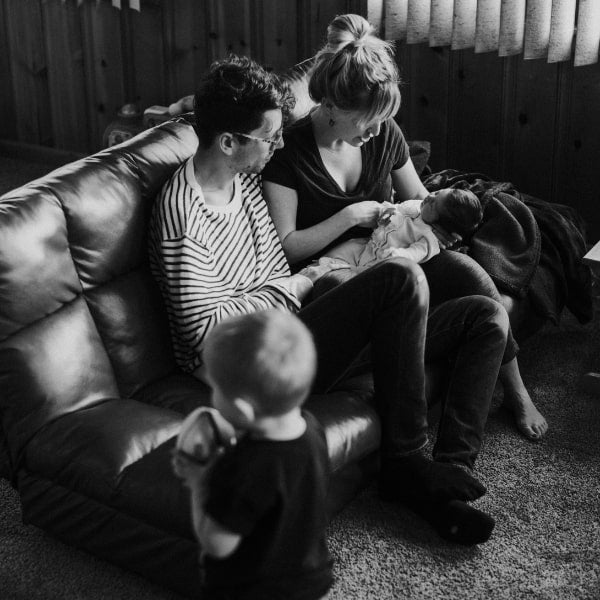


When babies cry, there is always a reason. There is something that is bothering the child or causing them discomfort, and often it is something that you as parents would never dream of.
High-need babies in particular are often truly sensitive souls who react extremely sensitively and with screaming even to small changes. They also sense exactly when you are in a bad mood or irritable. However, finding out exactly where the shoe pinches for your little one can be a real challenge.
High-need baby: Sensitive "listening" for a secure bond
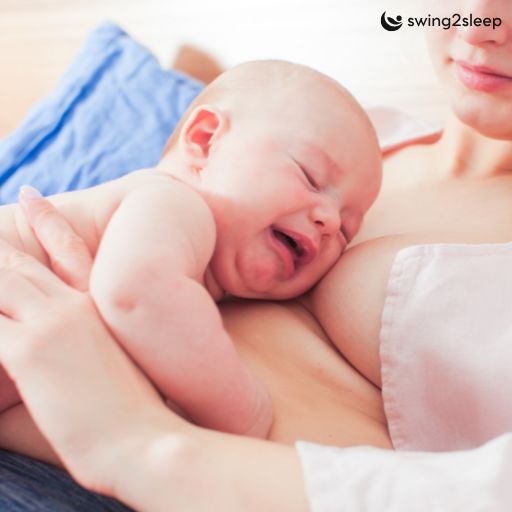
The baby is freshly changed and fed, it is not cold, has skin contact with mom or dad and is being carried. Despite everything, it simply cannot stop screaming. The thought quickly arises: "Am I perhaps a bad mother if I can't even manage to calm my own baby?"
Don't worry, you can forget this thought right away. What makes a good mother is not only determined by whether you regularly succeed in calming your baby.
There will be many more opportunities in your child's life that you will master with flying colors and which will then show that you are in fact great moms. And before you are too hard on yourselves, don't forget: Nobody is perfect. This applies also and especially to parenting.
When the child cries, it doesn't have to be your fault at all. If they absolutely cannot be calmed down, it is important to find the causes. The baby might also still have a birth trauma.

The Dunstan Baby Language
The Australian opera singer Priscilla Dunstan put forward the theory that babies worldwide use five universal sounds to express basic needs. The idea: Certain reflexes in the body create typical sound patterns and these sound similar in newborns everywhere.
Briefly summarized:
- According to Dunstan, babies use 5 basic sounds to communicate needs such as hunger, tiredness or discomfort.
- Those who recognize these sounds and also pay attention to body language can react more specifically.
- Early and reliable reactions strengthen primal trust and promote a secure bond.
This is not a magical secret language, but rather an observation system. It invites you to listen more closely and to see the baby as an active communicator, not as a mysterious being.
The needs of newborns
Biologically speaking, we are mammals, but strangely "unfinished" ones. A calf or foal stands on its own feet shortly after birth. A human baby, on the other hand? Completely dependent. Mathematically speaking, it would be closer to other mammals in terms of developmental biology if it stayed in the womb for about nine months longer.
The pediatrician Harvey Karp therefore calls these first months the "fourth trimester".
The idea behind it:
- The first three months after birth are like a post-pregnancy outside the body.
- Babies need a particularly large amount of closeness, physical contact and attention in this phase.
- In addition to food, security is a central basic need.
- Reliable reactions from caregivers promote security and emotional stability.
This seems almost banal, but it is deeply rooted biologically. A newborn is not a small, independent being; it is more like a half-finished human in the final construction phase. Closeness is not a luxury, but developmental nourishment.
In the end, it all comes down to something surprisingly simple: Listen, look, react. No complicated theory replaces the basic human capacity for resonance. And perhaps that is exactly one of the most elegant solutions that evolution has ever produced.

Primal trust – as important as food
Closeness, attention, security and safety are the ingredients for creating and strengthening primal trust throughout at least the entire first year of life – towards parents, the environment, but also as basic trust in oneself.
However, such primal trust can only build up if parents react promptly to the child's needs. In doing so, they signal to the child that their crying is being responded to. This is how they experience that they can influence their environment, that they are important and that their actions have results.
This makes the baby feel accepted and "right". If, on the other hand, the crying remains unanswered, frustration and despair are the result. The baby then has the painful experience that no one cares if they feel bad.
How then is it supposed to succeed in building trust in the large, strange, unmanageable, frightening world? The consequences later are deeply rooted feelings of worthlessness and powerlessness. With such burdens, the baby will have a harder time in later life.
The thing about spoiling
At the earliest towards the end of the first year of life, your baby's cognitive abilities have developed to the point where they begin to test their limits. If they previously cried exclusively out of grief or helplessness, they now sometimes use their crying specifically to get you to do something.
Now caution is advised. If you let them get away with everything from now on, the line to spoiling is quickly crossed. However, your empathy and powers of observation are also required here, because the transition is fluid. Some psychologists even believe that this point only comes after the first two years of life have passed.
Spoiling here means that things are taken away from the child that they could already do well themselves, or that the parents let them get away with everything and read every wish from their eyes. This can later lead to significant problems with independence and self-esteem.
Therefore, it is important to gently and lovingly show your little one limits from this age onwards and to encourage them to be independent by letting them do as many age-appropriate things as possible themselves.

High-need baby: Radiating calm works wonders
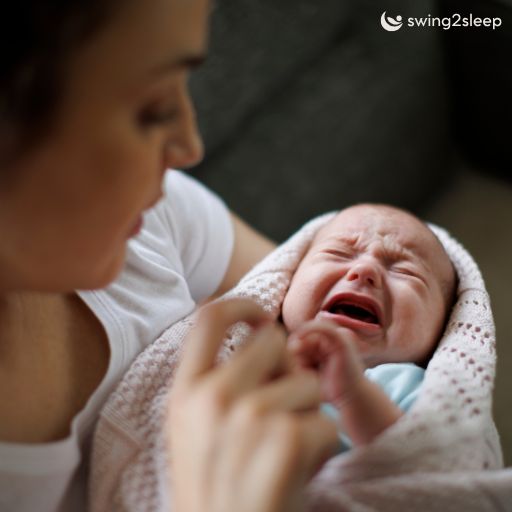
Having a crying baby in front of you is not exactly the most relaxing situation you can imagine. But if you react with stress and tension, your child will perceive this and will now cry even more. A vicious circle is created.
To calm the child, you must radiate calm. To do this, you must succeed in the feat of coming to rest yourself under adverse circumstances. This can also succeed. One way to get there would be to follow an approach that consists of two parts:
- Thinking about yourself for once
- Simple relaxation techniques for the acute situation
1. Thinking about yourself for once
Only if you are halfway in your center and not completely overtired or half-starved will you be in a condition in which you can put yourself in your baby's shoes, take them seriously, comfort them and care for them lovingly.
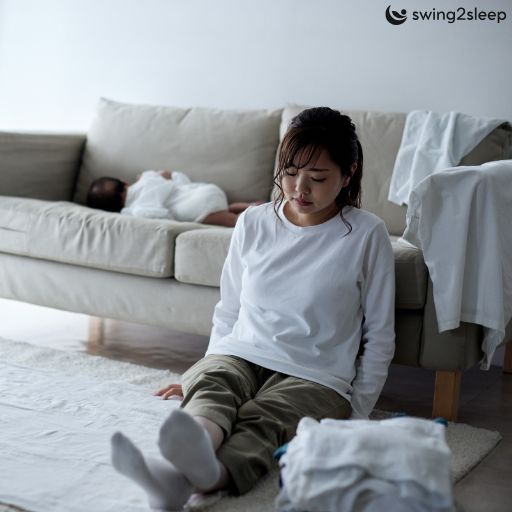
To accompany a small baby during the worst crying phases, you as parents need a lot of strength. Therefore, you must keep both in view: on the one hand, of course, the needs of the baby, but on the other hand, also yourself and the things from which you can draw the urgently needed strength.
Some parents, however, first have to learn not only to take care of the baby, but also of themselves.
Many parents literally merge with their baby and its grief, so much so that they no longer perceive themselves at all. Such a consuming sacrifice is not a noble gesture of parental care, but a fatal mistake!
Therefore, try to create small oases of strength in everyday life. This can be anything: a relaxing bath, a walk in nature, classical or relaxing music, a quiet meal, a good book, a chat with friends or something completely different, depending on what works for you.
2. Simple relaxation techniques for the acute situation
We are conscious beings. We can observe our thoughts, but also our feelings. Therefore, we are not helplessly at their mercy, however overwhelming the inner storm may sometimes appear.
If you take time for yourself every now and then, you have already gained a lot of inner serenity. This also makes it easier for you to recognize in time what is going on inside you when your emotions boil over in the face of the crying baby (or in any other situation).
Danger recognized, danger averted: with the following child's play techniques, inner peace will quickly return.
- Breathe deeply and into your belly. Conscious breathing is a thousands-of-years-old and very simple relaxation exercise.
- Try to feel your legs standing firmly on the floor. By focusing on your body, you pull your consciousness out of your head and stop the carousel of thoughts.
- Try to stay with yourself and "ground" yourself.
- Direct the energy not only at the baby, but also at yourself! Imagine how you are both connected to each other in this way and exchange energy.
Conclusion: Dealing correctly with a high-need baby
Communication is everything, from day one. If you learn to "listen" to your baby with all your senses, there is a good chance that they will "tell" you about their worries, needs and requirements.
In the first one to two years of life, you are called upon to provide your child with everything they need in abundance. In this way, you lay the foundations for healthy development and for later success in life. A high-need baby may still not be so easy to calm down.
Then you need strong nerves. You get these by not ignoring your own needs and repeatedly tapping into your sources of strength. Relaxation exercises also help to prevent a situation from escalating.
If you radiate calm and serenity, you will be better able to empathize with your child, strengthen the bond and have a calming effect on them.
By the way: Especially for high-need babies and very restless infants, the automatic baby hammock from swing2sleep has proven itself time and again. With its smooth-running motors, it gently swings the children up and down.
Together with the cozy tightness, this provides the little ones with a feeling like in the womb. This additionally relaxes and lets your baby fall asleep blissfully and contentedly. This way you gain time for yourself.
The vicious circle has been broken. The downward spiral is now turning upwards. In this way, the whole family benefits from a swing2sleep and the stress finally gives way to the family happiness you have been looking forward to for so long.
You can find more information on the subject of high-need babies in our high-need baby guide.