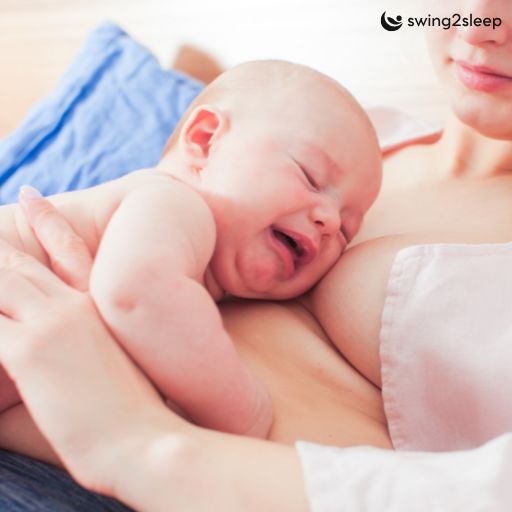



Hooray – a baby is finally on the way! A wonderful, turbulent, and exciting time lies ahead of you! But unfortunately, not everything always goes according to plan, and sometimes the reality with a baby turns out to be different than you had imagined. After months of anticipation comes the rude awakening. The baby cries and cries and cries and doesn't stop. Admittedly: it was somehow clear that babies cry at some point. But this often? And for this long? Fortunately, the crying phase is over for every baby at some point. But until then, you somehow have to make it through. Right?
When the baby's crying phase becomes a torment
It is only too understandable if, in the face of the nerve-wracking constant noise during the baby's crying phase, you ask yourself every now and then whether this is actually still normal.
But defining normality is a tricky thing... and even more so with babies! It will always be the case that some babies cry more than others – simply because they are more sensitive to moods, because they feel insecure or uncomfortable, or because they are more attentive than other babies and have more to process accordingly.
The big, wide world is not just thrilling and exciting for newborns, but can also seem intimidating to some babies. In mom's belly, the baby was cozy for 9 months and was constantly rocked back and forth. It was warm, not too loud, and the child could take a nap whenever it wanted.
In one fell swoop, everything was different. Their entire existence was turned upside down. Therefore, after birth, the baby first has to find its way into the big, strange world with its many stimuli and unknown smells and sounds.
With a colicky baby, your everyday life is anything but easy. Nevertheless, there are many possibilities and a few tips and tricks with which you can give your little screamer more security and a sense of safety. For you as parents, the most important thing is to stay cool and not lose your temper. Otherwise, the consequences could be fatal.
Why is the baby crying now? And how can you help?
Because infants cannot speak yet, determining a cause for the baby's crying is relatively difficult. Is the child in pain or just tired? Is the diaper full or is something else bothering them? If nothing seems to comfort the child and even the doctor cannot find anything, then your baby is probably suffering from a regulation disorder. This means it has great difficulty processing the huge flood of events of the day.
What helps the child in such a situation is security, safety, and protection from sensory overload. Sensitive children need a regulated daily routine so that they have orientation. Surprises and unpredictability make the child lose their composure. But if the structures are familiar, they will be better able to calm down and reduce stress.
Accept help when in doubt!
If nothing helps anymore and the stress-plagued parents are on the verge of a nervous breakdown, a visit to a crying clinic might be appropriate. This has already helped many parents because not only is the child cared for there, but the parents finally find a listening ear. Crying clinics are now available in almost every major city in Germany. For some desperate parents, they have proven to be a rescue from a crisis that seemed hopeless.
But even otherwise, you may and must accept any help that is offered to you. You are in an absolute exceptional situation. It won't work without relief. Grandma, grandpa, aunts, uncles, friends, or the nice neighbor who occasionally goes shopping for you – every little bit counts. You can return the favor later.
Technical aids can also certainly provide relief. Our swing2sleep automatic baby hammock offers many advantages that can make your life much easier. However, it should be noted that a swing2sleep is only an aid. It cannot and should not be a substitute for physical contact and attention. However, it can provide rest periods in which everyone can take a deep breath.
Abdominal pain is usually not the cause!
Until recently, people were convinced that such early childhood crying fits were caused in the vast majority of cases by digestive problems and the associated abdominal pain. This also gave the name to the so-called three-month colic.
The name has stuck in popular parlance, but today we know that digestive problems actually only play a role in 5% of all cases.For the rest, regulation disorders are assumed today. This means that the baby is more sensitive than other babies and therefore cannot react calmly to various situations. It expresses this stress by crying. It has, so to speak, adjustment problems in the adult world.
In fact, the term three-month colic is misleading not only with regard to the cause but also with regard to the duration. While it was previously suspected that the baby's crying fits would usually stop after 3 months, we know today that babies with regulation disorders are often plagued by crying fits for a few months longer.
Abdominal pain is not the trigger for the crying fits, but can be triggered by them: By crying, babies swallow a lot of air. This leads to flatulence, pain, and even more crying. This can create a vicious circle that makes comfort almost impossible.
What can help when the baby cries?

Once a colicky baby has started, attempts to calm them down are usually doomed to failure. Driving, singing, rocking, carrying, and even the football hold – everything helps at best briefly before the siren starts again.
Nevertheless, the situation is not hopeless. We have put together a few tips for you on how you might succeed in calming your little screamer. There might also be ideas that you didn't know yet.
The hottest tip among them, however, is the use of a swing2sleep. Our automatic baby hammock is designed to create an environment that comes quite close to mom's belly in some respects with gentle up and down movements and a cozy tightness. This makes the child feel safe and secure and can finally come to rest. And for you parents, too, this offers an opportunity for the short break you have long yearned for.
The baby cries – sometimes you have to accept that
But sometimes nothing actually helps. Sometimes the child simply remains inconsolable. In that case, parents face the difficult challenge of simply accepting it and making their peace with it. That may be easier said than done, but there are situations in which complete acceptance, even agreement with a hopeless situation, is the only solution.
Of course, this doesn't mean that you should leave the crying baby to its own devices. Quite the opposite! Just be there without getting too deeply involved in the suffering. Take a professional stance, so to speak, in which you maintain a protective distance and yet remain attentive and loving with the child. Accompany them in their crying phases, maintain physical contact, and carry them a lot (babies are meant to be carried). This shows the child that they can rely on you, that you are there, and that you love them. Sometimes that's all that matters.
How do you actually recognize a colicky baby?
All babies cry. That is completely normal and by no means a reason to worry. There are plenty of reasons: hunger, thirst, grief, cold, heat, full diapers, boredom, fatigue, longing for mom or dad, etc. If the baby experiences that its parents react and take care of its needs, this strengthens its basic trust and has enormously positive effects on its bond.
However, if a baby cries conspicuously frequently, often, and intensely, you may be dealing with a so-called colicky baby. The following rule of thumb applies: If the baby cries for more than three hours on at least three days per week over a period of three weeks, then according to the "rule of three" it is a colicky baby.
A stressful situation for everyone
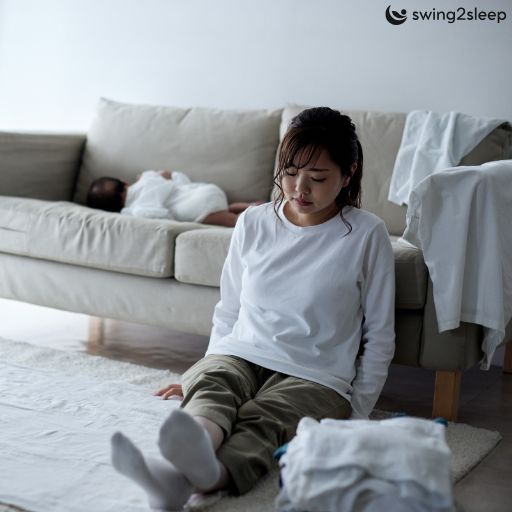
A colicky baby means an enormous burden for the parents. Overtiredness, helplessness, frustration, and often enough aggression spread quickly. If the child doesn't stop crying, nerves are on edge. Many parents are at some point close to shaking the baby vigorously or even worse. This is the recipe for a tragedy. To prevent such situations from arising in the first place, you should seek professional help early on. First signs that you should take care of it are, for example, irascibility, frequent shouting at your partner, or the feeling of being torn apart inside. Even if you are completely overtired and at the end of your strength and therefore permanently powerless or in a bad mood, you should take action.
We at swing2sleep have set ourselves the goal of standing by parents of colicky babies in their distress and preventing children from being shaken. Our automatic baby hammock has proven to be extremely effective in calming crying children. To make this solution affordable for everyone, we offer it for rent and send it to you immediately after receiving the rental form.
We know from our own painful experience what burdens and difficult hours a colicky baby brings with it. The invention of the automatic baby hammock was a stroke of luck for us and we want as many people as possible to benefit from it.
We very much hope to contribute to you being able to spend the precious hours with your newborn as harmoniously, happily, and peacefully as possible. We hope that we can help lay the foundation for a close bond, a healthy and self-confident upbringing, and strong cohesion.
If we may, we would like to belong to the family in this regard.
Sincerely,
your Schwedes family